DOWNLOAD our App & Get Amazing Discount
Download Now
Popular Products


Pait Safai Powder (پیٹ صفائی) 200g | Akseer-e-Maida | Price in Pakistan | CHILTAN PURE
60 reviews
Prime Fast Delivery
Made with 100% Organic Herbs
Relieves constipation acidity
Bloating and other gastrointestinal issues
Safe to be used by the whole family
Gross Weight 260Grm
Net Weight 200Grm
- Rs. 999
Rs. 1,110- Rs. 999
- Unit price
- / per


Activated Charcoal Teeth Whitening Powder 50ml | CHILTAN PURE
103 reviews
Prime Fast Delivery
Good For Smokers
Protects Gums
Whitens Teeth Naturally
Prevents from Permanent Staining
Removes Toxins from Mouth
Eliminates Bad Breath
Kills Cavity causing Bacteria
Removes Plaque Build up
50ml
- Rs. 999
Rs. 1,110- Rs. 999
- Unit price
- / per


Red Onion Oil for Hair 200ml | Price in Pakistan | CHILTAN PURE
121 reviews
Prime Fast Delivery
Nourishes Scalp
Prevents Greying
Boosts Hair Growth
Adds Strength & shine
Wards off Dandruff
Rich in Sulphur
Prevents Split-Ends
Used as a Natural Conditioner
200ml
- Rs. 1,099
Rs. 1,220- Rs. 1,099
- Unit price
- / per


Red Onion Shampoo | Sulfate-Free Hair Care | 260ml & 500ml
110 reviews
Prime Fast Delivery
Naturally Low Foaming [SLS FREE]
Boosts Hair Growth
Lessen Dandruff
Reduce Split Ends
Makes Hair Strong
Strengthen Hair Follicles
Calms Itchy & Dry Scalp
Prevent Premature Hair Greying
260ml
500ml
- From Rs. 890
Rs. 1,600- From Rs. 890
- Unit price
- / per


Pinkish Lips & Cheek Tint (گلابی ٹِنٹ) - Organic Liquid stain for lips, Nourish Lips & Hydrate lips all day
112 reviews
Prime Fast Delivery
Rosy-Pink Tint
Long-Lasting
24/7 Stay
Lip Moisturizing
Sheer & Buildablel
Natural-Look
Smudge-Proof
Give Your Face a Fresh Look
Brightens Lips & Cheeks With a Cheery Pop Of Color
30ml
- Rs. 599
Rs. 666- Rs. 599
- Unit price
- / per


Henna Hair & Beard Dye (Chocolate & Coffee) | 200g | CHILTAN PURE
62 reviews
Prime Fast Delivery
Strengthens Hair
Repairs Split Ends
Restricts Hair Fall
Stress Reliever
Improves Scalp Health
Balances pH & Oil Production
Prevents Premature Hair Greying
200gm
- Rs. 799
Rs. 890- Rs. 799
- Unit price
- / per


Vitamin C Serum 30ml | CHILTAN PURE
114 reviews
Helps skin look fresh and radiantSupports a smoother-looking skin textureHelps maintain skin hydrationDesigned for a simple, radiance-focused skincare routine30 ml
- Rs. 750
Rs. 1,220- Rs. 750
- Unit price
- / per


CHILTAN PURE Mix Seeds – Pumpkin, Flax, Sesame & Sunflower Seeds | 200g & 750g
68 reviews
Prime Fast Delivery
Right Fuel for Health
Good Source Of Fiber
Lower Cholesterol
Relieves Diarrhea
Nutritious Source of Plant Protein
Help Lower Blood Pressure
Support Healthy Bones
Reduce Inflammation
Aid Blood Cell Formation
Small200g
Large750g
- From Rs. 699
Rs. 1,350- From Rs. 699
- Unit price
- / per


CHILTAN PURE Glow Facial Kit – 6-Step Professional Facial at Home
294 reviews
Prime Fast Delivery
Step 1,Glow Facial Cleanser
Step 2,Glow Facial Scrub
Step 3,Glow Facial Massaging Cream
Step 4,Glow Skin Polisher
Step 5,Glow Facial Mud Mask
Step 6,Glow Facial Serum
- Rs. 4,599
Rs. 5,090- Rs. 4,599
- Unit price
- / per

-10%
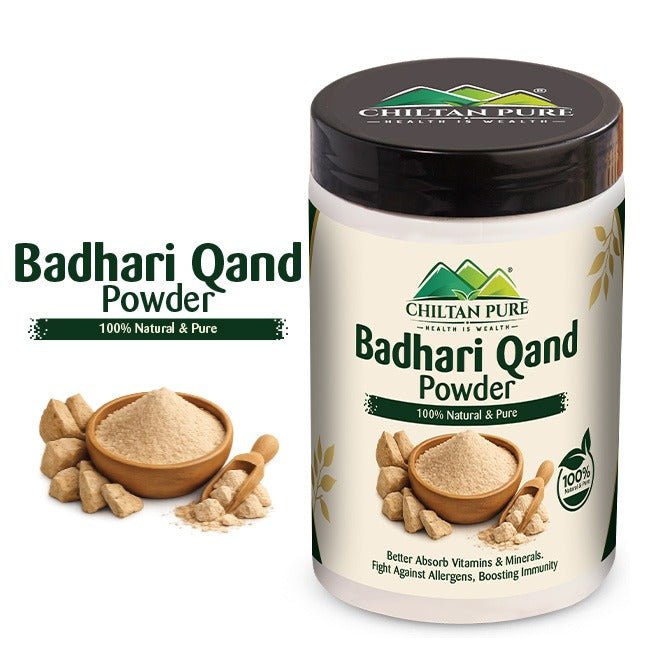
Badhari Qand Powder
2
sold in last
8
hours
Prime Fast Delivery
|
- Rs. 1,599
Rs. 1,774- Rs. 1,599
- Unit price
- / per
Pay in 3 Installments of
Rs. 533
10 customers are viewing this product


Need More Discount ~ Chat with Sales Person! BARGAIN NOW
What is Qand?
Qand, sometimes referred to as qand safaid or simply "qand," is a traditional, less-refined form of sugar that has been used across South Asian households for generations, valued for its milder processing compared to standard refined white sugar.
A Traditional Sweetener with Deep Roots
Long before modern sugar refining processes became widespread, communities across the Indian subcontinent relied on traditional sugar-making methods, producing sweeteners like qand and gur (jaggery) through less intensive processing. Qand has remained a household name in Pakistani kitchens for generations, often preferred by families who grew up using it in tea, milk, and traditional desserts, passed down as a familiar taste from one generation to the next.
How Qand Differs from Refined White Sugar
While both qand and standard refined sugar are derived from sugarcane, qand typically undergoes less intensive refining, which many households associate with a slightly different taste profile and a more "natural" character compared to the more heavily processed white sugar found in most modern kitchens.
How Badhari Qand Powder Is Made
The production of Badhari Qand Powder typically involves:
- Sourcing quality qand crystals
- Cleaning and quality-checking the crystals before processing
- Grinding the qand crystals into a fine, uniform powder
- Sifting to ensure a smooth, consistent texture free of lumps
- Packaging under hygienic conditions to preserve freshness and prevent moisture absorption
Why Powdered Form Matters
While whole qand crystals have long been a household staple, they can take longer to dissolve, particularly in cold liquids or delicate dessert preparations. Grinding qand into a fine powder makes it significantly easier to incorporate into recipes, dissolving quickly and evenly without altering its traditional flavor.
Qand in Pakistani Households
In Pakistan, qand remains a trusted, nostalgic sweetener in many homes, often used specifically in tea, warm milk, and traditional sweets where its distinct flavor is preferred over standard sugar. Badhari Qand Powder makes this traditional favorite more convenient for everyday use, allowing families to continue enjoying the familiar taste of qand in a form that's easier to measure, mix, and cook with.
What is Badhari Qand Powder?
Badhari Qand Powder is traditional qand, finely ground into a smooth, easy-to-use powder for everyday household use.
Traditional Qand Base Made from quality qand crystals, preserving the sweetener's characteristic traditional flavor.
Finely Ground for Easy Use Processed into a smooth powder that dissolves more readily than whole crystals.
A Natural Sweetening Alternative Offers a traditional, less-refined alternative to standard white sugar.
Versatile Everyday Use Suitable for tea, milk, desserts, and general cooking and baking needs.
Consistent Texture Sifted for a smooth, lump-free powder that's easy to measure and mix.
A Trusted Household Name Reflects a sweetener that has remained a staple in Pakistani kitchens for generations.
Convenient Packaging Packaged for everyday kitchen use and easy storage.
Suitable for the Whole Family A familiar, traditional taste enjoyed across generations within a household.
Why Choose Badhari Qand Powder?
Authentic Traditional Flavor Preserves the distinct, familiar taste of qand that many households have relied on for generations.
Convenient, Fast-Dissolving Format The fine powder form makes it easier and quicker to use compared to whole crystals.
A More Natural Alternative Offers a traditional, less-refined option compared to standard white sugar.
Versatile in the Kitchen Works well in tea, milk, desserts, and everyday cooking.
Consistent Quality Every batch is ground and sifted to deliver the same smooth texture and flavor.
A Nostalgic, Trusted Choice A familiar sweetener that connects modern kitchens to traditional household practices.
Easy to Measure and Store The powdered format is simple to portion and incorporate into recipes.
A Dependable Everyday Pantry Staple A reliable choice for households that prefer the traditional taste of qand.
Key Features
- Made from traditional, quality qand crystals
- Finely ground for smooth, easy use
- Dissolves faster than whole qand crystals
- A more natural alternative to refined white sugar
- Versatile for tea, milk, and desserts
- Suitable for everyday cooking and baking
- Sifted for a consistent, lump-free texture
What's in the Pack
Qand (Traditional Sugar Crystals, Finely Ground) The sole ingredient in this product — quality qand crystals, cleaned and finely ground into a smooth powder.
No Additives Free from artificial flavoring, coloring, or added preservatives.
Taste & Texture Profile
Flavor A mild, rounded sweetness with a subtle traditional character, distinct from the sharper sweetness of standard refined white sugar.
Aroma A light, natural aroma typical of traditionally processed qand.
Texture A fine, smooth powder that pours and measures easily, without clumping when stored properly.
Color A pale, off-white to light cream color, reflecting its less intensively refined nature compared to bright white refined sugar.
Dissolvability Dissolves readily in both warm and cold liquids due to its fine, powdered form.
How to Use
In Tea or Milk Add the desired amount of Badhari Qand Powder directly into hot tea or warm milk and stir until dissolved.
In Cooking & Baking Use as a substitute for standard sugar in traditional recipes, adjusting quantity to taste as qand's sweetness profile can differ slightly from refined sugar.
In Traditional Desserts Incorporate into traditional sweets and dessert preparations where qand is the preferred sweetener.
Measuring Use standard measuring spoons or cups, as the fine powder form measures similarly to granulated sugar.
Storage Store in a cool, dry place in an airtight container to prevent moisture absorption and clumping.
Precautions
- Sugar Content Awareness: As a sweetener, this product should be consumed in moderation as part of a balanced diet, particularly by those monitoring their sugar intake.
- Storage Care: Keep in an airtight container away from moisture, as the fine powder can absorb humidity and clump if left exposed.
- Check Expiry Date: Check the expiry date on the packaging before use.
- Diabetic Considerations: Individuals managing diabetes or blood sugar levels should consult their doctor regarding appropriate sweetener choices and quantities.
- Children: Use in age-appropriate quantities when preparing food or beverages for children.
- Keep Out of Reach of Pests: Store securely to prevent exposure to insects or pests common in pantry staples.
Frequently Asked Questions (FAQs)
Q1: What is the difference between qand and regular white sugar? Qand typically undergoes less intensive refining compared to standard white sugar, giving it a slightly different, more traditional flavor profile that many households prefer.
Q2: How is Badhari Qand Powder different from whole qand crystals? It's the same traditional qand, finely ground into a smooth powder that dissolves more quickly and is easier to measure and mix into recipes.
Q3: Can I use this powder as a direct substitute for sugar in recipes? Yes, it can generally be used as a substitute for standard sugar, though you may want to adjust quantities slightly to taste given qand's distinct flavor profile.
Q4: Does this product contain any additives? No, it consists solely of finely ground qand, without any added flavoring, coloring, or preservatives.
Q5: Is Badhari Qand Powder suitable for tea and milk? Yes, it's commonly used in tea and warm milk, dissolving easily due to its fine powder form.
Q6: How should I store Badhari Qand Powder? Store in a cool, dry place in an airtight container to prevent moisture absorption and clumping.
Related Products
Example product title
- Rs. 1,599
Rs. 1,774- Rs. 1,599
- Unit price
- / per
Example product title
- Rs. 1,599
Rs. 1,774- Rs. 1,599
- Unit price
- / per
Example product title
- Rs. 1,599
Rs. 1,774- Rs. 1,599
- Unit price
- / per
Example product title
- Rs. 1,599
Rs. 1,774- Rs. 1,599
- Unit price
- / per
Example product title
- Rs. 1,599
Rs. 1,774- Rs. 1,599
- Unit price
- / per
Example product title
- Rs. 1,599
Rs. 1,774- Rs. 1,599
- Unit price
- / per
Example product title
- Rs. 1,599
Rs. 1,774- Rs. 1,599
- Unit price
- / per
Example product title
- Rs. 1,599
Rs. 1,774- Rs. 1,599
- Unit price
- / per
Example product title
- Rs. 1,599
Rs. 1,774- Rs. 1,599
- Unit price
- / per
Example product title
- Rs. 1,599
Rs. 1,774- Rs. 1,599
- Unit price
- / per
Recently Viewed Products
Example product title
- Rs. 1,599
Rs. 1,774- Rs. 1,599
- Unit price
- / per
Example product title
- Rs. 1,599
Rs. 1,774- Rs. 1,599
- Unit price
- / per
Example product title
- Rs. 1,599
Rs. 1,774- Rs. 1,599
- Unit price
- / per
Example product title
- Rs. 1,599
Rs. 1,774- Rs. 1,599
- Unit price
- / per
Example product title
- Rs. 1,599
Rs. 1,774- Rs. 1,599
- Unit price
- / per
Example product title
- Rs. 1,599
Rs. 1,774- Rs. 1,599
- Unit price
- / per
Example product title
- Rs. 1,599
Rs. 1,774- Rs. 1,599
- Unit price
- / per
Example product title
- Rs. 1,599
Rs. 1,774- Rs. 1,599
- Unit price
- / per
Example product title
- Rs. 1,599
Rs. 1,774- Rs. 1,599
- Unit price
- / per
Example product title
- Rs. 1,599
Rs. 1,774- Rs. 1,599
- Unit price
- / per
- Choosing a selection results in a full page refresh.