DOWNLOAD our App & Get Amazing Discount
Download Now
Popular Products


Pait Safai / پیٹ صفائی / Natural Laxative Powder / ہر رات آدھا چمچ بنائے زندگی آسان
60 reviews
Prime Fast Delivery
Made with 100% Organic Herbs
Relieves constipation acidity
Bloating and other gastrointestinal issues
Safe to be used by the whole family
Gross Weight 260Grm
Net Weight 200Grm
- Rs. 999
Rs. 1,110- Rs. 999
- Unit price
- / per


Activated Charcoal Teeth / Whitening Treatment - Whitens Teeth Naturally, Kills Cavity causing Bacteria Eliminates Bad Breath
103 reviews
Prime Fast Delivery
Good For Smokers
Protects Gums
Whitens Teeth Naturally
Prevents from Permanent Staining
Removes Toxins from Mouth
Eliminates Bad Breath
Kills Cavity causing Bacteria
Removes Plaque Build up
50ml
- Rs. 999
Rs. 1,110- Rs. 999
- Unit price
- / per
![Red Onion Oil 🧅 Reduces Hair Fall & Accelerates Hair Regrowth [پیاز کا تیل].. Trending.... 🔥 - ChiltanPure](http://chiltanpure.com/cdn/shop/products/red-onion-oil-reduces-hair-fall-amp-accelerates-hair-regrowth-piaz-ka-til-trending-394813_640x.jpg?v=1707464619)
![Red Onion Oil 🧅 Reduces Hair Fall & Accelerates Hair Regrowth [پیاز کا تیل].. Trending.... 🔥 - ChiltanPure](http://chiltanpure.com/cdn/shop/products/red-onion-oil-reduces-hair-fall-amp-accelerates-hair-regrowth-piaz-ka-til-trending-329640_1170x.jpg?v=1708127491)
Red Onion Oil / Reduces Hair Fall & Accelerates Hair Regrowth
122 reviews
Prime Fast Delivery
Nourishes Scalp
Prevents Greying
Boosts Hair Growth
Adds Strength & shine
Wards off Dandruff
Rich in Sulphur
Prevents Split-Ends
Used as a Natural Conditioner
200ml
- Rs. 1,099
Rs. 1,220- Rs. 1,099
- Unit price
- / per


Red Onion Shampoo Natural Solution for Regrow Hair & Prevent Hair Loss.
110 reviews
Prime Fast Delivery
Naturally Low Foaming [SLS FREE]
Boosts Hair Growth
Lessen Dandruff
Reduce Split Ends
Makes Hair Strong
Strengthen Hair Follicles
Calms Itchy & Dry Scalp
Prevent Premature Hair Greying
260ml
500ml
- From Rs. 890
Rs. 1,600- From Rs. 890
- Unit price
- / per


Pinkish Lips & Cheek Tint (گلابی ٹِنٹ) - Organic Liquid stain for lips, Nourish Lips & Hydrate lips all day
112 reviews
Prime Fast Delivery
Rosy-Pink Tint
Long-Lasting
24/7 Stay
Lip Moisturizing
Sheer & Buildablel
Natural-Look
Smudge-Proof
Give Your Face a Fresh Look
Brightens Lips & Cheeks With a Cheery Pop Of Color
30ml
- Rs. 599
Rs. 666- Rs. 599
- Unit price
- / per


Henna Hair and Beard Dye (Chocolate & Coffee) – Prevents Premature Hair Greying, Improves Scalp Health, Balances pH & Oil Production
62 reviews
Prime Fast Delivery
Strengthens Hair
Repairs Split Ends
Restricts Hair Fall
Stress Reliever
Improves Scalp Health
Balances pH & Oil Production
Prevents Premature Hair Greying
200gm
- Rs. 799
Rs. 890- Rs. 799
- Unit price
- / per


Vitamin C Serum for Face – 30ml Brighter, Fresher and More Even-Looking Skin
114 reviews
Prime Fast Delivery
Lightens dark circles
Reduces Wrinkles
Provides moisture
Promotes healthy skin
Enhances skin tone
Fights pigmentation
Improves skin texture
Protects from sun damage
Stimulates collagen production
For all skin types
30ml
- Rs. 750
Rs. 1,220- Rs. 750
- Unit price
- / per


Mix Seeds Normal – Rich in Antioxidants, Metabolism Booster & Good Source of Omega-3
68 reviews
Prime Fast Delivery
Right Fuel for Health
Good Source Of Fiber
Lower Cholesterol
Relieves Diarrhea
Nutritious Source of Plant Protein
Help Lower Blood Pressure
Support Healthy Bones
Reduce Inflammation
Aid Blood Cell Formation
Small200g
Large750g
- From Rs. 699
Rs. 1,350- From Rs. 699
- Unit price
- / per


Glow Facial Kit /4x Results / Deep Cleansing, Anti- Aging & Enhances Skin’s Natural Glow | Personal Kit
294 reviews
Prime Fast Delivery
Step 1,Glow Facial Cleanser
Step 2,Glow Facial Scrub
Step 3,Glow Facial Massaging Cream
Step 4,Glow Skin Polisher
Step 5,Glow Facial Mud Mask
Step 6,Glow Facial Serum
- Rs. 4,599
Rs. 5,090- Rs. 4,599
- Unit price
- / per

-10%
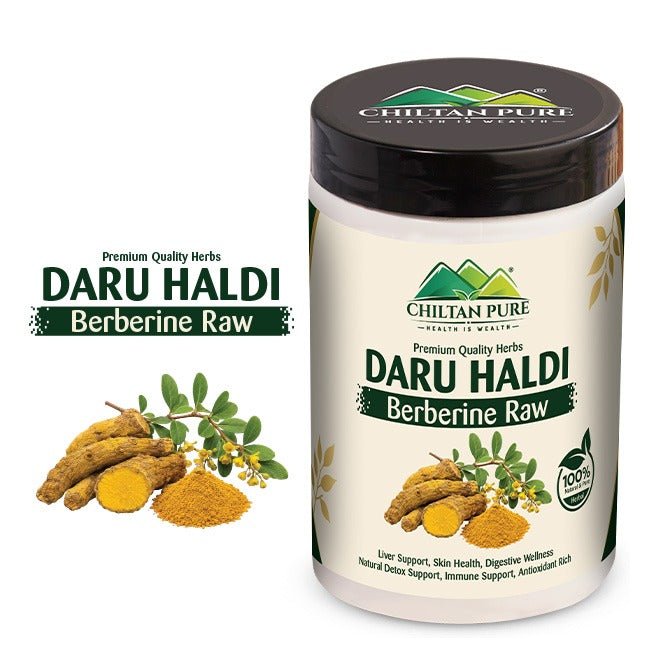
Daru Haldi Berberine Raw
2
sold in last
8
hours
Prime Fast Delivery
|
- Rs. 799
Rs. 886- Rs. 799
- Unit price
- / per
Pay in 3 Installments of
Rs. 266
Tags:
/
999
/
Discounted Products
/
Herbal Supplement
/
Herbs
/
NEW ARRIVAL
/
Top Products
/
Top Seller
10 customers are viewing this product


Need More Discount ~ Chat with Sales Person! BARGAIN NOW
What is Daru Haldi?
Daru Haldi, botanically known as Berberis lycium (and related Berberis species), is a shrub whose roots and bark have been used for centuries across South Asian traditional medicine systems, including Ayurveda and Unani practices. Often referred to as "tree turmeric" due to its yellow-colored roots, Daru Haldi is distinct from common turmeric (Curcuma longa) despite the similarity in name and color.
A Long History in Traditional Medicine
Daru Haldi has a documented history spanning centuries in South Asian traditional healing systems, where the root and bark have been dried, ground, and prepared in various traditional forms as part of household wellness practices. Passed down through generations, knowledge of this herb's traditional preparation and use remains part of many families' inherited wellness practices, particularly in regions of Pakistan, India, and the broader Himalayan foothills where the plant is native.
What Makes Daru Haldi Notable
The roots and bark of the Daru Haldi plant naturally contain berberine, a yellow-colored plant compound (alkaloid) that has drawn significant global research interest in recent years. Berberine is also found in several other traditional plants used across different medicine systems worldwide, but Daru Haldi remains one of its most traditional and recognized South Asian sources.
How Raw Daru Haldi Is Prepared
Preparing raw Daru Haldi for sale typically involves:
- Harvesting the roots and bark of the Daru Haldi plant from its natural growing regions
- Cleaning the harvested material thoroughly to remove soil and debris
- Drying the roots and bark naturally to preserve their properties
- Sorting and quality-checking the dried material
- Packaging the raw herb under hygienic conditions without further processing into powder or extract form
Why "Raw" Matters
Unlike processed extracts or standardized supplements, raw Daru Haldi is offered in its natural, unprocessed root or bark form, allowing those familiar with traditional preparation methods (such as boiling to make a decoction) to use it according to the customs passed down in their own households.
Daru Haldi in Pakistani Households
In Pakistan, particularly in the northern regions where the plant grows natively, Daru Haldi has remained a well-known traditional herb, often sourced from local herbal shops (pansaris) and prepared at home according to family traditions. This raw offering makes the traditional herb accessible to those seeking it in its natural, unprocessed form, just as previous generations would have used it.
What is Daru Haldi (Berberine Raw)?
Daru Haldi (Berberine Raw) is the natural, unprocessed root and bark of the Berberis lycium plant, offered in its traditional raw form.
100% Natural, Unprocessed Herb Sold in its raw, dried root and bark form without extraction or standardization.
Naturally Contains Berberine The plant's roots and bark naturally contain berberine, the compound the herb is traditionally recognized for.
Rooted in Traditional Use Reflects centuries of traditional South Asian herbal practice, particularly in Ayurvedic and Unani systems.
Suitable for Traditional Preparation Methods Can be prepared according to traditional methods, such as boiling to make a decoction, as passed down through generations.
Sourced with a Focus on Purity Harvested and dried with attention to cleanliness and quality.
No Added Fillers or Processing Offered as the pure, natural herb without additional processing into capsules, powders, or extracts.
A Traditional Household Herb Reflects a long-standing presence in South Asian home wellness practices.
Suitable for Those Familiar with Traditional Herbal Use Best suited for individuals already familiar with how to prepare and use raw herbal roots.
Why Choose Daru Haldi (Berberine Raw)?
Authentic, Traditional Form Offered in its natural, raw state rather than a modern processed extract.
100% Natural Sourcing No added chemicals, fillers, or synthetic processing.
Rooted in Generations of Traditional Use Reflects a herb with deep, documented roots in South Asian traditional medicine.
Purity-Focused Preparation Carefully harvested, cleaned, and dried to preserve the herb's natural state.
Flexible for Traditional Preparation Suitable for those who wish to prepare it according to inherited family or traditional methods.
Consistent Quality Every batch is sourced and dried with attention to consistent quality.
A Trusted Traditional Herb Reflects the continued relevance of Daru Haldi in modern Pakistani households.
Simple, Honest Offering No unnecessary additives — just the raw herb as nature and tradition intended.
Key Features
- 100% natural, raw Daru Haldi root and bark
- Naturally contains berberine
- No added fillers, chemicals, or processing
- Rooted in centuries of South Asian traditional use
- Sourced from native growing regions
- Naturally dried to preserve the herb's properties
What's in the Pack
Daru Haldi Root & Bark (Berberis lycium) The raw, dried root and bark of the Daru Haldi plant, naturally containing berberine, offered in its whole or roughly cut traditional form.
No Additional Ingredients This product consists solely of the raw herb, without added fillers, extracts, or processing agents.
Traditional Preparation & Use
Note: The following reflects traditional preparation practices passed down through generations. As with any herbal product, especially one containing a bioactive compound like berberine, it's strongly recommended to consult a qualified hakim, Ayurvedic practitioner, or doctor before use, particularly regarding appropriate quantities and preparation methods for your specific situation.
Traditional Decoction (Kwath) Method Historically, small pieces of the root or bark have been boiled in water to prepare a traditional decoction, following methods passed down within families or guided by a traditional practitioner.
Consulting a Practitioner Given that raw herbs like Daru Haldi do not come with standardized dosing the way modern extracts or supplements do, consulting someone experienced in traditional herbal preparation is strongly recommended before use.
Storage Store in a cool, dry place away from moisture and direct sunlight, ideally in an airtight container, to help preserve the herb's natural properties over time.
Precautions
- Consult a Professional First: As Daru Haldi naturally contains berberine, a bioactive plant compound, it's strongly recommended to consult a hakim, Ayurvedic practitioner, or doctor before use, particularly regarding appropriate preparation and quantities.
- Not Standardized: Unlike processed supplements, this raw herb does not come with a standardized dosage; traditional preparation knowledge or professional guidance is important.
- Medication Interactions: Berberine-containing herbs may interact with certain medications; consult your doctor if you are on any prescription medication, particularly for blood sugar or blood pressure management.
- Pregnancy & Breastfeeding: Not recommended for use during pregnancy or breastfeeding unless specifically advised by a qualified healthcare provider.
- Not for Children: This raw herb is not intended for use in children without professional guidance.
- Discontinue if Adverse Reaction Occurs: Stop use and consult a doctor if any adverse reaction occurs.
- Not a Substitute for Medical Treatment: This product is a traditional raw herb and is not intended to diagnose, treat, cure, or prevent any disease.
- Store Properly: Keep in a cool, dry place away from moisture, sunlight, and children's reach.
Frequently Asked Questions (FAQs)
Q1: What is Daru Haldi, and how is it different from regular turmeric? Daru Haldi (Berberis lycium) is a different plant from common turmeric (Curcuma longa), despite the similar name; it's a traditional South Asian herb whose roots and bark naturally contain berberine.
Q2: How is raw Daru Haldi traditionally prepared? It has traditionally been prepared as a decoction by boiling small pieces of the root or bark in water, following methods passed down through families or guided by traditional practitioners.
Q3: Does this product come with a fixed dosage? No, as a raw, unprocessed herb, it does not come with standardized dosing; consulting a hakim, Ayurvedic practitioner, or doctor is recommended for guidance on appropriate use.
Q4: Is this product safe to use with other medications? Berberine-containing herbs may interact with certain medications, so it's important to consult your doctor before use if you're taking any prescription medicine.
Q5: Is Daru Haldi the same herb used in Ayurvedic and Unani medicine? Yes, Daru Haldi has a long-documented history of use in both Ayurvedic and Unani traditional medicine systems across South Asia.
Q6: How should I store raw Daru Haldi? Store in a cool, dry place away from moisture and direct sunlight, ideally in an airtight container, to help preserve its natural properties.
Related Products
Example product title
- Rs. 799
Rs. 886- Rs. 799
- Unit price
- / per
Example product title
- Rs. 799
Rs. 886- Rs. 799
- Unit price
- / per
Example product title
- Rs. 799
Rs. 886- Rs. 799
- Unit price
- / per
Example product title
- Rs. 799
Rs. 886- Rs. 799
- Unit price
- / per
Example product title
- Rs. 799
Rs. 886- Rs. 799
- Unit price
- / per
Example product title
- Rs. 799
Rs. 886- Rs. 799
- Unit price
- / per
Example product title
- Rs. 799
Rs. 886- Rs. 799
- Unit price
- / per
Example product title
- Rs. 799
Rs. 886- Rs. 799
- Unit price
- / per
Example product title
- Rs. 799
Rs. 886- Rs. 799
- Unit price
- / per
Example product title
- Rs. 799
Rs. 886- Rs. 799
- Unit price
- / per
Recently Viewed Products
Example product title
- Rs. 799
Rs. 886- Rs. 799
- Unit price
- / per
Example product title
- Rs. 799
Rs. 886- Rs. 799
- Unit price
- / per
Example product title
- Rs. 799
Rs. 886- Rs. 799
- Unit price
- / per
Example product title
- Rs. 799
Rs. 886- Rs. 799
- Unit price
- / per
Example product title
- Rs. 799
Rs. 886- Rs. 799
- Unit price
- / per
Example product title
- Rs. 799
Rs. 886- Rs. 799
- Unit price
- / per
Example product title
- Rs. 799
Rs. 886- Rs. 799
- Unit price
- / per
Example product title
- Rs. 799
Rs. 886- Rs. 799
- Unit price
- / per
Example product title
- Rs. 799
Rs. 886- Rs. 799
- Unit price
- / per
Example product title
- Rs. 799
Rs. 886- Rs. 799
- Unit price
- / per
- Choosing a selection results in a full page refresh.