DOWNLOAD our App & Get Amazing Discount
Download Now
Popular Products


Pait Safai / پیٹ صفائی / Natural Laxative Powder / ہر رات آدھا چمچ بنائے زندگی آسان
60 reviews
Prime Fast Delivery
Made with 100% Organic Herbs
Relieves constipation acidity
Bloating and other gastrointestinal issues
Safe to be used by the whole family
Gross Weight 260Grm
Net Weight 200Grm
- Rs. 999
Rs. 1,110- Rs. 999
- Unit price
- / per


Activated Charcoal Teeth / Whitening Treatment - Whitens Teeth Naturally, Kills Cavity causing Bacteria Eliminates Bad Breath
103 reviews
Prime Fast Delivery
Good For Smokers
Protects Gums
Whitens Teeth Naturally
Prevents from Permanent Staining
Removes Toxins from Mouth
Eliminates Bad Breath
Kills Cavity causing Bacteria
Removes Plaque Build up
50ml
- Rs. 999
Rs. 1,110- Rs. 999
- Unit price
- / per
![Red Onion Oil 🧅 Reduces Hair Fall & Accelerates Hair Regrowth [پیاز کا تیل].. Trending.... 🔥 - ChiltanPure](http://chiltanpure.com/cdn/shop/products/red-onion-oil-reduces-hair-fall-amp-accelerates-hair-regrowth-piaz-ka-til-trending-394813_640x.jpg?v=1707464619)
![Red Onion Oil 🧅 Reduces Hair Fall & Accelerates Hair Regrowth [پیاز کا تیل].. Trending.... 🔥 - ChiltanPure](http://chiltanpure.com/cdn/shop/products/red-onion-oil-reduces-hair-fall-amp-accelerates-hair-regrowth-piaz-ka-til-trending-329640_1170x.jpg?v=1708127491)
Red Onion Oil / Reduces Hair Fall & Accelerates Hair Regrowth
122 reviews
Prime Fast Delivery
Nourishes Scalp
Prevents Greying
Boosts Hair Growth
Adds Strength & shine
Wards off Dandruff
Rich in Sulphur
Prevents Split-Ends
Used as a Natural Conditioner
200ml
- Rs. 1,099
Rs. 1,220- Rs. 1,099
- Unit price
- / per


Red Onion Shampoo Natural Solution for Regrow Hair & Prevent Hair Loss.
110 reviews
Prime Fast Delivery
Naturally Low Foaming [SLS FREE]
Boosts Hair Growth
Lessen Dandruff
Reduce Split Ends
Makes Hair Strong
Strengthen Hair Follicles
Calms Itchy & Dry Scalp
Prevent Premature Hair Greying
260ml
500ml
- From Rs. 890
Rs. 1,600- From Rs. 890
- Unit price
- / per


Pinkish Lips & Cheek Tint (گلابی ٹِنٹ) - Organic Liquid stain for lips, Nourish Lips & Hydrate lips all day
112 reviews
Prime Fast Delivery
Rosy-Pink Tint
Long-Lasting
24/7 Stay
Lip Moisturizing
Sheer & Buildablel
Natural-Look
Smudge-Proof
Give Your Face a Fresh Look
Brightens Lips & Cheeks With a Cheery Pop Of Color
30ml
- Rs. 599
Rs. 666- Rs. 599
- Unit price
- / per


Henna Hair and Beard Dye (Chocolate & Coffee) – Prevents Premature Hair Greying, Improves Scalp Health, Balances pH & Oil Production
62 reviews
Prime Fast Delivery
Strengthens Hair
Repairs Split Ends
Restricts Hair Fall
Stress Reliever
Improves Scalp Health
Balances pH & Oil Production
Prevents Premature Hair Greying
200gm
- Rs. 799
Rs. 890- Rs. 799
- Unit price
- / per


Vitamin C Serum for Face – 30ml Brighter, Fresher and More Even-Looking Skin
114 reviews
Prime Fast Delivery
Lightens dark circles
Reduces Wrinkles
Provides moisture
Promotes healthy skin
Enhances skin tone
Fights pigmentation
Improves skin texture
Protects from sun damage
Stimulates collagen production
For all skin types
30ml
- Rs. 750
Rs. 1,220- Rs. 750
- Unit price
- / per


Mix Seeds Normal – Rich in Antioxidants, Metabolism Booster & Good Source of Omega-3
68 reviews
Prime Fast Delivery
Right Fuel for Health
Good Source Of Fiber
Lower Cholesterol
Relieves Diarrhea
Nutritious Source of Plant Protein
Help Lower Blood Pressure
Support Healthy Bones
Reduce Inflammation
Aid Blood Cell Formation
Small200g
Large750g
- From Rs. 699
Rs. 1,350- From Rs. 699
- Unit price
- / per


CHILTAN PURE Glow Facial Kit – 6-Step Professional Facial at Home
294 reviews
Prime Fast Delivery
Step 1,Glow Facial Cleanser
Step 2,Glow Facial Scrub
Step 3,Glow Facial Massaging Cream
Step 4,Glow Skin Polisher
Step 5,Glow Facial Mud Mask
Step 6,Glow Facial Serum
- Rs. 4,599
Rs. 5,090- Rs. 4,599
- Unit price
- / per

-10%
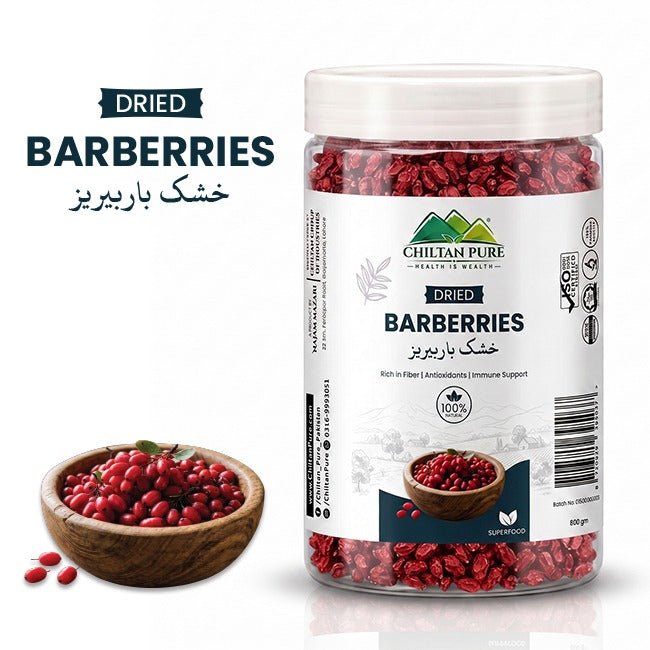
Dried Barberries
2
sold in last
8
hours
Prime Fast Delivery
|
- Rs. 2,599
Rs. 2,884- Rs. 2,599
- Unit price
- / per
Pay in 3 Installments of
Rs. 866
10 customers are viewing this product


Need More Discount ~ Chat with Sales Person! BARGAIN NOW
CHILTAN PURE Dried Barberries offer a distinctive tart and tangy fruit flavor in a convenient dried form. They are widely used in rice dishes, salads, sauces, baking, desserts, trail mixes, and other sweet and savory recipes.
Product Information
| Product Detail | Information |
|---|---|
| Product Name | Dried Barberries |
| Common Name | Barberry, Zereshk |
| Botanical Name | Berberis vulgaris |
| Plant Family | Berberidaceae |
| Plant Part | Fruit |
| Form | Dried Fruit |
| Taste | Tart, tangy, fruity |
| Texture | Soft / chewy* |
| Category | Dried Fruit / Food |
| Origin | As stated on product packaging |
| Storage | Cool, dry place |
*Texture may vary depending on the drying and processing method.
What Are Dried Barberries?
Dried barberries are the small dried fruits of barberry plants, commonly associated with Berberis vulgaris. Barberries are known for their bright red color and naturally sharp, tart flavor.
They are particularly popular in Persian, Middle Eastern, Central Asian, and South Asian-inspired cuisine, where their tangy character is used to add contrast and flavor to rice dishes, salads, sauces, and other recipes.
The drying process removes much of the fruit's moisture and creates a convenient ingredient with a more concentrated fruity and tart flavor.
Key Features
-
Made from barberry fruit
-
Commonly associated with Berberis vulgaris
-
Naturally tart and tangy flavor
-
Distinctive fruity character
-
Convenient dried fruit format
-
Suitable for sweet and savory recipes
-
Great for rice dishes and salads
-
Easy to add to everyday cooking
Common Uses
Dried barberries are a versatile ingredient for many recipes:
-
Persian-style rice dishes
-
Pilaf and pulao
-
Biryani-style recipes
-
Salads
-
Couscous and grain bowls
-
Stuffed vegetables
-
Sauces and chutneys
-
Homemade trail mixes
-
Yogurt toppings
-
Breakfast bowls
-
Cookies and baked goods
-
Cakes and desserts
-
Fruit and nut blends
-
Savory meat and poultry dishes
How to Use
Dried barberries can be used directly in recipes. For a softer texture, they can be briefly soaked in water before cooking.
Try them:
-
Mixed into rice or pulao
-
Added to biryani-style dishes
-
Sprinkled over salads
-
Mixed into grain bowls
-
Added to yogurt
-
Combined with nuts and dried fruits
-
Used in sauces and chutneys
-
Added to baked goods
-
Used as a dessert topping
-
Included in homemade trail mixes
If the packaging provides specific preparation or serving instructions, follow those instructions.
Taste & Texture
Dried barberries are naturally tart, tangy, and fruity. Their sharp flavor provides a pleasant contrast to richer, sweeter, or savory ingredients.
Depending on the processing method, they may have a soft, slightly chewy texture. Soaking can make them softer and easier to incorporate into certain dishes.
Nutritional Information
Barberries naturally contain dietary fiber and various naturally occurring plant compounds. Their deep red color is associated with naturally occurring pigments and polyphenolic compounds.
As with other dried fruits, removing water concentrates the fruit's naturally occurring sugars and other components by weight compared with fresh fruit.
Exact calories, sugars, fiber, vitamins, minerals, and other nutritional values depend on the product and processing method. Refer to the nutrition panel on the packaging for precise information.
Important Information
Dried barberry products can differ in variety, drying method, and processing.
Some commercial products may contain added sugar, oil, preservatives, or other ingredients. Always check the ingredient list to confirm the exact formulation.
Natural variations in fruit size, color, tartness, and texture may occur between batches.
Allergy Information
People with known fruit allergies or food sensitivities should check the complete ingredient and allergen information before consumption.
If the product is processed or packed in a facility handling nuts, dairy, gluten, soy, or other allergens, check the packaging for applicable cross-contact information.
Storage Instructions
-
Store in a cool, dry place.
-
Keep away from direct sunlight and excessive heat.
-
Keep the package tightly sealed after opening.
-
Protect from moisture.
-
Use a clean, dry utensil when handling if applicable.
-
Follow any additional storage instructions printed on the packaging.
Why Choose CHILTAN PURE Dried Barberries?
CHILTAN PURE Dried Barberries offer a convenient way to add a naturally tart and fruity flavor to everyday meals and snacks.
Their versatility makes them particularly useful in rice dishes, salads, grain bowls, sauces, desserts, baking, yogurt, and homemade snack mixes. They can also be soaked briefly when a softer texture is preferred.
Dried Barberries vs. Fresh Barberries
| Feature | Dried Barberries | Fresh Barberries |
|---|---|---|
| Format | Dried fruit | Fresh fruit |
| Water Content | Lower | High |
| Texture | Soft / chewy* | Juicy and firm |
| Flavor | More concentrated | Fresh and tart |
| Convenience | Easy to store | More delicate |
| Uses | Rice, salads, baking, snacks | Cooking and fresh recipes |
*Texture depends on the drying method.
Frequently Asked Questions
1. What are dried barberries?
Dried barberries are barberry fruits that have had much of their natural moisture removed through a drying process.
2. What is the botanical name of barberry?
Barberry is commonly associated with Berberis vulgaris, although other Berberis species are also used in different regions.
3. What family does barberry belong to?
Berberis vulgaris belongs to the Berberidaceae family.
4. What do dried barberries taste like?
They have a naturally tart, tangy, sharp, and fruity flavor.
5. Are dried barberries ready to eat?
They can generally be eaten directly or incorporated into recipes unless the packaging provides different instructions.
6. What is Zereshk?
Zereshk is the Persian name commonly used for dried barberries, particularly those used in Persian cuisine.
7. Can dried barberries be used in rice?
Yes. They are especially popular as a tangy addition to Persian-style rice, pilaf, pulao, and similar grain dishes.
8. Can dried barberries be used in biryani?
Yes. They can be used as a flavorful garnish or mixed into certain biryani-style rice recipes.
9. Can I add dried barberries to salads?
Yes. Their tart flavor can provide contrast to fresh vegetables, grains, nuts, and creamy dressings.
10. Can dried barberries be added to yogurt?
Yes. They can be sprinkled over yogurt or combined with granola, nuts, and other dried fruits.
Related Products
Example product title
- Rs. 2,599
Rs. 2,884- Rs. 2,599
- Unit price
- / per
Example product title
- Rs. 2,599
Rs. 2,884- Rs. 2,599
- Unit price
- / per
Example product title
- Rs. 2,599
Rs. 2,884- Rs. 2,599
- Unit price
- / per
Example product title
- Rs. 2,599
Rs. 2,884- Rs. 2,599
- Unit price
- / per
Example product title
- Rs. 2,599
Rs. 2,884- Rs. 2,599
- Unit price
- / per
Example product title
- Rs. 2,599
Rs. 2,884- Rs. 2,599
- Unit price
- / per
Example product title
- Rs. 2,599
Rs. 2,884- Rs. 2,599
- Unit price
- / per
Example product title
- Rs. 2,599
Rs. 2,884- Rs. 2,599
- Unit price
- / per
Example product title
- Rs. 2,599
Rs. 2,884- Rs. 2,599
- Unit price
- / per
Example product title
- Rs. 2,599
Rs. 2,884- Rs. 2,599
- Unit price
- / per
Recently Viewed Products
Example product title
- Rs. 2,599
Rs. 2,884- Rs. 2,599
- Unit price
- / per
Example product title
- Rs. 2,599
Rs. 2,884- Rs. 2,599
- Unit price
- / per
Example product title
- Rs. 2,599
Rs. 2,884- Rs. 2,599
- Unit price
- / per
Example product title
- Rs. 2,599
Rs. 2,884- Rs. 2,599
- Unit price
- / per
Example product title
- Rs. 2,599
Rs. 2,884- Rs. 2,599
- Unit price
- / per
Example product title
- Rs. 2,599
Rs. 2,884- Rs. 2,599
- Unit price
- / per
Example product title
- Rs. 2,599
Rs. 2,884- Rs. 2,599
- Unit price
- / per
Example product title
- Rs. 2,599
Rs. 2,884- Rs. 2,599
- Unit price
- / per
Example product title
- Rs. 2,599
Rs. 2,884- Rs. 2,599
- Unit price
- / per
Example product title
- Rs. 2,599
Rs. 2,884- Rs. 2,599
- Unit price
- / per
- Choosing a selection results in a full page refresh.