DOWNLOAD our App & Get Amazing Discount
Download Now
Popular Products


Pait Safai Powder (پیٹ صفائی) 200g | Akseer-e-Maida | Price in Pakistan | CHILTAN PURE
60 reviews
Prime Fast Delivery
Made with 100% Organic Herbs
Relieves constipation acidity
Bloating and other gastrointestinal issues
Safe to be used by the whole family
Gross Weight 260Grm
Net Weight 200Grm
- Rs. 999
Rs. 1,110- Rs. 999
- Unit price
- / per


Activated Charcoal Teeth Whitening Powder 50ml | CHILTAN PURE
103 reviews
Prime Fast Delivery
Good For Smokers
Protects Gums
Whitens Teeth Naturally
Prevents from Permanent Staining
Removes Toxins from Mouth
Eliminates Bad Breath
Kills Cavity causing Bacteria
Removes Plaque Build up
50ml
- Rs. 999
Rs. 1,110- Rs. 999
- Unit price
- / per


Red Onion Oil for Hair 200ml | Price in Pakistan | CHILTAN PURE
122 reviews
Prime Fast Delivery
Nourishes Scalp
Prevents Greying
Boosts Hair Growth
Adds Strength & shine
Wards off Dandruff
Rich in Sulphur
Prevents Split-Ends
Used as a Natural Conditioner
200ml
- Rs. 1,099
Rs. 1,220- Rs. 1,099
- Unit price
- / per


Red Onion Shampoo | Sulfate-Free Hair Care | 260ml & 500ml
110 reviews
Prime Fast Delivery
Naturally Low Foaming [SLS FREE]
Boosts Hair Growth
Lessen Dandruff
Reduce Split Ends
Makes Hair Strong
Strengthen Hair Follicles
Calms Itchy & Dry Scalp
Prevent Premature Hair Greying
260ml
500ml
- From Rs. 890
Rs. 1,600- From Rs. 890
- Unit price
- / per


Pinkish Lips & Cheek Tint (گلابی ٹِنٹ) - Organic Liquid stain for lips, Nourish Lips & Hydrate lips all day
112 reviews
Prime Fast Delivery
Rosy-Pink Tint
Long-Lasting
24/7 Stay
Lip Moisturizing
Sheer & Buildablel
Natural-Look
Smudge-Proof
Give Your Face a Fresh Look
Brightens Lips & Cheeks With a Cheery Pop Of Color
30ml
- Rs. 599
Rs. 666- Rs. 599
- Unit price
- / per


Henna Hair & Beard Dye (Chocolate & Coffee) | 200g | CHILTAN PURE
62 reviews
Prime Fast Delivery
Strengthens Hair
Repairs Split Ends
Restricts Hair Fall
Stress Reliever
Improves Scalp Health
Balances pH & Oil Production
Prevents Premature Hair Greying
200gm
- Rs. 799
Rs. 890- Rs. 799
- Unit price
- / per


Vitamin C Serum 30ml | CHILTAN PURE
114 reviews
Helps skin look fresh and radiantSupports a smoother-looking skin textureHelps maintain skin hydrationDesigned for a simple, radiance-focused skincare routine30 ml
- Rs. 750
Rs. 1,220- Rs. 750
- Unit price
- / per


CHILTAN PURE Mix Seeds – Pumpkin, Flax, Sesame & Sunflower Seeds | 200g & 750g
68 reviews
Prime Fast Delivery
Right Fuel for Health
Good Source Of Fiber
Lower Cholesterol
Relieves Diarrhea
Nutritious Source of Plant Protein
Help Lower Blood Pressure
Support Healthy Bones
Reduce Inflammation
Aid Blood Cell Formation
Small200g
Large750g
- From Rs. 699
Rs. 1,350- From Rs. 699
- Unit price
- / per


CHILTAN PURE Glow Facial Kit – 6-Step Professional Facial at Home
294 reviews
Prime Fast Delivery
Step 1,Glow Facial Cleanser
Step 2,Glow Facial Scrub
Step 3,Glow Facial Massaging Cream
Step 4,Glow Skin Polisher
Step 5,Glow Facial Mud Mask
Step 6,Glow Facial Serum
- Rs. 4,599
Rs. 5,090- Rs. 4,599
- Unit price
- / per

-10%
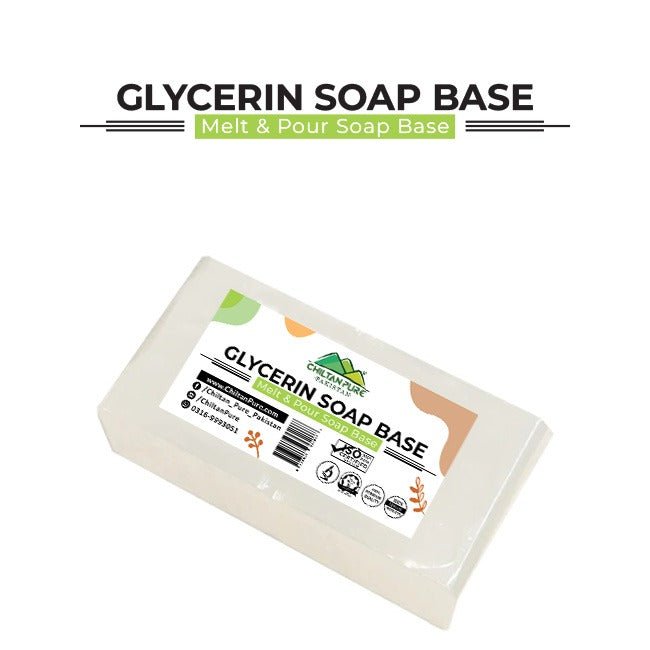
Glycerin Soap Base Price in Pakistan | Melt & Pour Soap Base – CHILTAN PURE
2
sold in last
8
hours
Pre-formulated melt-and-pour soap base for handmade soap projects. Cut into small pieces, melt gently, pour into clean moulds and allow to set. Use only compatible cosmetic-grade additives and follow the supplier’s instructions.
- Rs. 450
Rs. 499- Rs. 450
- Unit price
- / per
Pay in 3 Installments of
Rs. 150
Tags:
/
999
/
Discounted Products
/
Ingredients
/
NEW ARRIVAL
/
SKIN CARE
/
Soaps
/
Top Products
/
Top Seller
10 customers are viewing this product


Need More Discount ~ Chat with Sales Person! BARGAIN NOW
Glycerin Soap Base Price in Pakistan – CHILTAN PURE
Looking for a glycerin soap base in Pakistan for handmade soap, skincare product development, or a small soap-making business? CHILTAN PURE Glycerin Soap Base is a ready-to-melt foundation designed for melt-and-pour soap projects. Cut it into small pieces, melt gently, customise with suitable cosmetic-grade colours or fragrances, pour into a mould, and allow it to set.
This guide explains what glycerin soap base is, how to use it, project ideas, formulation tips, storage, precautions, and answers to common questions. Please check the selected pack size and current price on this page before ordering. Product-specific ingredient composition and technical values should be confirmed against the supplier's current specification or Certificate of Analysis (CoA); do not assume every glycerin base has the same formula.
What Is Glycerin Soap Base?
Glycerin soap base is a pre-formulated soap material used to make bars without carrying out the full soap-making reaction from scratch. It is commonly sold as a solid block and used in the melt-and-pour method. Glycerin is a humectant, meaning it can attract and hold water at the skin's surface; the finished soap's feel and performance also depend on the complete formula, cleansing agents, fragrance, additives, and how the bar is used.
Unlike traditional cold-process soap making, melt-and-pour soap making normally does not require the maker to handle raw sodium hydroxide during the customisation step, and the finished bars do not need the same multi-week curing period. The base must still be heated carefully and handled hygienically.
Key Features and Benefits
- Convenient soap making: A pre-made base simplifies the process for hobbyists and experienced makers.
- Customisable appearance: Make simple bars, coloured bars, layered designs, embeds, and shaped soaps using suitable moulds and cosmetic colourants.
- Fragrance options: Compatible fragrance or essential oils may be used only at levels supported by the base supplier and the fragrance's safety documentation.
- Creative product development: Experiment with carefully selected cosmetic-grade powders, clays, or exfoliants after checking compatibility.
- Small-batch production: Useful for testing concepts, creating gift bars, and developing handmade soap ranges.
- Convenient setting: Melt-and-pour bars generally solidify as they cool and usually do not require a long cold-process curing period.
Important: A glycerin soap base is a cleansing ingredient, not a treatment for acne, eczema, pigmentation, infection, or other medical conditions. Results and skin tolerance vary by formula and individual.
Common Uses of Glycerin Soap Base
1. Handmade bath and body soap
Use the base to make everyday rinse-off cleansing bars. Choose additives suitable for skin contact and keep the final formula balanced so the bar remains firm and lathers as intended.
2. Transparent and decorative soaps
Where the supplied base is transparent, it can be used for clear-looking bars, layered colours, embeds, and gift soaps. Excess colour, powders, oils, or air bubbles may reduce clarity.
3. Gift, event, and shaped soaps
Pour into clean silicone moulds to create themed shapes for gifts, events, guest bathrooms, or handmade product collections. Use only safe, purpose-made soap decorations; do not embed objects that could be a choking hazard or injure the user.
4. Exfoliating soap concepts
Fine, skin-appropriate exfoliating materials may be considered for a rinse-off bar. Avoid sharp, rough, contaminated, or overly abrasive particles, especially for facial use. Test whether the particles remain evenly dispersed and whether the finished bar is comfortable to use.
5. Small-business prototyping
Soap makers can use melt-and-pour base to test shapes, fragrance profiles, colour combinations, packaging, and customer feedback before scaling up. For commercial sale, validate the final formula, label, claims, stability, and applicable local requirements.
How to Use Glycerin Soap Base – Step-by-Step
- Prepare your workspace: Clean and dry the work surface, tools, moulds, and heat-safe container. Wash hands and keep water out of the unmelted base.
- Cut the base: Cut it into small, similar-sized cubes so it melts more evenly.
- Melt gently: Use a double boiler or short microwave bursts in a microwave-safe container. Stir slowly between intervals. Follow the supplier's recommended temperature; avoid boiling or overheating.
- Allow it to cool slightly: When fully melted, let the base cool to the recommended addition temperature before adding compatible fragrance or colour. This can help reduce fragrance loss and air bubbles.
- Add approved additives carefully: Weigh additions accurately. Follow the base manufacturer's limits and the fragrance supplier's usage guidance. Too much oil, water, powder, or fragrance can soften the bar, reduce lather, affect clarity, or cause separation.
- Pour into moulds: Pour slowly into clean, dry moulds. Tap gently to release trapped air. If using a surface alcohol spray, use only an appropriate product with ventilation and away from heat or flame.
- Let it set: Leave undisturbed until completely firm. Setting time depends on bar size, room temperature, and the specific base.
- Unmould and wrap: Remove carefully and wrap promptly in suitable airtight packaging to help reduce moisture droplets (“glycerin dew”), especially in humid weather.
- Check before use or sale: Inspect appearance, smell, texture, and packaging. For commercial products, conduct suitable quality and stability checks.
Formulation and Customisation Ideas
Simple coloured soap
Start with the base alone, then add a small, measured amount of soap-compatible cosmetic colourant. Mix gently and record the amount so the result can be reproduced. Check the colourant supplier's permitted applications.
Fragranced soap bar
Select a fragrance or essential oil specifically suitable for rinse-off soap. Use the lower of the base manufacturer's maximum and the fragrance supplier's applicable safety limit. Do not assume that a fragrance safe for a candle or diffuser is safe for skin.
Botanical or exfoliating bar
Consider compatible cosmetic-grade clay or a finely milled, skin-suitable exfoliant. Add gradually and test dispersion, bar hardness, lather, and user comfort. Fresh fruit, fresh herbs, milk, juice, and other perishable or water-rich ingredients can introduce instability or microbial risk and should not be added casually.
Layered or embedded soap
Pour one layer, allow it to become firm enough to support the next, and follow a tested method to help layers bond. Keep later pours cool enough not to remelt the layer below, while still fluid enough to pour. Test the process on a small batch first.
These are concept ideas, not validated commercial recipes. Confirm each ingredient's suitability and use level before making a product for sale.
Technical Information
Glycerin soap base is a multi-ingredient mixture, so its technical profile varies by manufacturer and grade. The table below distinguishes general guidance from values that must be confirmed for this specific batch.
| Property | Information |
|---|---|
| Product type | Pre-formulated melt-and-pour soap base |
| Physical form | Typically a solid block; confirm the supplied grade and appearance |
| INCI / ingredient list | Use the current supplier specification and actual batch documentation |
| pH | Formula- and test-method-dependent; request the supplier's specification |
| Recommended melting range | Follow the supplier's instructions; heat gently and do not boil |
| Additive level | Depends on the base, additive, and safety documentation; no universal percentage applies |
| CAS number / molecular formula | Not applicable to the complete multi-component base as a single substance |
| Shelf life | Follow the batch label or supplier's documented shelf life |
| Storage | Keep tightly wrapped in a cool, dry place away from direct sunlight and excess humidity |
Do not use a generic ingredient list, pH, melting temperature, glycerin percentage, or shelf-life estimate as a confirmed specification for this product unless it has been verified by CHILTAN PURE's supplier or batch documentation.
Precautions and Safety
- For external use in soap making only. Do not ingest and do not use as a leave-on skincare product.
- Avoid contact with eyes. If contact occurs, rinse thoroughly with clean water; seek medical advice if irritation continues.
- Hot melted base can cause burns. Use heat-resistant containers, suitable gloves where needed, and careful handling.
- Never heat the base in a sealed container, leave heating unattended, or allow it to scorch.
- Keep alcohol sprays and other flammable materials away from flames, sparks, hot elements, and smoking.
- Use cosmetic-grade additives with documented suitability for rinse-off products. Follow supplier limits and applicable fragrance-allergen guidance.
- Do not assume a custom bar is suitable for babies, children, highly sensitive skin, or a medical skin condition. Avoid unnecessary fragrance and test the final product appropriately.
- Stop using a finished soap if it causes persistent irritation. Patch testing may help identify intolerance but does not replace a proper safety assessment.
- For commercial sale, maintain batch records and verify ingredient declarations, product claims, stability, and applicable Pakistani regulatory and labelling requirements.
Storage and Troubleshooting
Why do water droplets appear on the soap?
Glycerin and other humectants can attract moisture from humid air. This is often called glycerin dew. Wrap cooled bars promptly in moisture-resistant packaging and store them in a cool, dry place.
Why is my soap cloudy?
Possible causes include overheating, vigorous stirring, incompatible additives, excess powders or oils, or air trapped during pouring. Melt gently, stir slowly, and test additions in small batches.
Why is the bar soft or sweating?
Too much added liquid, oil, or fragrance, high humidity, or unsuitable storage can affect firmness and surface appearance. Reduce unnecessary additives and follow the base supplier's limits.
Why are there bubbles on top?
Air can become trapped during mixing or pouring. Stir slowly, pour carefully, and use a suitable surface treatment only if recommended for the process and handled safely.
Frequently Asked Questions (FAQs)
What is glycerin soap base used for?
It is commonly used to make handmade cleansing bars, transparent or coloured soaps, layered designs, shaped gift soaps, and small-batch soap prototypes.
Is glycerin soap base ready to use?
It is a pre-formulated base intended to be melted and moulded. It is not generally used straight from the block as a finished bar; follow the supplier's instructions for processing.
Do I need to add sodium hydroxide?
For a standard melt-and-pour project, you normally use the supplied pre-made base without adding raw sodium hydroxide. Do not add lye to this base as a shortcut or without a separately validated formulation.
How much fragrance can I add?
There is no single safe percentage for every fragrance and base. Follow the base manufacturer's limit and the fragrance supplier's safety documentation for rinse-off soap, using the stricter limit.
Can I add essential oils?
Only if the specific essential oil is suitable for rinse-off skin products and is used within its documented safety limit. Natural origin does not automatically mean an ingredient is non-irritating or safe at any amount.
Can I add ordinary food colour or craft glitter?
Do not assume food colours, craft pigments, or decorative glitter are suitable for soap used on skin. Choose ingredients explicitly suitable for cosmetic soap applications and check local requirements.
Can I add fresh fruit, milk, juice, or fresh herbs?
These ingredients can introduce water, spoilage, discolouration, or microbial concerns. Prefer suitable stable cosmetic-grade ingredients and validate the finished formula rather than adding fresh materials without testing.
Can I use this base on my face?
Suitability depends on the base's complete formula and your skin's tolerance. Soap is generally alkaline, and some people find it drying or irritating on facial skin. Avoid the eye area and discontinue use if irritation occurs.
Is it suitable for sensitive skin?
Not automatically. Fragrance, surfactants, colourants, and other ingredients can affect tolerance. Review the ingredient list and test the finished product carefully; seek professional advice for persistent skin problems.
Does glycerin soap base expire?
Use the shelf life and storage instructions supplied for the actual batch. Keep the base sealed and dry, and do not use it if its appearance or odour changes unexpectedly or the packaging is compromised.
How do I prevent glycerin dew?
Let the bar cool fully, then wrap it promptly in suitable moisture-resistant packaging and store it away from humid conditions.
Can I sell soaps made with this base?
Commercial use depends on the base's documentation, your finished formulation, local product and labelling requirements, and appropriate quality and safety checks. Confirm these before selling.
Which pack size should I choose?
Choose a smaller pack for initial trials and a larger pack for repeated production after you have tested your process. Confirm the pack size shown in the product selector before checkout.
Explore More from CHILTAN PURE
- Explore soap bases and soap-making ingredients
- Browse essential oils for suitable cosmetic projects
- Explore carrier oils and cosmetic oils
- Shop skincare products
- Find soap-making tools and moulds
Ready to create your next soap project? Select your preferred pack size above and review the product details before placing your order with CHILTAN PURE.
Related Products
Example product title
- From Rs. 450
Rs. 499- From Rs. 450
- Unit price
- / per
Example product title
- From Rs. 450
Rs. 499- From Rs. 450
- Unit price
- / per
Example product title
- From Rs. 450
Rs. 499- From Rs. 450
- Unit price
- / per
Example product title
- From Rs. 450
Rs. 499- From Rs. 450
- Unit price
- / per
Example product title
- From Rs. 450
Rs. 499- From Rs. 450
- Unit price
- / per
Example product title
- From Rs. 450
Rs. 499- From Rs. 450
- Unit price
- / per
Example product title
- From Rs. 450
Rs. 499- From Rs. 450
- Unit price
- / per
Example product title
- From Rs. 450
Rs. 499- From Rs. 450
- Unit price
- / per
Example product title
- From Rs. 450
Rs. 499- From Rs. 450
- Unit price
- / per
Example product title
- From Rs. 450
Rs. 499- From Rs. 450
- Unit price
- / per
Recently Viewed Products
Example product title
- From Rs. 450
Rs. 499- From Rs. 450
- Unit price
- / per
Example product title
- From Rs. 450
Rs. 499- From Rs. 450
- Unit price
- / per
Example product title
- From Rs. 450
Rs. 499- From Rs. 450
- Unit price
- / per
Example product title
- From Rs. 450
Rs. 499- From Rs. 450
- Unit price
- / per
Example product title
- From Rs. 450
Rs. 499- From Rs. 450
- Unit price
- / per
Example product title
- From Rs. 450
Rs. 499- From Rs. 450
- Unit price
- / per
Example product title
- From Rs. 450
Rs. 499- From Rs. 450
- Unit price
- / per
Example product title
- From Rs. 450
Rs. 499- From Rs. 450
- Unit price
- / per
Example product title
- From Rs. 450
Rs. 499- From Rs. 450
- Unit price
- / per
Example product title
- From Rs. 450
Rs. 499- From Rs. 450
- Unit price
- / per
- Choosing a selection results in a full page refresh.