DOWNLOAD our App & Get Amazing Discount
Download Now
Popular Products


Pait Safai Powder (پیٹ صفائی) 200g | Akseer-e-Maida | Price in Pakistan | CHILTAN PURE
60 reviews
Prime Fast Delivery
Made with 100% Organic Herbs
Relieves constipation acidity
Bloating and other gastrointestinal issues
Safe to be used by the whole family
Gross Weight 260Grm
Net Weight 200Grm
- Rs. 999
Rs. 1,110- Rs. 999
- Unit price
- / per


Activated Charcoal Teeth Whitening Powder 50ml | CHILTAN PURE
103 reviews
Prime Fast Delivery
Good For Smokers
Protects Gums
Whitens Teeth Naturally
Prevents from Permanent Staining
Removes Toxins from Mouth
Eliminates Bad Breath
Kills Cavity causing Bacteria
Removes Plaque Build up
50ml
- Rs. 999
Rs. 1,110- Rs. 999
- Unit price
- / per


Red Onion Oil for Hair 200ml | Price in Pakistan | CHILTAN PURE
121 reviews
Prime Fast Delivery
Nourishes Scalp
Prevents Greying
Boosts Hair Growth
Adds Strength & shine
Wards off Dandruff
Rich in Sulphur
Prevents Split-Ends
Used as a Natural Conditioner
200ml
- Rs. 1,099
Rs. 1,220- Rs. 1,099
- Unit price
- / per


Red Onion Shampoo | Sulfate-Free Hair Care | 260ml & 500ml
110 reviews
Prime Fast Delivery
Naturally Low Foaming [SLS FREE]
Boosts Hair Growth
Lessen Dandruff
Reduce Split Ends
Makes Hair Strong
Strengthen Hair Follicles
Calms Itchy & Dry Scalp
Prevent Premature Hair Greying
260ml
500ml
- From Rs. 890
Rs. 1,600- From Rs. 890
- Unit price
- / per


Pinkish Lips & Cheek Tint (گلابی ٹِنٹ) - Organic Liquid stain for lips, Nourish Lips & Hydrate lips all day
112 reviews
Prime Fast Delivery
Rosy-Pink Tint
Long-Lasting
24/7 Stay
Lip Moisturizing
Sheer & Buildablel
Natural-Look
Smudge-Proof
Give Your Face a Fresh Look
Brightens Lips & Cheeks With a Cheery Pop Of Color
30ml
- Rs. 599
Rs. 666- Rs. 599
- Unit price
- / per


Henna Hair & Beard Dye (Chocolate & Coffee) | 200g | CHILTAN PURE
62 reviews
Prime Fast Delivery
Strengthens Hair
Repairs Split Ends
Restricts Hair Fall
Stress Reliever
Improves Scalp Health
Balances pH & Oil Production
Prevents Premature Hair Greying
200gm
- Rs. 799
Rs. 890- Rs. 799
- Unit price
- / per


Vitamin C Serum 30ml | CHILTAN PURE
114 reviews
Helps skin look fresh and radiantSupports a smoother-looking skin textureHelps maintain skin hydrationDesigned for a simple, radiance-focused skincare routine30 ml
- Rs. 750
Rs. 1,220- Rs. 750
- Unit price
- / per


CHILTAN PURE Mix Seeds – Pumpkin, Flax, Sesame & Sunflower Seeds | 200g & 750g
68 reviews
Prime Fast Delivery
Right Fuel for Health
Good Source Of Fiber
Lower Cholesterol
Relieves Diarrhea
Nutritious Source of Plant Protein
Help Lower Blood Pressure
Support Healthy Bones
Reduce Inflammation
Aid Blood Cell Formation
Small200g
Large750g
- From Rs. 699
Rs. 1,350- From Rs. 699
- Unit price
- / per


CHILTAN PURE Glow Facial Kit – 6-Step Professional Facial at Home
294 reviews
Prime Fast Delivery
Step 1,Glow Facial Cleanser
Step 2,Glow Facial Scrub
Step 3,Glow Facial Massaging Cream
Step 4,Glow Skin Polisher
Step 5,Glow Facial Mud Mask
Step 6,Glow Facial Serum
- Rs. 4,599
Rs. 5,090- Rs. 4,599
- Unit price
- / per

-10%
Khurood
2
sold in last
8
hours
Prime Fast Delivery
|
- Rs. 1,190
Rs. 1,329- Rs. 1,190
- Unit price
- / per
Pay in 3 Installments of
Rs. 397
10 customers are viewing this product


Need More Discount ~ Chat with Sales Person! BARGAIN NOW
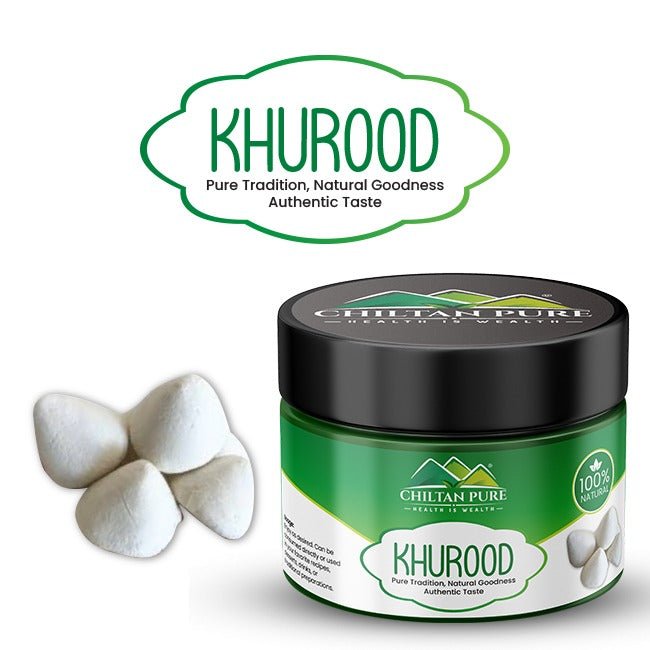
CHILTAN PURE Khurood is a traditional dried, salty yogurt product — also known as qurut across Afghanistan and parts of Iran — made by straining and drying yogurt until it forms a hard, tangy, nutrient-dense block or ball. A staple of Baloch, Afghan, and Central Asian households for generations, khurood was traditionally developed as a way to preserve milk's nourishment through long winters and journeys, without refrigeration. CHILTAN PURE brings this authentic, time-tested product to your kitchen in its traditional form — intensely tangy, satisfyingly salty, and ready to be rehydrated into sauces, soups, and dips the way it has been prepared for generations.
What is Khurood (Qurut)?
Khurood, known as qurut in Afghanistan and parts of Iran and Central Asia, is a traditional dried dairy product made by straining yogurt of its liquid whey and then drying the resulting solid mass — often shaped into balls or hard blocks — until it becomes shelf-stable for long periods without refrigeration.
History of Khurood
Khurood has been made for centuries across Balochistan, Afghanistan, and parts of Iran and Central Asia, in regions where pastoral and semi-nomadic communities needed reliable ways to preserve the nutritional value of milk and yogurt without access to refrigeration. By straining yogurt to remove moisture and then drying it thoroughly under the sun, communities created a dense, salty, long-lasting food that could be carried on long journeys, stored through harsh winters, and rehydrated as needed to bring warmth and nourishment to daily meals. This practice reflects a broader tradition found throughout Central and South Asia of transforming dairy into durable, portable forms — khurood remains an essential pantry staple in many Baloch and Afghan households today, valued as much for its deep, tangy flavor as for its practicality.
How Khurood Is Made
The traditional production of khurood typically involves:
- Straining fresh yogurt through cloth to separate the solids from the liquid whey
- Salting the strained yogurt solids to season and aid preservation
- Shaping the mixture into balls or blocks by hand
- Sun-drying the shaped yogurt over several days until firm and fully dehydrated
- Storing the dried khurood in a cool, dry place, where it can keep for extended periods
Traditional Ingredients
Khurood is traditionally made from just two ingredients — yogurt and salt — reflecting the simplicity and resourcefulness of pastoral food preservation traditions. This minimal ingredient list is part of what has kept khurood a trusted, authentic staple across generations.
Modern Production
Today's khurood is still largely produced using traditional straining and drying methods, with attention to consistent salt levels and thorough drying to ensure a long shelf life and reliable quality across batches.
Uses Around the World
Khurood, or qurut, is used extensively across Afghan, Baloch, Iranian, and broader Central Asian cooking — rehydrated into sauces for dishes like Afghan "kofta qurma," used as a tangy base for dips, stirred into soups for added richness, or crumbled directly over rice and meat dishes.
Popularity in Pakistan
Khurood holds a cherished, deeply traditional place in Baloch cuisine and households across Balochistan, where it has been prepared and passed down through generations as both a practical preserved food and a beloved flavor. CHILTAN PURE Khurood brings this authentic regional staple to a wider audience, preserving the traditional preparation while making it more accessible.
What is CHILTAN PURE Khurood?
Traditionally Strained Yogurt — Yogurt strained of its whey to concentrate its solids and flavor.
Naturally Salted — Seasoned with salt as part of the traditional preservation process.
Sun-Dried for Preservation — Dried thoroughly using traditional methods for a long, stable shelf life without refrigeration.
Rooted in Baloch and Afghan Tradition — Reflects a preservation and cooking practice passed down through generations across the region.
Why Choose CHILTAN PURE Khurood?
Authentic Traditional Preparation — Made using the same straining and drying methods relied upon for generations.
Simple, Honest Ingredients — Made from just yogurt and salt — nothing else added.
Nutrient-Dense — Concentrated from yogurt, retaining much of its natural nutritional value in a compact, shelf-stable form.
Long Shelf Life Without Refrigeration — A practical pantry staple that doesn't require cold storage until rehydrated.
Deep, Authentic Tang — Delivers the distinctive salty-sour flavor that defines genuine khurood.
Versatile in the Kitchen — Works rehydrated into sauces, soups, and dips, or used as a flavoring ingredient in various traditional dishes.
Consistent Quality — Every batch is prepared to the same traditional standard.
Trusted Regional Staple — A dependable, authentic product for households that value traditional Baloch and Afghan cooking.
Key Features
- Made from just two ingredients — yogurt and salt
- Prepared using traditional straining and sun-drying methods
- No artificial preservatives or additives
- Long shelf life without refrigeration
- Delivers an authentic, deeply tangy flavor
- Nutrient-dense, concentrated form of yogurt
- Rooted in generations of Baloch and Afghan tradition
- Versatile for use in sauces, soups, and dips
- Suitable for traditional dishes like kofta qurma
- A practical, portable food with a long history
Ingredients
Yogurt — Fresh yogurt, traditionally strained to remove excess whey and concentrate its solids and flavor.
Salt — Added during preparation both for seasoning and to aid in the traditional preservation process.
Taste Profile
Tanginess — A pronounced, sour tang — the defining character of properly made khurood, more intense than fresh yogurt. Saltiness — A distinct saltiness woven throughout, balancing the sourness. Richness — A concentrated dairy richness that comes through even after rehydration. Umami — A subtle savory depth that develops through the drying and fermentation process. Aroma — A strong, characteristic fermented dairy aroma, typical of traditional dried yogurt products. Texture (Dried) — Hard, dense, and firm in its dried form, requiring soaking or rehydration before most culinary uses. Texture (Rehydrated) — A thick, creamy, tangy paste or sauce once softened with water. Color — An off-white to pale cream color, typical of dried yogurt.
Nutritional Information
Calories — Moderate, reflecting its concentrated dairy content. Protein — A notable source of protein, concentrated through the straining and drying process. Fat — Contains fat naturally present in the yogurt used, varying depending on the milk source. Carbohydrates — Contains a modest amount of natural carbohydrates from the dairy base. Sugars — Contains natural milk sugars (lactose), reduced somewhat through fermentation and straining. Calcium — Naturally rich in calcium, consistent with its concentrated dairy origin. Sodium — Notably higher than fresh yogurt due to the salt used in traditional preparation — use in moderation as part of a balanced diet.
Best Ways to Enjoy CHILTAN PURE Khurood
- Rehydrated into Traditional Afghan Kofta Qurma Sauce
- Used as a Tangy Base for Dips
- Crumbled Over Rice Dishes
- Stirred into Hearty Winter Soups
- Mixed into Yogurt-Based Sauces for Kebabs
- Used to Add Tang to Lentil Stews
- Rehydrated and Served with Flatbread
- Crumbled Over Grilled Meats
- Used as a Base for a Savory Dip with Herbs
- Added to Traditional Baloch Rice Dishes
Recipe Ideas
1. Traditional Khurood Sauce (Qurut Sauce)
- Ingredients: 1 block CHILTAN PURE Khurood, 1.5 cups warm water, 1 clove garlic (minced), fresh coriander (chopped)
- Instructions: Break khurood into pieces, soak in warm water for 15-20 minutes until softened, whisk until smooth, then stir in garlic and coriander before serving alongside rice or meat dishes.
- Prep Time: 20 minutes | Cook Time: 0 minutes | Serves: 4
2. Khurood Kofta Qurma-Style Sauce
- Ingredients: 500g meatballs (kofta), 1 block CHILTAN PURE Khurood (rehydrated), 1 onion (diced), 1 tsp turmeric
- Instructions: Cook meatballs in a pan until browned, prepare khurood sauce by soaking and whisking with water, pour over meatballs with sautéed onion and turmeric, and simmer 15-20 minutes.
- Prep Time: 15 minutes | Cook Time: 25 minutes | Serves: 4
3. Khurood Lentil Soup
- Ingredients: 1 cup lentils, 4 cups water, 1 block CHILTAN PURE Khurood (rehydrated), 1 onion (diced)
- Instructions: Cook lentils with onion until soft, about 25 minutes, then stir in rehydrated khurood and simmer 5 more minutes before serving.
- Prep Time: 10 minutes | Cook Time: 30 minutes | Serves: 4
4. Khurood Herb Dip
- Ingredients: 1 block CHILTAN PURE Khurood (rehydrated to a thick paste), 1 tbsp olive oil, fresh mint and coriander (chopped)
- Instructions: Rehydrate khurood to a thick, spreadable consistency, mix in olive oil and chopped herbs, then serve with warm flatbread.
- Prep Time: 15 minutes | Cook Time: 0 minutes | Serves: 4
5. Khurood Rice Topping
- Ingredients: 2 cups cooked rice, 1 block CHILTAN PURE Khurood (crumbled), 2 tbsp melted butter
- Instructions: Crumble a small amount of dried khurood directly over hot cooked rice, drizzle with melted butter, and mix gently before serving.
- Prep Time: 5 minutes | Cook Time: 0 minutes | Serves: 4
Frequently Asked Questions (FAQs)
Q1: What is CHILTAN PURE Khurood made from? It's made from just two traditional ingredients — strained yogurt and salt, dried using traditional methods.
Q2: How do I prepare khurood before using it in a recipe? Break it into pieces and soak in warm water for 15-20 minutes until softened, then whisk until smooth before using in sauces, soups, or dips.
Q3: Does khurood need to be refrigerated? In its dried form, it's shelf-stable and doesn't require refrigeration; however, once rehydrated, any leftover prepared sauce should be refrigerated and used promptly.
Q4: Is khurood very salty? Yes, salt is a key part of the traditional preservation process, so khurood is naturally quite salty — this should be accounted for when seasoning dishes made with it.
Q5: What dishes is khurood traditionally used in? It's traditionally used in dishes like Afghan kofta qurma, rehydrated into sauces and dips, crumbled over rice, and stirred into soups and stews.
Q6: How should I store CHILTAN PURE Khurood? Store in a cool, dry place in its dried form; it has a long shelf life due to the traditional drying and salting process.
Q7: Is khurood similar to other dried dairy products? Yes, it's related to similar traditional products found across Central Asia and the Middle East, such as kashk in Iran, though preparation and regional character can vary.
Related Products
Example product title
- Rs. 1,190
Rs. 1,329- Rs. 1,190
- Unit price
- / per
Example product title
- Rs. 1,190
Rs. 1,329- Rs. 1,190
- Unit price
- / per
Example product title
- Rs. 1,190
Rs. 1,329- Rs. 1,190
- Unit price
- / per
Example product title
- Rs. 1,190
Rs. 1,329- Rs. 1,190
- Unit price
- / per
Example product title
- Rs. 1,190
Rs. 1,329- Rs. 1,190
- Unit price
- / per
Example product title
- Rs. 1,190
Rs. 1,329- Rs. 1,190
- Unit price
- / per
Example product title
- Rs. 1,190
Rs. 1,329- Rs. 1,190
- Unit price
- / per
Example product title
- Rs. 1,190
Rs. 1,329- Rs. 1,190
- Unit price
- / per
Example product title
- Rs. 1,190
Rs. 1,329- Rs. 1,190
- Unit price
- / per
Example product title
- Rs. 1,190
Rs. 1,329- Rs. 1,190
- Unit price
- / per
Recently Viewed Products
Example product title
- Rs. 1,190
Rs. 1,329- Rs. 1,190
- Unit price
- / per
Example product title
- Rs. 1,190
Rs. 1,329- Rs. 1,190
- Unit price
- / per
Example product title
- Rs. 1,190
Rs. 1,329- Rs. 1,190
- Unit price
- / per
Example product title
- Rs. 1,190
Rs. 1,329- Rs. 1,190
- Unit price
- / per
Example product title
- Rs. 1,190
Rs. 1,329- Rs. 1,190
- Unit price
- / per
Example product title
- Rs. 1,190
Rs. 1,329- Rs. 1,190
- Unit price
- / per
Example product title
- Rs. 1,190
Rs. 1,329- Rs. 1,190
- Unit price
- / per
Example product title
- Rs. 1,190
Rs. 1,329- Rs. 1,190
- Unit price
- / per
Example product title
- Rs. 1,190
Rs. 1,329- Rs. 1,190
- Unit price
- / per
Example product title
- Rs. 1,190
Rs. 1,329- Rs. 1,190
- Unit price
- / per
- Choosing a selection results in a full page refresh.