DOWNLOAD our App & Get Amazing Discount
Download Now
Popular Products


Pait Safai Powder (پیٹ صفائی) 200g | Akseer-e-Maida | Price in Pakistan | CHILTAN PURE
60 reviews
Prime Fast Delivery
Made with 100% Organic Herbs
Relieves constipation acidity
Bloating and other gastrointestinal issues
Safe to be used by the whole family
Gross Weight 260Grm
Net Weight 200Grm
- Rs. 999
Rs. 1,110- Rs. 999
- Unit price
- / per


Activated Charcoal Teeth Whitening Powder 50ml | CHILTAN PURE
103 reviews
Prime Fast Delivery
Good For Smokers
Protects Gums
Whitens Teeth Naturally
Prevents from Permanent Staining
Removes Toxins from Mouth
Eliminates Bad Breath
Kills Cavity causing Bacteria
Removes Plaque Build up
50ml
- Rs. 999
Rs. 1,110- Rs. 999
- Unit price
- / per


Red Onion Oil for Hair 200ml | Price in Pakistan | CHILTAN PURE
122 reviews
Prime Fast Delivery
Nourishes Scalp
Prevents Greying
Boosts Hair Growth
Adds Strength & shine
Wards off Dandruff
Rich in Sulphur
Prevents Split-Ends
Used as a Natural Conditioner
200ml
- Rs. 1,099
Rs. 1,220- Rs. 1,099
- Unit price
- / per


Red Onion Shampoo | Sulfate-Free Hair Care | 260ml & 500ml
110 reviews
Prime Fast Delivery
Naturally Low Foaming [SLS FREE]
Boosts Hair Growth
Lessen Dandruff
Reduce Split Ends
Makes Hair Strong
Strengthen Hair Follicles
Calms Itchy & Dry Scalp
Prevent Premature Hair Greying
260ml
500ml
- From Rs. 890
Rs. 1,600- From Rs. 890
- Unit price
- / per


Pinkish Lips & Cheek Tint (گلابی ٹِنٹ) - Organic Liquid stain for lips, Nourish Lips & Hydrate lips all day
112 reviews
Prime Fast Delivery
Rosy-Pink Tint
Long-Lasting
24/7 Stay
Lip Moisturizing
Sheer & Buildablel
Natural-Look
Smudge-Proof
Give Your Face a Fresh Look
Brightens Lips & Cheeks With a Cheery Pop Of Color
30ml
- Rs. 599
Rs. 666- Rs. 599
- Unit price
- / per


Henna Hair & Beard Dye (Chocolate & Coffee) | 200g | CHILTAN PURE
62 reviews
Prime Fast Delivery
Strengthens Hair
Repairs Split Ends
Restricts Hair Fall
Stress Reliever
Improves Scalp Health
Balances pH & Oil Production
Prevents Premature Hair Greying
200gm
- Rs. 799
Rs. 890- Rs. 799
- Unit price
- / per


Vitamin C Serum 30ml | CHILTAN PURE
114 reviews
Helps skin look fresh and radiantSupports a smoother-looking skin textureHelps maintain skin hydrationDesigned for a simple, radiance-focused skincare routine30 ml
- Rs. 750
Rs. 1,220- Rs. 750
- Unit price
- / per


CHILTAN PURE Mix Seeds – Pumpkin, Flax, Sesame & Sunflower Seeds | 200g & 750g
68 reviews
Prime Fast Delivery
Right Fuel for Health
Good Source Of Fiber
Lower Cholesterol
Relieves Diarrhea
Nutritious Source of Plant Protein
Help Lower Blood Pressure
Support Healthy Bones
Reduce Inflammation
Aid Blood Cell Formation
Small200g
Large750g
- From Rs. 699
Rs. 1,350- From Rs. 699
- Unit price
- / per


CHILTAN PURE Glow Facial Kit – 6-Step Professional Facial at Home
294 reviews
Prime Fast Delivery
Step 1,Glow Facial Cleanser
Step 2,Glow Facial Scrub
Step 3,Glow Facial Massaging Cream
Step 4,Glow Skin Polisher
Step 5,Glow Facial Mud Mask
Step 6,Glow Facial Serum
- Rs. 4,599
Rs. 5,090- Rs. 4,599
- Unit price
- / per

-10%
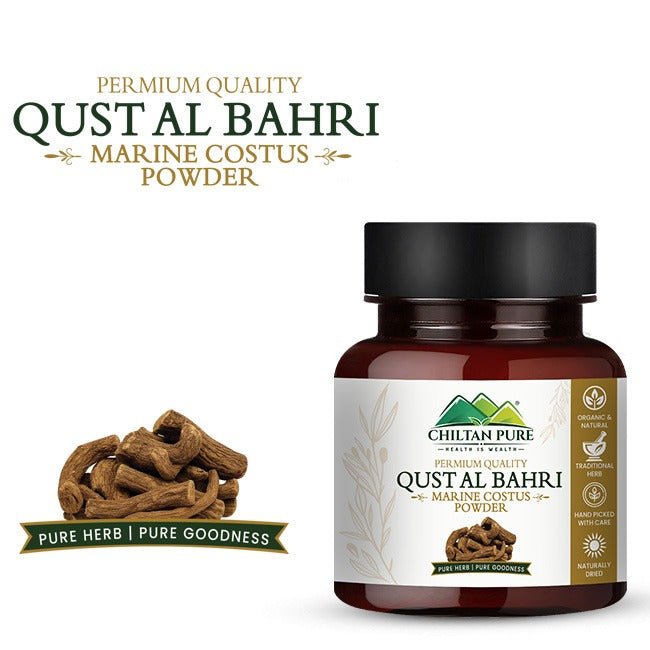
Qust Al Bahri / Marine Costus Powder
2
sold in last
8
hours
Prime Fast Delivery
|
- Rs. 1,499
Rs. 1,663- Rs. 1,499
- Unit price
- / per
Pay in 3 Installments of
Rs. 500
10 customers are viewing this product


Need More Discount ~ Chat with Sales Person! BARGAIN NOW
Qust Al Bahri Powder, also known as Marine Costus, Sea Costus, White Costus, or Qust-e-Shireen, is a finely ground traditional aromatic root powder. It is commonly associated with Saussurea lappa / Saussurea costus and is known for its light appearance, woody-earthy aroma, and naturally bitter to mildly sweet taste.
The powdered form is convenient for traditional herbal preparations, botanical blends, and other uses according to the product label.
Product Information
| Feature | Details |
|---|---|
| Product Name | Qust Al Bahri / Marine Costus Powder |
| Common Names | Qust Al Bahri, Marine Costus, Sea Costus, White Costus, Qust-e-Shireen |
| Traditional Name | Al-Qust Al-Bahri |
| Botanical Identity | Commonly associated with Saussurea lappa / Saussurea costus |
| Current Taxonomic Name | Dolomiaea costus is used in modern taxonomy |
| Plant Part | Root |
| Form | Fine Powder |
| Color | Pale beige to light brown |
| Aroma | Woody, earthy, aromatic |
| Taste | Bitter to mildly sweet |
| Product Type | Traditional Botanical Root Powder |
| Storage | Cool & Dry Place |
What Is Qust Al Bahri Powder?
Qust Al Bahri is a traditional name used for a light-colored variety of costus root. It is also commonly called Marine Costus, Sea Costus, White Costus, or Qust-e-Shireen. Some commercial references identify it with Saussurea lappa / Saussurea costus.
The root is naturally aromatic and has traditionally been valued in herbal and cultural practices. When dried and ground, it becomes a convenient powder that can be incorporated into selected traditional preparations.
Because common names and botanical classifications can vary between suppliers and regions, the exact botanical identity should always be checked against the product label or supplier specification.
Key Features
-
Finely ground traditional costus root
-
Commonly known as Marine Costus or Qust Al Bahri
-
Naturally aromatic and woody fragrance
-
Light-colored root powder
-
Convenient for traditional botanical preparations
-
Suitable for use according to product-label directions
-
No need to prepare or grind whole root pieces
Natural Appearance, Aroma & Taste
Qust Al Bahri Powder is generally lighter in color than products sold as Qust Al Hindi. Commercial descriptions commonly characterize Qust Al Bahri as pale or light-colored, with a woody, earthy aroma and a comparatively milder taste.
Natural variations in color, aroma, and texture may occur between batches.
Traditional Uses
Costus root has a long history in traditional herbal practices across South Asian, Middle Eastern, Ayurvedic, and Unani traditions.
Qust Al Bahri Powder may be used as an ingredient in:
-
Traditional herbal preparations
-
Botanical powder blends
-
Traditional decoctions
-
Herbal infusions
-
Honey-based traditional preparations
-
Selected cultural and aromatic preparations
These are traditional uses and should not be interpreted as proven medical benefits.
Qust Al Bahri vs Qust Al Hindi
| Feature | Qust Al Bahri | Qust Al Hindi |
|---|---|---|
| Common Description | Marine / White Costus | Indian Costus |
| Appearance | Generally lighter | Generally darker |
| Taste Profile | Generally milder | Generally more bitter |
| Aroma | Woody and aromatic | Stronger, earthy and aromatic |
| Common Botanical Association | Saussurea lappa / costus | Saussurea lappa / costus |
| Traditional Name | Qust Al Bahri / Qust-e-Shireen | Qust Al Hindi |
The distinction between these names can vary by region and supplier, so product labeling should be used for exact identification.
How to Use Qust Al Bahri Powder
Use according to the instructions provided on your product packaging.
For traditional preparations, the powder may be incorporated into a suitable recipe, botanical blend, infusion, or other preparation as directed.
Do not assume a serving size or dosage from the common name alone. If the packaging does not provide consumption instructions, consult a qualified herbal practitioner or healthcare professional before internal use.
Traditional Preparation Ideas
Depending on the product's intended use, Qust Al Bahri Powder may be incorporated into:
-
Herbal Infusions – Use only the quantity specified by the product instructions.
-
Traditional Powder Blends – Combine with other botanicals according to a trusted formulation.
-
Honey-Based Preparations – Only when the product is specifically intended for internal use.
-
Decoctions – Prepare according to an established traditional recipe and product directions.
-
Aromatic Blends – Use according to the intended non-food application.
Important Information
-
Qust Al Bahri is a traditional/common name and botanical naming can vary.
-
Saussurea lappa, Saussurea costus, and Dolomiaea costus may appear in different references for costus.
-
Always verify the exact botanical identity and intended use from the product label.
-
Traditional use does not establish that a product can treat, cure, or prevent a disease.
-
Do not use a non-food-grade powder for consumption.
-
Product color and aroma can naturally vary.
Precautions
-
Follow the recommended instructions on the product packaging.
-
If you are pregnant or breastfeeding, consult a qualified healthcare professional before internal use.
-
If you take prescription medicines or have an existing medical condition, seek professional advice before using concentrated herbal preparations.
-
Avoid use if you have a known sensitivity or allergy to costus or related botanical ingredients.
-
Keep powder away from the eyes and avoid inhaling loose powder.
-
Keep out of reach of children.
-
Stop use if an unwanted reaction occurs.
Storage Instructions
Store Qust Al Bahri Powder in a tightly sealed, airtight container.
Keep it in a cool, dry place away from:
-
Moisture
-
Direct sunlight
-
Excessive heat
-
Strong odors
-
Contamination
Always use a clean, dry spoon when handling the powder.
Why Choose Qust Al Bahri Powder?
Qust Al Bahri Powder provides the traditional character of costus root in an easy-to-use powdered form. Its naturally aromatic profile and fine texture make it convenient for selected traditional botanical preparations and blends.
For best quality, choose properly labeled powder with clear information about botanical identity, plant part, processing, and intended use.
Frequently Asked Questions
1. What is Qust Al Bahri Powder?
Qust Al Bahri Powder is a powdered form of a traditionally used aromatic costus root, commonly marketed as Marine Costus, Sea Costus, or White Costus.
2. What is Marine Costus?
Marine Costus is another common name used for Qust Al Bahri or Qust-e-Shireen.
3. What is the botanical name of Qust Al Bahri?
It is commonly associated with Saussurea lappa / Saussurea costus. Modern taxonomy may use Dolomiaea costus.
4. Which part of the plant is used?
The root is the traditionally used part of the costus plant.
5. What does Qust Al Bahri Powder look like?
It is generally pale beige to light brown, although natural color can vary between batches.
6. What does Marine Costus smell like?
It has a naturally woody, earthy, and aromatic fragrance.
7. What does Qust Al Bahri taste like?
It is generally described as aromatic with a bitter to relatively mild taste.
8. Is Qust Al Bahri the same as Qust Al Hindi?
They are traditionally described as different varieties or types of costus, with Qust Al Bahri generally described as lighter and milder. Naming can vary by region and supplier.
9. Can Qust Al Bahri Powder be used in herbal preparations?
Yes, it is traditionally used in selected herbal preparations, but the specific application should follow the product label or a qualified practitioner's guidance.
10. Can I make tea with Marine Costus Powder?
Only if your specific product is labeled as suitable for internal use and provides appropriate preparation instructions.
Related Products
Example product title
- Rs. 1,499
Rs. 1,663- Rs. 1,499
- Unit price
- / per
Example product title
- Rs. 1,499
Rs. 1,663- Rs. 1,499
- Unit price
- / per
Example product title
- Rs. 1,499
Rs. 1,663- Rs. 1,499
- Unit price
- / per
Example product title
- Rs. 1,499
Rs. 1,663- Rs. 1,499
- Unit price
- / per
Example product title
- Rs. 1,499
Rs. 1,663- Rs. 1,499
- Unit price
- / per
Example product title
- Rs. 1,499
Rs. 1,663- Rs. 1,499
- Unit price
- / per
Example product title
- Rs. 1,499
Rs. 1,663- Rs. 1,499
- Unit price
- / per
Example product title
- Rs. 1,499
Rs. 1,663- Rs. 1,499
- Unit price
- / per
Example product title
- Rs. 1,499
Rs. 1,663- Rs. 1,499
- Unit price
- / per
Example product title
- Rs. 1,499
Rs. 1,663- Rs. 1,499
- Unit price
- / per
Recently Viewed Products
Example product title
- Rs. 1,499
Rs. 1,663- Rs. 1,499
- Unit price
- / per
Example product title
- Rs. 1,499
Rs. 1,663- Rs. 1,499
- Unit price
- / per
Example product title
- Rs. 1,499
Rs. 1,663- Rs. 1,499
- Unit price
- / per
Example product title
- Rs. 1,499
Rs. 1,663- Rs. 1,499
- Unit price
- / per
Example product title
- Rs. 1,499
Rs. 1,663- Rs. 1,499
- Unit price
- / per
Example product title
- Rs. 1,499
Rs. 1,663- Rs. 1,499
- Unit price
- / per
Example product title
- Rs. 1,499
Rs. 1,663- Rs. 1,499
- Unit price
- / per
Example product title
- Rs. 1,499
Rs. 1,663- Rs. 1,499
- Unit price
- / per
Example product title
- Rs. 1,499
Rs. 1,663- Rs. 1,499
- Unit price
- / per
Example product title
- Rs. 1,499
Rs. 1,663- Rs. 1,499
- Unit price
- / per
- Choosing a selection results in a full page refresh.