DOWNLOAD our App & Get Amazing Discount
Download Now
Popular Products


Pait Safai Powder (پیٹ صفائی) 200g | Akseer-e-Maida | Price in Pakistan | CHILTAN PURE
60 reviews
Prime Fast Delivery
Made with 100% Organic Herbs
Relieves constipation acidity
Bloating and other gastrointestinal issues
Safe to be used by the whole family
Gross Weight 260Grm
Net Weight 200Grm
- Rs. 999
Rs. 1,110- Rs. 999
- Unit price
- / per


Activated Charcoal Teeth Whitening Powder 50ml | CHILTAN PURE
103 reviews
Prime Fast Delivery
Good For Smokers
Protects Gums
Whitens Teeth Naturally
Prevents from Permanent Staining
Removes Toxins from Mouth
Eliminates Bad Breath
Kills Cavity causing Bacteria
Removes Plaque Build up
50ml
- Rs. 999
Rs. 1,110- Rs. 999
- Unit price
- / per


Red Onion Oil for Hair 200ml | Price in Pakistan | CHILTAN PURE
122 reviews
Prime Fast Delivery
Nourishes Scalp
Prevents Greying
Boosts Hair Growth
Adds Strength & shine
Wards off Dandruff
Rich in Sulphur
Prevents Split-Ends
Used as a Natural Conditioner
200ml
- Rs. 1,099
Rs. 1,220- Rs. 1,099
- Unit price
- / per


Red Onion Shampoo | Sulfate-Free Hair Care | 260ml & 500ml
110 reviews
Prime Fast Delivery
Naturally Low Foaming [SLS FREE]
Boosts Hair Growth
Lessen Dandruff
Reduce Split Ends
Makes Hair Strong
Strengthen Hair Follicles
Calms Itchy & Dry Scalp
Prevent Premature Hair Greying
260ml
500ml
- From Rs. 890
Rs. 1,600- From Rs. 890
- Unit price
- / per


Pinkish Lips & Cheek Tint (گلابی ٹِنٹ) - Organic Liquid stain for lips, Nourish Lips & Hydrate lips all day
112 reviews
Prime Fast Delivery
Rosy-Pink Tint
Long-Lasting
24/7 Stay
Lip Moisturizing
Sheer & Buildablel
Natural-Look
Smudge-Proof
Give Your Face a Fresh Look
Brightens Lips & Cheeks With a Cheery Pop Of Color
30ml
- Rs. 599
Rs. 666- Rs. 599
- Unit price
- / per


Henna Hair & Beard Dye (Chocolate & Coffee) | 200g | CHILTAN PURE
62 reviews
Prime Fast Delivery
Strengthens Hair
Repairs Split Ends
Restricts Hair Fall
Stress Reliever
Improves Scalp Health
Balances pH & Oil Production
Prevents Premature Hair Greying
200gm
- Rs. 799
Rs. 890- Rs. 799
- Unit price
- / per


Vitamin C Serum 30ml | CHILTAN PURE
114 reviews
Helps skin look fresh and radiantSupports a smoother-looking skin textureHelps maintain skin hydrationDesigned for a simple, radiance-focused skincare routine30 ml
- Rs. 750
Rs. 1,220- Rs. 750
- Unit price
- / per


CHILTAN PURE Mix Seeds – Pumpkin, Flax, Sesame & Sunflower Seeds | 200g & 750g
68 reviews
Prime Fast Delivery
Right Fuel for Health
Good Source Of Fiber
Lower Cholesterol
Relieves Diarrhea
Nutritious Source of Plant Protein
Help Lower Blood Pressure
Support Healthy Bones
Reduce Inflammation
Aid Blood Cell Formation
Small200g
Large750g
- From Rs. 699
Rs. 1,350- From Rs. 699
- Unit price
- / per


CHILTAN PURE Glow Facial Kit – 6-Step Professional Facial at Home
294 reviews
Prime Fast Delivery
Step 1,Glow Facial Cleanser
Step 2,Glow Facial Scrub
Step 3,Glow Facial Massaging Cream
Step 4,Glow Skin Polisher
Step 5,Glow Facial Mud Mask
Step 6,Glow Facial Serum
- Rs. 4,599
Rs. 5,090- Rs. 4,599
- Unit price
- / per

-10%
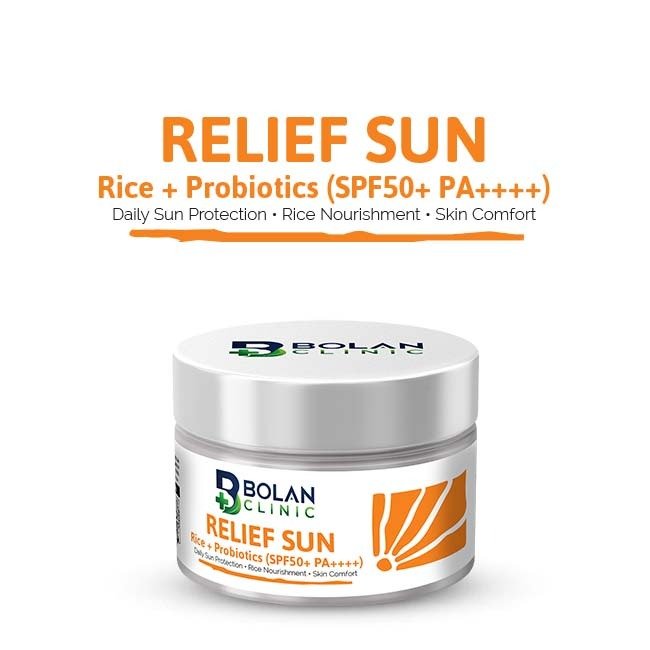
Relief Sun / Rice + Probitics SPF 50+
2
sold in last
8
hours
Prime Fast Delivery
|
- Rs. 1,599
Rs. 1,774- Rs. 1,599
- Unit price
- / per
Pay in 3 Installments of
Rs. 533
Tags:
/
Discounted Products
/
NEW ARRIVAL
/
Skin Care 1
/
Sun Block
/
sunblock
/
Top Products
/
Top Seller
/
UV protection Skin Care
10 customers are viewing this product


Need More Discount ~ Chat with Sales Person! BARGAIN NOW
Make daily sun protection a comfortable part of your skincare routine with CHILTAN PURE Relief Sun / Rice + Probiotics SPF 50+.
This lightweight facial sunscreen combines SPF 50+ protection with the skincare appeal of rice and probiotic-inspired ingredients, helping protect exposed skin from the damaging effects of UV radiation while supporting a soft, comfortable and hydrated-looking complexion.
Its skincare-focused texture makes it ideal for everyday use on the face and neck and for layering after moisturizer and before makeup.
What Is Relief Sun Rice + Probiotics SPF 50+?
CHILTAN PURE Relief Sun / Rice + Probiotics SPF 50+ is a daily facial sunscreen designed to protect skin from ultraviolet exposure while fitting comfortably into a modern skincare routine.
Unlike sunscreen products that are used only at the beach or during outdoor activities, facial sunscreen should ideally become part of everyday morning skincare.
This formula is positioned around three key ideas:
-
High-level SPF 50+ protection
-
Comfortable daily wear
-
Rice and probiotic-inspired skincare support
Regular sunscreen use is one of the most important cosmetic steps for maintaining healthy-looking skin over time.
Key Benefits
-
Provides SPF 50+ sun protection
-
Helps protect exposed skin from UV radiation
-
Designed for everyday facial use
-
Lightweight skincare-focused texture
-
Helps support a comfortable skin feel
-
Helps maintain hydrated-looking skin
-
Supports a smoother-looking complexion
-
Helps protect against sun-related visible skin ageing
-
Helps reduce unnecessary daily UV exposure
-
Suitable for face and neck
-
Can be worn under makeup
-
Fits easily into morning skincare routines
-
Suitable for men and women
-
Ideal for everyday indoor and outdoor routines where UV exposure occurs
Why Daily Sunscreen Matters
Ultraviolet radiation is present whenever skin is exposed to daylight.
Repeated UV exposure can contribute to visible changes such as:
-
Uneven-looking pigmentation
-
Dullness
-
Fine lines
-
Loss of elasticity
-
Rough-looking texture
-
Premature visible skin ageing
Daily sunscreen helps reduce the amount of UV radiation reaching the skin.
For consistent protection, sunscreen needs to be applied properly and reapplied when necessary.
What Does SPF 50+ Mean?
SPF stands for Sun Protection Factor.
SPF mainly measures protection against UVB radiation under standardized testing conditions.
An SPF 50 product provides a high level of protection when:
-
Applied at the correct amount
-
Spread evenly
-
Used according to directions
-
Reapplied appropriately
SPF does not mean you can remain in the sun indefinitely without reapplication.
No sunscreen provides 100% protection from UV radiation.
Does SPF 50+ Block All UV Rays?
No.
Even high-SPF sunscreen does not block every UV ray.
Sun protection works best as part of a complete approach that can also include:
-
Shade
-
Protective clothing
-
Sunglasses
-
Hats
-
Avoiding unnecessary intense sun exposure
Rice in Skincare
Rice has a long history of use in Asian beauty traditions.
Rice-derived skincare ingredients may be valued for their ability to support:
-
Skin conditioning
-
Softness
-
A smoother appearance
-
A hydrated-looking complexion
-
Natural radiance
The exact benefits depend on which rice-derived ingredients are present in the actual formulation.
Why Rice Is Popular in Facial Skincare
Rice-based cosmetic ingredients are commonly incorporated into products designed to support a healthy-looking complexion.
They may help skin appear:
-
Softer
-
Fresher
-
Better conditioned
-
More luminous
-
Smoother
These benefits complement a sunscreen formula by making everyday sun protection feel more skincare-focused.
Probiotics in Skincare
The word probiotics is widely used in skincare marketing, but cosmetic formulations may contain different types of probiotic-related ingredients.
These may include:
-
Fermented ingredients
-
Lysates
-
Filtrates
-
Postbiotic ingredients
-
Probiotic-derived components
A finished cosmetic product does not necessarily contain live probiotic microorganisms.
For ingredient-specific claims, the exact INCI list should always be checked.
Rice + Probiotics Combination
The Rice + Probiotics concept combines daily UV protection with skincare-inspired conditioning.
This combination is designed to appeal to users who want sunscreen that feels like part of their skincare rather than a separate heavy sunblock step.
The formula can help support:
-
Comfortable wear
-
Skin softness
-
Hydrated appearance
-
Smoothness
-
Everyday protection
Sunscreen and Skin Ageing
UV radiation is one of the major environmental contributors to premature visible skin ageing.
Long-term exposure can contribute to:
-
Fine lines
-
Uneven tone
-
Visible dark spots
-
Rough texture
-
Loss of firmness
Consistent sunscreen use helps reduce cumulative UV exposure and forms an important part of an age-supportive skincare routine.
Sunscreen for Uneven-Looking Skin Tone
Sun exposure can make existing pigmentation concerns appear more noticeable.
Daily sunscreen can help protect the skin from additional UV exposure that may worsen the appearance of uneven tone.
Sunscreen itself should not automatically be described as a treatment that removes pigmentation.
For existing dark spots, targeted skincare may also be needed.
Sunscreen for Dark Spots
If you already use products for the appearance of dark spots, sunscreen becomes particularly important.
Without consistent sun protection, continued UV exposure may work against the appearance-focused goals of your skincare routine.
A useful routine may include:
-
Gentle cleanser
-
Brightening or hydrating serum
-
Moisturizer
-
CHILTAN PURE Relief Sun SPF 50+
Sunscreen for Dull-Looking Skin
A sunscreen containing skincare-focused ingredients can help maintain a fresh-looking complexion while protecting against UV exposure.
Rice-derived ingredients may provide additional conditioning benefits depending on the formula.
Sunscreen for Dry Skin
Dry skin often prefers sunscreen formulas that feel comfortable and moisturizing.
For dry skin:
-
Cleanse gently
-
Apply hydrating essence
-
Use serum if desired
-
Apply moisturizer
-
Finish with Relief Sun SPF 50+
If the sunscreen provides sufficient comfort, some users may prefer a lighter moisturizer underneath.
Sunscreen for Oily Skin
Oily skin also requires sun protection.
Use a lighter routine beneath sunscreen:
-
Gentle cleanser
-
Lightweight essence or serum
-
Lightweight moisturizer if needed
-
Relief Sun SPF 50+
Allow each layer to settle before applying the next.
Sunscreen for Combination Skin
Combination skin may have an oilier T-zone with normal or drier cheeks.
Use lightweight hydration across the face and adjust moisturizer according to individual areas before applying sunscreen evenly.
Sunscreen for Sensitive Skin
Sensitive skin should evaluate sunscreen carefully because tolerance depends on the complete formulation.
When introducing a new sunscreen:
-
Patch test first
-
Review the full ingredient list
-
Apply to healthy skin
-
Avoid direct eye contact
-
Discontinue if persistent irritation occurs
Sunscreen for Acne-Prone Skin
Acne-prone skin still requires daily sun protection.
A comfortable sunscreen can be used as part of a simple routine:
-
Gentle cleanser
-
Acne treatment if appropriate
-
Moisturizer
-
Sunscreen
Whether a particular sunscreen suits acne-prone skin depends on the complete formula and individual response.
Do not automatically describe a product as non-comedogenic unless this claim has been appropriately tested or documented.
Texture and Skin Feel
Relief Sun is positioned as a facial sunscreen with a skincare-like application experience.
A well-designed daily sunscreen should ideally feel:
-
Comfortable
-
Smooth
-
Easy to spread
-
Easy to layer
-
Suitable beneath makeup
-
Appropriate for repeated daily use
The actual finish depends on the exact formulation and individual skin type.
Does It Leave a White Cast?
White cast depends largely on:
-
UV filter system
-
Skin tone
-
Amount applied
-
Product formulation
Do not claim that CHILTAN PURE Relief Sun is completely invisible or leaves zero white cast unless this has been confirmed through appropriate product testing.
Does It Feel Greasy?
Skin feel varies by individual skin type and the full formula.
Users with oily skin can reduce the amount of heavy skincare underneath sunscreen rather than reducing the required sunscreen application itself.
How to Use Relief Sun SPF 50+
Step 1 – Complete Your Morning Skincare
Apply your usual:
-
Essence
-
Serum
-
Eye care
-
Moisturizer
Allow these products to settle.
Step 2 – Apply Sunscreen
Apply CHILTAN PURE Relief Sun / Rice + Probiotics SPF 50+ generously and evenly over exposed facial skin.
Step 3 – Include the Neck
Apply sunscreen to exposed neck areas as well.
Step 4 – Apply Before Sun Exposure
Use sunscreen before significant outdoor exposure according to the directions on the finished product packaging.
Step 5 – Reapply
Reapply as directed, particularly after:
-
Sweating
-
Swimming
-
Towel drying
-
Extended outdoor exposure
If the product is not specifically labeled water resistant, do not assume that it remains protective after swimming or heavy sweating.
How Much Sunscreen Should You Apply?
Sunscreen testing uses a standardized application amount.
For real-world use, the key principle is to apply a generous, even layer over all exposed areas rather than using only a tiny amount.
Insufficient application can significantly reduce the level of protection achieved.
Follow the amount and application directions stated on the product packaging.
When Should Sunscreen Be Applied?
Sunscreen should be the final skincare step in your morning routine before makeup.
Typical order:
Cleanser → Toner → Essence → Serum → Eye Care → Moisturizer → Sunscreen → Makeup
Should Sunscreen Go Before or After Moisturizer?
Sunscreen normally goes after moisturizer.
Moisturizer supports hydration, while sunscreen forms the final protective skincare layer.
Should Sunscreen Go Before or After Makeup?
Apply sunscreen before makeup.
Allow it to settle before applying:
-
Primer
-
Foundation
-
Concealer
-
Other makeup products
Can You Wear It Under Makeup?
Yes.
A facial sunscreen can be used under makeup.
For better layering:
-
Avoid applying excessive amounts of heavy skincare underneath
-
Allow moisturizer to absorb
-
Apply sunscreen evenly
-
Let sunscreen settle before makeup
-
Avoid aggressively rubbing the layers together
Can Sunscreen Replace Moisturizer?
This depends on your skin type and the finished formula.
Some users with oily or normal skin may find a comfortable sunscreen moisturizing enough during certain seasons.
Dry skin may still prefer a separate moisturizer underneath.
Morning Skincare Routine
A simple morning routine may include:
-
CHILTAN PURE Low pH Good Morning Gel Cleanser
-
CHILTAN PURE Ginseng Essence Water
-
Facial serum
-
Moisturizer
-
CHILTAN PURE Relief Sun / Rice + Probiotics SPF 50+
Using It with CHILTAN PURE Ginseng Essence Water
Suggested routine:
-
Cleanser
-
Ginseng Essence Water
-
Treatment serum
-
Moisturizer
-
Relief Sun SPF 50+
The essence supports hydration while the sunscreen provides the final sun-protection step.
Using It with CHILTAN PURE Extra Ordinary Oil Serum
Oil-heavy skincare underneath sunscreen can sometimes affect layering.
For daytime use:
-
Cleanser
-
Essence
-
Serum
-
Moisturizer
-
A very small amount of Extra Ordinary Oil Serum if needed
-
Relief Sun SPF 50+
Allow the oil to absorb before applying sunscreen.
Dry skin may enjoy this combination, while oily skin may prefer to reserve facial oil for nighttime.
Using It with CHILTAN PURE Revive Eye Serum
Because CHILTAN PURE Revive Eye Serum contains retinol, it is primarily suited to an evening routine.
Consistent sunscreen use the following morning is particularly important when retinoids form part of your skincare routine.
Can You Use It with Vitamin C?
Yes.
A common morning combination is:
-
Cleanser
-
Essence
-
Vitamin C serum
-
Moisturizer
-
Relief Sun SPF 50+
Vitamin C does not replace sunscreen.
Can You Use It with Niacinamide?
Yes.
Apply niacinamide serum before moisturizer and sunscreen.
Can You Use It with Hyaluronic Acid?
Yes.
Suggested routine:
-
Cleanser
-
Essence
-
Hyaluronic acid serum
-
Moisturizer
-
Relief Sun SPF 50+
Can You Use It with Retinol?
Retinol is typically used at night.
Use Relief Sun SPF 50+ during the daytime as part of a retinol skincare routine.
Can You Use It with AHA or BHA?
Yes.
Exfoliating acids can increase the importance of a consistent sun-protection routine.
If you use AHA or BHA products, follow their instructions and apply sunscreen during the day.
Can You Use It After Exfoliation?
Yes, sunscreen is especially important during the daytime after exfoliating routines.
If the skin is irritated, simplify your skincare routine and avoid additional unnecessary actives.
Why Sunscreen Is Important with Retinol
Retinoid skincare is frequently used to improve the appearance of:
-
Fine lines
-
Texture
-
Visible signs of ageing
A daytime sunscreen helps protect the skin from ongoing UV exposure while you maintain your skincare routine.
Why Sunscreen Is Important with Exfoliating Acids
Products containing AHA or BHA can form part of texture and blemish-focused routines.
Sun protection remains essential because your skincare goals can be undermined by repeated UV exposure.
Can You Use Sunscreen Every Day?
Yes.
Daily use is recommended whenever exposed skin may receive meaningful UV radiation.
Sunscreen should not be reserved only for summer or beach days.
Do You Need Sunscreen in Winter?
Yes.
UV exposure can still occur during winter.
Daily sunscreen is especially useful for people who:
-
Spend time outdoors
-
Drive frequently
-
Sit near bright windows
-
Use pigmentation-focused skincare
-
Use retinoids or exfoliating acids
Do You Need Sunscreen on Cloudy Days?
UV radiation can still reach the skin on cloudy days.
Cloud cover does not completely eliminate UV exposure.
Do You Need Sunscreen Indoors?
Indoor sunscreen needs depend on factors such as:
-
Distance from windows
-
Amount of daylight exposure
-
Type of UV radiation reaching the space
-
Time spent near windows
People spending substantial time near daylight-exposed windows may choose to maintain daily sunscreen use.
Do You Need Sunscreen While Driving?
Drivers may receive UV exposure through vehicle windows, particularly on exposed areas such as:
-
Face
-
Neck
-
Hands
-
Arms
Using sunscreen can be part of a broader sun-protection routine.
How Often Should Sunscreen Be Reapplied?
Reapplication needs depend on:
-
Outdoor exposure
-
Sweating
-
Swimming
-
Towel drying
-
Product instructions
-
Water-resistance rating
During prolonged outdoor exposure, follow the reapplication directions printed on the sunscreen packaging.
Does Makeup with SPF Replace Sunscreen?
Usually not.
Most people do not apply enough SPF-containing makeup to achieve the labeled sunscreen protection.
Use a dedicated sunscreen first and treat SPF makeup as an additional layer rather than your primary protection.
Can Sunscreen Be Applied Over Makeup?
Reapplication over makeup can be challenging.
Options may include sunscreen formats specifically designed for reapplication, but adequate and even coverage remains important.
Do not rely on a very small amount simply to avoid disturbing makeup.
Is SPF 50 Better Than SPF 30?
SPF 50 provides a higher tested level of UVB protection than SPF 30 when both are applied correctly.
However, correct application and reapplication are just as important as the SPF number.
A high-SPF sunscreen applied too thinly may not deliver the protection expected from the label.
Does Higher SPF Mean You Never Need to Reapply?
No.
SPF level does not eliminate the need for reapplication.
Sweating, rubbing, water exposure and time outdoors can reduce effective coverage.
Does Sunscreen Prevent Tanning?
Sunscreen reduces UV exposure but does not guarantee that the skin will never tan.
No sunscreen blocks all UV radiation.
Does Sunscreen Lighten Skin?
Sunscreen does not bleach or permanently lighten natural skin tone.
Its role is to help protect against UV exposure that can contribute to tanning, uneven pigmentation and visible sun damage.
Can Sunscreen Help Prevent Darkening?
By reducing UV exposure, sunscreen can help minimize sun-induced tanning and the worsening of UV-related pigmentation.
The effect depends on proper and consistent use.
Can Sunscreen Remove Existing Dark Spots?
No.
Sunscreen protects against additional UV exposure but is not itself a guaranteed treatment for existing pigmentation.
However, it is an important supporting step in pigmentation-focused skincare.
Can Sunscreen Prevent Wrinkles?
Regular sunscreen use helps reduce UV exposure associated with premature visible skin ageing.
It should therefore be considered an important preventative skincare step rather than a product that removes existing wrinkles.
Can Men Use Relief Sun?
Yes.
Sunscreen should be selected according to skin type, comfort and protection needs rather than gender.
Can Women Use Relief Sun?
Yes.
It can be incorporated into simple or multi-step morning skincare routines.
Can Teenagers Use SPF 50+?
A suitable sunscreen can form an important part of a teenager's basic skincare routine.
A simple routine may include:
-
Gentle cleanser
-
Moisturizer
-
Sunscreen
Can Children Use This Sunscreen?
Use on children only if the finished product labeling indicates that it is appropriate for their age group.
Children's sun protection needs may differ from adult cosmetic skincare.
Can You Apply It to the Neck?
Yes.
Exposed neck skin should also receive sun protection.
Can You Apply It to the Ears?
If the ears are exposed to sunlight, sunscreen can be applied carefully to the external ear area.
Avoid putting cosmetic sunscreen inside the ear canal.
Can You Apply It Around the Eyes?
Apply carefully around the eye area without getting sunscreen directly into the eyes.
If the product causes eye irritation, rinse thoroughly and avoid applying too close to the lash line.
Can You Apply It to the Lips?
Only use the product directly on lips if its labeling specifically states that it is suitable for lip use.
Otherwise, use a dedicated lip sunscreen product.
Can You Use It on the Body?
If the product labeling allows facial and body use, it may be used on other exposed areas.
However, facial sunscreen packaging may not be practical for covering large areas of the body.
Use an appropriate body sunscreen for extensive exposure.
Can Sunscreen Cause Pimples?
Any cosmetic product may suit some users better than others.
Whether sunscreen contributes to congestion depends on:
-
Complete formulation
-
Skin type
-
Amount of other skincare used
-
Cleansing routine
-
Individual response
If breakouts consistently appear after introducing a product, reassess the routine.
Should Sunscreen Be Washed Off at Night?
Yes.
At the end of the day, cleanse the skin to remove sunscreen along with:
-
Oil
-
Sweat
-
Pollution
-
Makeup
-
Other surface buildup
Do You Need Double Cleansing to Remove Sunscreen?
Not always.
Regular sunscreen may be removed with an effective facial cleanser.
Water-resistant sunscreen, heavy makeup or multiple layers may benefit from double cleansing.
Suggested Evening Cleansing Routine
-
Cleansing balm or oil if needed
-
CHILTAN PURE Low pH Good Morning Gel Cleanser
-
Ginseng Essence Water
-
Treatment serum
-
Moisturizer
Rice + Probiotics and Skin Comfort
The rice and probiotic positioning adds a skincare dimension to an everyday sunscreen product.
Depending on the exact INCI formulation, these ingredients may contribute to:
-
Skin conditioning
-
Hydration support
-
A smoother feel
-
A healthier-looking complexion
Exact ingredient-specific claims should be based on the finished formulation.
Ingredients Explained
The complete INCI ingredient list printed on CHILTAN PURE Relief Sun packaging should always be considered the authoritative formulation reference.
Rice-Derived Ingredients
Depending on the actual formula, rice may appear as:
-
Rice extract
-
Rice water
-
Rice ferment
-
Rice-derived ingredients
These ingredients are generally used for skin-conditioning and cosmetic appearance benefits.
Probiotic-Related Ingredients
Depending on the formula, probiotic-related skincare ingredients may include:
-
Fermented extracts
-
Lysates
-
Filtrates
-
Postbiotic ingredients
-
Other fermentation-derived components
Only the exact ingredients present in the finished product should be named in marketing content.
UV Filters
Sunscreen protection comes from approved UV-filter ingredients incorporated into the formula.
The exact filters used should be taken from the finished product's INCI list.
Do not assume the product contains a particular modern or traditional UV filter without checking the actual formulation.
Important SPF Claim Note
Claims such as:
-
SPF 50+
-
UVA protection
-
PA rating
-
Broad spectrum
-
Water resistance
should match the exact validated testing and labeling of the finished CHILTAN PURE sunscreen.
Do not add PA++++, water resistant, sweat resistant or similar protection claims unless they are confirmed on the product documentation.
Tips for Best Results
-
Apply every morning
-
Use a generous, even amount
-
Cover all exposed facial areas
-
Include the neck
-
Apply as the final skincare step
-
Allow sunscreen to settle before makeup
-
Reapply according to exposure and label directions
-
Reapply after swimming or sweating if required by the product instructions
-
Combine sunscreen with shade and protective clothing
-
Cleanse the skin at night
Common Sunscreen Mistakes
Applying Too Little
Using only a tiny amount can significantly reduce protection.
Missing Areas
Commonly forgotten areas include:
-
Hairline
-
Ears
-
Jawline
-
Neck
Applying Sunscreen Only in Summer
UV exposure occurs throughout the year.
Depending Only on Makeup SPF
Makeup is usually not applied generously enough to replace dedicated sunscreen.
Forgetting Reapplication
Protection can decrease during extended exposure.
Assuming Higher SPF Means Unlimited Sun Time
No sunscreen allows unlimited safe sun exposure.
Important Precautions
For external cosmetic use only.
-
Avoid direct contact with eyes
-
Rinse thoroughly if product enters the eyes
-
Do not ingest
-
Do not apply to severely damaged skin
-
Discontinue use if persistent irritation develops
-
Keep out of reach of children
-
Follow the labeled sun-protection directions
-
Reapply according to product instructions
-
Do not rely on sunscreen as your only sun-protection measure during intense exposure
Storage Instructions
-
Store in a cool, dry place
-
Protect from prolonged direct sunlight
-
Avoid excessive heat
-
Keep packaging properly closed
-
Do not leave sunscreen in extremely hot environments for extended periods
-
Follow the storage instructions on the finished packaging
-
Keep out of reach of children
Frequently Asked Questions
What is CHILTAN PURE Relief Sun / Rice + Probiotics SPF 50+?
It is a daily facial sunscreen combining SPF 50+ sun protection with a skincare-focused Rice + Probiotics concept.
What does SPF 50+ do?
SPF 50+ provides a high tested level of protection primarily against UVB radiation when the sunscreen is applied correctly.
Can I use this sunscreen every day?
Yes. Sunscreen is intended to be part of a regular daytime skincare routine.
Is it only for summer?
No. UV exposure occurs throughout the year.
Is it suitable for the face?
Yes. It is positioned as a facial sunscreen.
Can I use it on my neck?
Yes.
Can men use it?
Yes.
Can women use it?
Yes.
Can teenagers use it?
A suitable facial sunscreen can be incorporated into a teenager's basic skincare routine.
Is it suitable for dry skin?
It can fit dry-skin routines when used with appropriate hydration and moisturizer.
Is it suitable for oily skin?
Oily skin can use sunscreen. Keep the skincare layers underneath lightweight if needed.
Is it suitable for combination skin?
Yes, depending on individual tolerance and the finished formula.
Can acne-prone skin use it?
Acne-prone skin requires sunscreen too, but suitability depends on individual response and the complete ingredient formula.
Is it suitable for sensitive skin?
Sensitive skin should patch test and review the ingredient list before regular use.
Does it contain rice?
The product is positioned around Rice + Probiotics. The exact rice-derived ingredient should be confirmed from the INCI list.
Does it contain live probiotics?
Not necessarily. Cosmetic products marketed around probiotics may contain ferments, lysates, filtrates or other probiotic-derived ingredients rather than live microorganisms.
Related Products
Example product title
- Rs. 1,599
Rs. 1,774- Rs. 1,599
- Unit price
- / per
Example product title
- Rs. 1,599
Rs. 1,774- Rs. 1,599
- Unit price
- / per
Example product title
- Rs. 1,599
Rs. 1,774- Rs. 1,599
- Unit price
- / per
Example product title
- Rs. 1,599
Rs. 1,774- Rs. 1,599
- Unit price
- / per
Example product title
- Rs. 1,599
Rs. 1,774- Rs. 1,599
- Unit price
- / per
Example product title
- Rs. 1,599
Rs. 1,774- Rs. 1,599
- Unit price
- / per
Example product title
- Rs. 1,599
Rs. 1,774- Rs. 1,599
- Unit price
- / per
Example product title
- Rs. 1,599
Rs. 1,774- Rs. 1,599
- Unit price
- / per
Example product title
- Rs. 1,599
Rs. 1,774- Rs. 1,599
- Unit price
- / per
Example product title
- Rs. 1,599
Rs. 1,774- Rs. 1,599
- Unit price
- / per
Recently Viewed Products
Example product title
- Rs. 1,599
Rs. 1,774- Rs. 1,599
- Unit price
- / per
Example product title
- Rs. 1,599
Rs. 1,774- Rs. 1,599
- Unit price
- / per
Example product title
- Rs. 1,599
Rs. 1,774- Rs. 1,599
- Unit price
- / per
Example product title
- Rs. 1,599
Rs. 1,774- Rs. 1,599
- Unit price
- / per
Example product title
- Rs. 1,599
Rs. 1,774- Rs. 1,599
- Unit price
- / per
Example product title
- Rs. 1,599
Rs. 1,774- Rs. 1,599
- Unit price
- / per
Example product title
- Rs. 1,599
Rs. 1,774- Rs. 1,599
- Unit price
- / per
Example product title
- Rs. 1,599
Rs. 1,774- Rs. 1,599
- Unit price
- / per
Example product title
- Rs. 1,599
Rs. 1,774- Rs. 1,599
- Unit price
- / per
Example product title
- Rs. 1,599
Rs. 1,774- Rs. 1,599
- Unit price
- / per
- Choosing a selection results in a full page refresh.