![Red Onion Oil 🧅 Reduces Hair Fall & Accelerates Hair Regrowth [پیاز کا تیل].. Trending.... 🔥 - ChiltanPure](http://chiltanpure.com/cdn/shop/products/red-onion-oil-reduces-hair-fall-amp-accelerates-hair-regrowth-piaz-ka-til-trending-394813_640x.jpg?v=1707464619)
![Red Onion Oil 🧅 Reduces Hair Fall & Accelerates Hair Regrowth [پیاز کا تیل].. Trending.... 🔥 - ChiltanPure](http://chiltanpure.com/cdn/shop/products/red-onion-oil-reduces-hair-fall-amp-accelerates-hair-regrowth-piaz-ka-til-trending-329640_1170x.jpg?v=1708127491)





Ashwagandha Benefits, Dosage, Uses, Precautions & Side Effects Explained

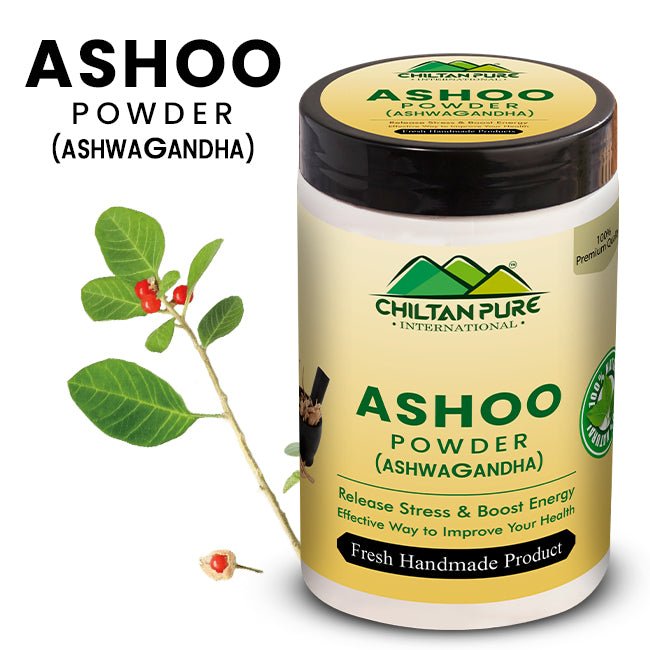
Ashwagandha (Withania somnifera) is an Ayurvedic adaptogen traditionally used to reduce stress, improve sleep, boost energy and stamina, and support hormonal balance. It is one of the most researched herbs in Ayurvedic medicine and one of the most searched wellness terms in Pakistan today, where it is locally known as Asgandh Nagori or Ashoo.
If you have been asking "what does ashwagandha actually do," "how do I take it," or "is it safe to use every day," this guide answers all of it in one place: the science-backed benefits, the different ways people take it, precautions, real buyer feedback patterns, and how to pick the right form for your lifestyle, including the range of ashwagandha products made by ChiltanPure.
What Is Ashwagandha?
Ashwagandha is a small shrub native to India, the Middle East, and parts of Africa, and it also grows in Pakistan, where it is traditionally called Asgandh or Ashoo. Its root is dried and processed into powder, capsules, or added to food products, and brands like ChiltanPure now offer it in multiple everyday-friendly forms, grown and processed with Pakistani wellness needs in mind. In Ayurveda, it is classified as a Rasayana (a rejuvenating herb), and more recently, modern researchers describe it as an adaptogen: a natural substance believed to help the body adapt to physical and mental stress.
Other common names you may have seen it under:
-
English: Indian Ginseng, Winter Cherry
-
Botanical: Withania somnifera
-
Urdu/Hindi: Asgandh, Asgand Nagori
-
Pakistani market name: Ashoo

Top Ashwagandha Benefits (Backed by Traditional & Modern Use)
Note: The points below reflect traditional Ayurvedic use and preliminary research findings. Evidence for many of these effects comes from small studies, and results vary from person to person.
1. May Help the Body Manage Stress and Anxiety
Ashwagandha is traditionally used and has been studied in some small clinical trials for its potential to support healthy cortisol levels, the hormone released when the body is under stress. Some users report that this may ease everyday tension, racing thoughts, and physical tightness associated with chronic stress, though individual results vary.
2. May Support Better Sleep Quality
Some users report falling asleep more easily and feeling more rested, an effect often linked to its traditional use in cortisol regulation. Evidence here is still preliminary, and results differ from person to person.
3. May Support Energy, Stamina, and Physical Performance
Ashwagandha has been studied in limited trials for its potential to support exercise capacity, muscle strength, and recovery time. This is why it's popular among fitness enthusiasts, though it should not be treated as a substitute for proper training and nutrition.
4. Traditionally Used to Support Hormonal Balance
In Ayurvedic tradition, this herb has long been used to support thyroid function and reproductive health in both men and women. Anyone with a thyroid condition or hormonal disorder should consult a doctor before use, as ashwagandha may interact with thyroid medication.
5. May Help Support Healthy Blood Sugar Levels Already Within Normal Range
Some preliminary studies suggest ashwagandha may help the body maintain more stable blood sugar levels. This is not a treatment for diabetes or any blood sugar disorder. People on blood sugar medication should speak to a doctor before use.
6. Antioxidant and Immune Support
Ashwagandha contains natural antioxidant compounds that may help the body manage everyday oxidative stress. People with autoimmune conditions should consult a healthcare professional first, as ashwagandha may stimulate immune activity.
7. May Support Brain Health and Focus
Some active compounds in ashwagandha, called withanolides, have been studied in early research for their potential role in brain cell health. Many long-term users report improved focus, though larger studies are still needed to confirm this effect.
8. May Support Joint Comfort
Some users use ashwagandha for its natural anti-inflammatory properties to help with everyday joint stiffness or muscle soreness. This is not a treatment for arthritis or any diagnosed joint condition.

How to Use Ashwagandha (Powder, Capsules & Food Forms)
One of the best things about ashwagandha today is that you no longer need to choke down a bitter root. ChiltanPure and other brands now offer it in several easy formats:
| Form | Typical Serving | Best For | How to Take It |
|---|---|---|---|
| Powder | ½ tsp (about 2 to 3g) per serving, standardized root powder | Traditional users, DIY milk/tea drinkers | Mixed into warm milk, smoothies, or brewed as tea for 10 minutes |
| Capsules/Tablets | 1 capsule (typically 300 to 500mg root extract per capsule; check label for exact mg and withanolide %) | Busy lifestyles, precise daily dosing | 1 capsule daily, preferably after a meal with water |
| Juice | As per label serving size (varies by concentration) | Those who don't like powder texture | Small quantity on its own, or diluted with water |
| Biscuits | Check pack for ashwagandha content per biscuit | Everyday snacking with a wellness twist | Enjoy with tea as a light snack |
| Honey Jam | Check label for ashwagandha content per serving/spoon | Families and kids who prefer a sweet format | Spread on bread or toast as part of breakfast |
Exact withanolide concentration and mg per serving vary by batch and product. Always check the specific product label for standardized extract percentage before use, and don't exceed the recommended daily serving.
Storage tip: Keep powder, biscuits, and jam sealed tightly in a cool, dry place away from direct sunlight to preserve freshness and keep out moisture.
Precautions & Possible Side Effects
Ashwagandha is generally well tolerated, but as with any herbal supplement, a few precautions are worth knowing:
-
Mild digestive upset: Some first-time users report slight stomach discomfort or drowsiness, usually when taken on an empty stomach or in higher-than-recommended amounts.
-
Thyroid medication: Ashwagandha may influence thyroid hormone activity, so anyone on thyroid medication should consult their doctor before use.
-
Blood sugar or blood pressure medication: Since ashwagandha may affect blood sugar and blood pressure levels, people on related medication should seek medical advice first.
-
Sedatives or sleep medication: Combining ashwagandha with sedative medication may increase drowsiness.
-
Pregnancy and breastfeeding: Not recommended without a doctor's guidance.
-
Autoimmune conditions: People with autoimmune conditions should consult a healthcare professional, as ashwagandha can stimulate immune activity.

What Do Buyers Actually Say?
Ashwagandha is one of the most reviewed herbal supplements sold online today, across many different brands. Looking at verified purchase reviews across these platforms, a few consistent themes come up again and again:
-
A noticeable change in daily life. One buyer described ashwagandha as a genuine turning point, saying it helped them feel better and live better overall.
-
Strong potency. Another reviewer praised how effective the product was, noting it made a real difference with the specific issues they were hoping to address.
-
A calm way to start the day. A regular user mixes the powder into their morning smoothie and says it sets a calmer tone for the day, adding that they notice the difference on the days they skip it.
-
Support for weight management. One short but clear review credited the supplement with helping support their weight loss goals.
-
Easy to mix, calming effect. A buyer mentioned that it blends easily into food, drinks, and smoothies, and that it leaves them feeling calmer with noticeably better sleep.
-
Skeptical at first, impressed after. A first-time user admitted they expected little effect going in, but ended up pleasantly surprised by the boost they felt.
Taken together, these reviews point to the same handful of benefits people search for again and again: calm, better sleep, steady energy, and an easy fit into daily food and drinks. This is reflected in ChiltanPure's own customer feedback as well, where buyers of the Ashoo Ashwagandha range frequently mention the same themes of calm, better sleep, and steady energy. A smaller share of buyers report little to no difference, usually because they used it inconsistently or expected instant results rather than giving it the typical 2+ week window.

Choosing the Right Ashwagandha Product for You
Not everyone wants their wellness herb the same way, which is why ChiltanPure offers ashwagandha in multiple everyday-friendly formats. Here's how to pick:
-
Want the most traditional, potent form? Go for the Ashwagandha / Ashoo Powder, ideal for mixing into milk, smoothies, or brewing as tea, and the format most closely tied to classic Ayurvedic use.
-
Want convenience and precise daily dosing? The Ashwagandha Capsules / Tablets are perfect for people who are always on-the-go: one capsule after a meal, no measuring, no taste.
-
Don't like the earthy taste of powder? Try the Ashwagandha Juice, a lighter, more palatable way to get your daily dose.
-
Want to build a habit around tea time? The Ashwagandha Biscuits turn a wellness habit into a comforting daily snack, made with organic desi butter for a light, crunchy bite.
-
Prefer something sweet for breakfast? The Ashwagandha Jam (Made with Honey) blends pure honey with ashwagandha for an easy spread on toast, a great option for families and anyone who wants their supplement to feel like a treat rather than a task.
Whichever format you choose, all of these are made from the same 100% natural Ashwagandha (Withania somnifera), so you can pick based on your taste preference and daily routine rather than worrying about which one "works better."

Conclusion
Ashwagandha has earned its reputation as one of the most versatile natural herbs for stress relief, energy, sleep support, and overall vitality. Today it's easier than ever to fit into daily life, whether you prefer powder, capsules, juice, a biscuit with your evening tea, or a spoonful of honey jam on toast.
Explore the full range of 100% natural Ashwagandha products by ChiltanPure and find the format that fits your routine best.
Frequently Asked Questions
Is ashwagandha safe to take every day?
Yes, when used as directed and at the recommended serving size. Long-term daily use is common in Ayurvedic tradition, but anyone with a medical condition or on medication should consult a doctor first.
How long does it take to see results from ashwagandha?
Most users report noticing effects, especially around stress and sleep, after about 2 weeks of consistent use. It is not a fast-acting stimulant; its benefits build gradually.
What is the best time to take ashwagandha, morning or night?
Both work. Morning doses are popular for steady daytime energy, while evening doses are popular for winding down before sleep. Taking it after a meal is generally gentler on the stomach.
Does ashwagandha have side effects?
Most people tolerate it well, but some may experience mild drowsiness or stomach discomfort, especially at higher doses or on an empty stomach. Anyone on thyroid, blood sugar, or sedative medication should check with a doctor first.
What is the difference between ashwagandha powder and capsules?
They contain the same core ingredient. Powder is more traditional and versatile (can be mixed into drinks or made into tea), while capsules offer precise, no-taste, on-the-go dosing.
Can ashwagandha help with stress and anxiety?
Ashwagandha is traditionally used to help the body manage everyday stress by supporting healthy cortisol regulation. Many users report feeling calmer with consistent use, though individual results vary.
Who should avoid ashwagandha?
Pregnant or breastfeeding women, and people with thyroid conditions, autoimmune conditions, or those on regular medication should speak to a healthcare professional before use.