

Vitamin C Serum: Benefits, Where Vitamin C Comes From, How to Use It and the Best Options in Pakistan

If there is one skincare ingredient that dermatologists, estheticians and skincare lovers keep coming back to, it is Vitamin C. Dullness, uneven skin tone, dark spots, early fine lines and sun damage are some of the most common skin concerns in Pakistan, and a well-formulated Vitamin C serum can help with all of them.
But Vitamin C is also one of the most misunderstood ingredients. Where does it actually come from? Why are there so many forms of it? Why do some serums turn brown? And how do you use it without irritating your skin?
In this complete guide, we answer all of these questions in detail. We also introduce the Vitamin C serums available at Chiltan Pure and other products from the Vitamin C collection that work well alongside them.
What Is Vitamin C?
Vitamin C, also known as ascorbic acid, is a water-soluble vitamin and a powerful antioxidant. It is essential for human health, but most people don't know an important fact: the human body cannot make Vitamin C on its own. Most mammals can produce it internally, but humans lost this ability through evolution. That means we must get it from outside, either through food, supplements or products applied to the skin.
In the body, Vitamin C plays several key roles:
- It helps produce collagen, the protein that keeps skin firm, plump and elastic.
- It neutralizes free radicals created by sunlight, pollution and stress.
- It supports wound healing and a healthy immune system.
- It helps the body absorb iron from plant-based foods.

Where Does Vitamin C Come From?
This is the question many readers ask, and the answer has two parts: natural sources and the Vitamin C used in skincare products.
Natural Sources of Vitamin C
Vitamin C is found mainly in fruits and vegetables. Some of the richest natural sources include:
- Citrus fruits such as oranges, kinnow, lemons, grapefruit and malta
- Amla (Indian gooseberry), one of the richest known natural sources
- Guava, which contains more Vitamin C than oranges per serving
- Kiwi and strawberries
- Bell peppers (capsicum), especially red and yellow ones
- Broccoli, cauliflower and cabbage
- Papaya, pineapple and mango
- Tomatoes and leafy greens
- Rose hips, camu camu and acerola cherry, which are very high in Vitamin C
Cooking, storing for long periods and exposure to air all reduce the Vitamin C content of food, which is why fresh produce is best.
A Short History of Vitamin C
Vitamin C was discovered because of a disease called scurvy. For centuries, sailors on long sea voyages suffered from bleeding gums, weakness and slow-healing wounds. In the 1700s, a naval doctor named James Lind showed that citrus fruits could prevent and cure scurvy. In the 1930s, scientist Albert Szent-Györgyi isolated the compound responsible and later received a Nobel Prize for his work. The molecule was named ascorbic acid, meaning "against scurvy."
Where Does the Vitamin C in Skincare Come From?
The Vitamin C used in serums, creams and supplements is usually not squeezed from fruit. Extracting enough from fruit would be expensive, and the result would be unstable. Instead, it is produced in laboratories, most commonly by fermenting glucose (sugar derived from plants such as corn) and then converting it through a series of controlled steps into pure ascorbic acid.
Chemically, this lab-made ascorbic acid is identical to the Vitamin C found in an orange. Your skin cannot tell the difference. What matters is the purity, concentration, form of Vitamin C used, and how well the formula protects it from breaking down.

Different Forms of Vitamin C in Skincare
Not all Vitamin C serums are the same. The ingredient list may show one of several forms:
L-Ascorbic Acid (LAA): This is the pure, most researched and most potent form. It works quickly but is sensitive to light, air and heat, so it needs careful formulation and packaging.
Ascorbyl Glucoside: A more stable, gentler form. The skin converts it into active Vitamin C over time. It is a good choice for sensitive skin.
Magnesium Ascorbyl Phosphate (MAP) and Sodium Ascorbyl Phosphate (SAP): Water-soluble and stable derivatives that are well tolerated. SAP is also studied for its benefits on acne-prone skin.
Ascorbyl Palmitate: A fat-soluble form that blends well into creams and oil-based products.
Tetrahexyldecyl Ascorbate (THD): An oil-soluble, stable and gentle derivative that penetrates well.
Vitamin C Suspensions: Some products suspend Vitamin C in a silicone or other water-free base instead of dissolving it in a water-based serum. These are usually high-strength treatments with a smoother, more spreadable skin feel.
How Does Vitamin C Work on the Skin?
When you apply a Vitamin C serum, several things happen:
- Antioxidant Protection: Vitamin C neutralizes free radicals from UV rays and pollution before they can damage skin cells.
- Collagen Support: Vitamin C is a necessary cofactor in collagen production. More available Vitamin C supports firmer, smoother-looking skin over time.
- Brightening: It interferes with tyrosinase, the enzyme involved in melanin production, which helps fade the look of dark spots and uneven tone.
- Boosting Sunscreen Performance: Vitamin C does not replace sunscreen, but it adds an extra layer of antioxidant defense when used under it.

Benefits of Using a Vitamin C Serum
- Brighter, More Radiant Complexion: Dull, tired-looking skin appears fresher.
- Reduced Dark Spots and Hyperpigmentation: Including marks left behind by acne and sun exposure.
- More Even Skin Tone: Helpful for patchy, uneven complexion.
- Smoother Fine Lines: By supporting collagen, skin looks firmer and more youthful.
- Protection From Environmental Damage: Especially important in cities with high pollution and strong sunlight.
- Improved Look of Post-Acne Marks: Gradual fading with consistent use.
Remember that skincare is a gradual process. Most people begin noticing visible changes after 4 to 8 weeks of regular use, with better results at 12 weeks and beyond.
Who Should Use a Vitamin C Serum?
Vitamin C is suitable for most skin types when the right form and strength are chosen:
- Dull or Tired Skin: To bring back glow.
- Pigmented or Sun-Tanned Skin: Very common in Pakistan's strong sunlight.
- Early Signs of Aging: From the mid-20s onward as a preventive step.
- Oily and Acne-Prone Skin: Lightweight serums are a good fit.
- Dry Skin: Choose a hydrating formula or layer it with a moisturizer.
- Sensitive Skin: Start with a gentler, fragrance-free formula or a lower concentration and use it less often at first.

How to Use a Vitamin C Serum Correctly
Using it the right way makes a big difference to results and to how your skin feels.
- Cleanse: Start with a gentle face wash on clean skin.
- Apply the Serum: Use the amount recommended on the label and gently press it into your face and neck, avoiding the eye area. Apply to dry or slightly damp skin.
- Moisturize: Follow with a moisturizer to lock in hydration.
- Apply Sunscreen in the Morning: This step is not optional. If you use Vitamin C in the morning, sunscreen must be the last step.
Morning or Night?
Morning is the most popular time, because Vitamin C protects the skin against the day's UV and pollution exposure. However, it can also be used at night, as it does not make the skin sun-sensitive. The best time is the one that fits your routine, and the most important rule is to follow the directions printed on your specific product. For example, some Chiltan Pure serums are recommended for morning use only, while others are recommended for the evening, as you will see below.
How Much and How Often?
Start with the amount stated on the label. Beginners can start every second day and then move to daily use as the skin gets used to it. Higher-strength products should always be introduced more slowly.
What to Pair It With
- Hyaluronic Acid: Adds hydration and balances the tingling some people feel.
- Vitamin E and Ferulic Acid: Boost antioxidant stability and effect.
- Sunscreen: The most important partner.
- Niacinamide: Works well for tone and texture for most people, and you can also find it together with Vitamin C in one bottle in Chiltan Pure's serum with niacinamide and alpha arbutin.
What to Be Careful With
- Avoid applying Vitamin C at the same time as retinol or strong exfoliating acids, especially if your skin is sensitive. Some product labels, including the Chiltan Pure Vitamin C Serum, specifically advise against using the serum together with retinol products.
- Always patch test a new product on a small area, such as behind the ear or on the inner forearm, for 24 hours before using it on your whole face.

How to Choose a Good Vitamin C Serum
Look for these qualities:
- A Clearly Stated Vitamin C Form and Concentration: Many effective serums fall between roughly 10 and 20 percent for pure L-ascorbic acid. Higher is not always better and can increase irritation, so strengths above this range are better suited to people who already use Vitamin C.
- Protective Packaging: Dark or opaque bottles with a dropper or pump reduce exposure to light and air.
- A Stable Formula: Supporting ingredients like Vitamin E, ferulic acid or a suspension base help keep Vitamin C active.
- Skin-Friendly Extras: Hydrators such as hyaluronic acid and barrier-supporting ingredients such as ceramides are a bonus.
- A Trusted Brand: One that shares transparent ingredient information about its products.
Storage Tips
Vitamin C is sensitive. Keep the bottle tightly closed, away from direct sunlight and heat, and use it within the recommended period after opening. If the serum turns dark brown and smells unpleasant, it has likely oxidized and should be replaced.

Chiltan Pure Vitamin C Serums
Chiltan Pure has five Vitamin C serums, ranging from gentle everyday options to strong treatments for experienced users. Here is how they differ, so you can pick the one that matches your skin and your experience with Vitamin C.
1. Chiltan Pure Vitamin C Serum
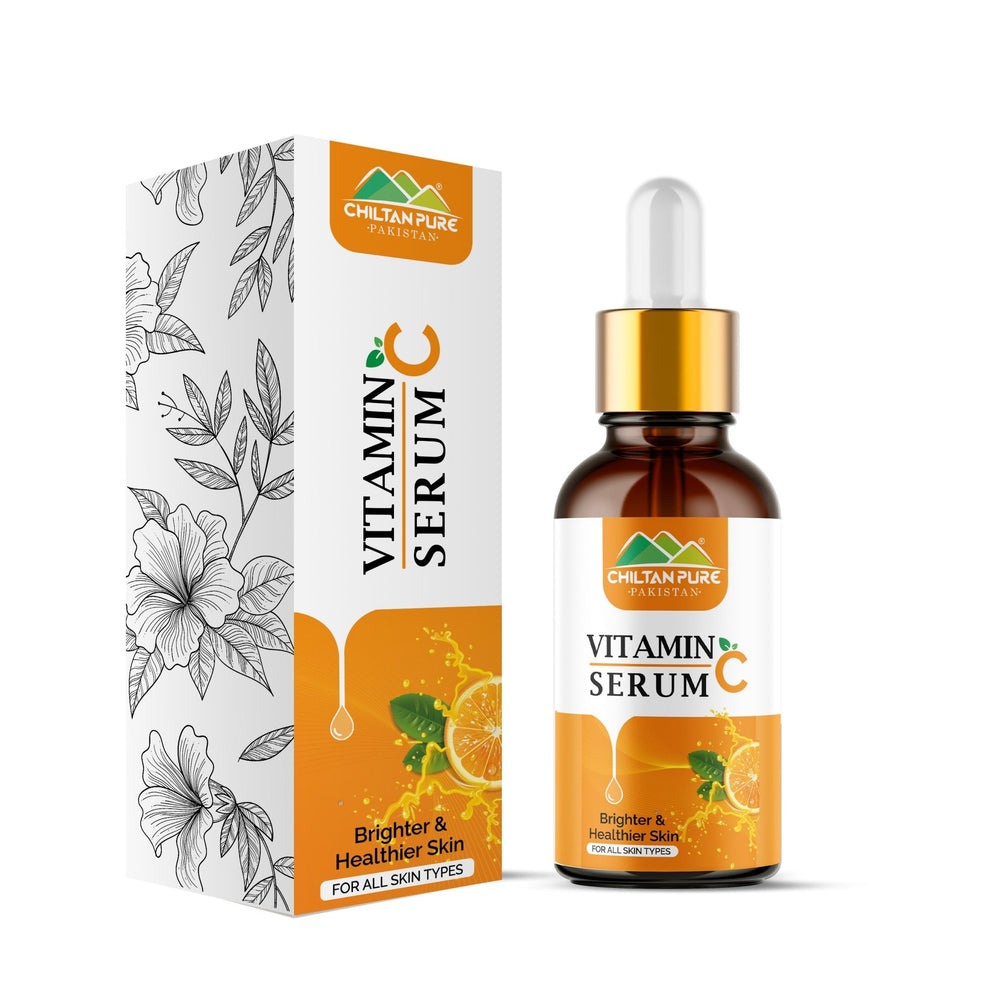
The Chiltan Pure Vitamin C Serum is the easiest place to begin. It is a simple, glow-focused serum that pairs brightening and moisturizing ingredients, including hyaluronic acid, alpha arbutin, glycerin and Vitamin E, along with an ingredient listed as AGS and orange essential oil. The product page does not mention the exact form or percentage of Vitamin C, so check the bottle label for that detail.
Two to three drops are enough per use, and evening is the suggested time. Keep retinol products out of the same routine. Since the formula contains orange essential oil, anyone who reacts to citrus or fragrance should patch test before regular use.
2. Skin Renewing Vitamin C Serum
If you prefer a clearly stated strength, the Skin Renewing Vitamin C Serum by Bolan Clinic contains 10% L-ascorbic acid, the purest and most researched form of Vitamin C. Around it sit ceramides that help support the skin barrier, plus hyaluronic acid and panthenol for moisture. The brand says it has no added fragrance or parabens, does not clog pores and is made for all skin types, sensitive skin included. The protective packaging is designed to slow down oxidation.
Spread it over the face and neck in the morning, keep it away from the eyes and store it somewhere cool and dark. It is a balanced, gentle choice for most people.
3. Vitamin C Serum With Niacinamide and Alpha Arbutin
If you like the idea of tackling uneven tone from several angles at once, the Vitamin C Serum With Niacinamide and Alpha Arbutin puts three popular brightening ingredients into one bottle. Vitamin C brings antioxidant protection, niacinamide helps with tone and texture, and alpha arbutin is commonly used to fade the look of dark marks. The texture is light and absorbs quickly, which makes it easy to wear under a moisturizer, and it is meant for regular daily use.
The product page does not list exact percentages, so check the label for the full ingredient list. Apply a small amount to clean, dry skin after cleansing and before moisturizer. As with any active serum, patch test first, keep it away from the eyes and stop using it if irritation continues.
4. Vitamin C Suspension 30% in Silicone
Experienced users who want maximum strength can look at the Vitamin C Suspension 30% in Silicone. This is the most concentrated option in the range, and the silicone base gives it a soft, smooth glide on the skin. It is aimed at skin that looks dull, uneven or tired. Because of its strength, the brand positions it for people who already use Vitamin C, so beginners should patch test and work up to it gradually.
5. Vitamin C Suspension 23% + HA Spheres 2%
The Vitamin C Suspension 23% + HA Spheres 2% is another strong formula, with extra cushioning built in. It combines 23% Vitamin C with 2% hyaluronic acid spheres, so brightening comes with added hydration and a smoother feel. Like the 30% suspension, it suits people who are already comfortable with Vitamin C.
Which One Should You Choose?
If you are new to Vitamin C, start with the Chiltan Pure Vitamin C Serum or the Skin Renewing Vitamin C Serum. If your main concerns are uneven tone and dark marks and you like the idea of a multi-ingredient formula, the serum with niacinamide and alpha arbutin is worth a look. If your skin is sensitive or you dislike scented products, the Skin Renewing Vitamin C Serum is the better pick because the brand describes it as free from added fragrance. Once your skin is used to Vitamin C and you want something stronger, move to the 23% + HA Spheres 2% suspension, which is a good match for dry skin, or the 30% suspension in silicone.
Please read the label and the directions on each product page before you start.

Other Vitamin C Products From Chiltan Pure
A serum is the star of a Vitamin C routine, but the rest of your routine and even your diet can support it. You can browse everything in one place on the Vitamin C collection page.
Cleansing
Begin with the Vitamin C Face Wash, a daily cleanser made for dull-looking skin. Another option is the Brightening Vitamin C Cleanser from Bolan Clinic, which combines Vitamin C with niacinamide and three ceramides and is aimed at dull, uneven-looking skin.
Moisturizing
After your serum, lock in moisture with the Vitamin C Cream, a brightening face moisturizer, or the Vitamin C Hydrating Moisturizer, which is aimed at skin that needs extra hydration and protection from daily sun exposure.
Masks and Treatments
For a weekly boost, the Vitamin C Mud Mask is a good option for dull and breakout-prone skin. The Vitamin C Clay can help soften the look of uneven skin tone, and the Vitamin C Pack is a ready-made set that bundles a Vitamin C face wash, serum and mud mask in one purchase.
Body Care
Your body deserves the same brightening care as your face. The Vitamin C Brightening Body Wash pairs kojic acid with niacinamide for a brightening shower routine, while the Vitamin C Soap is a simple bar that gently cleanses daily impurities.
Vitamin C for Your Diet
Skincare works best when it is supported from within. If you want to raise your daily intake, you can look at the orange-flavoured Vitamin C Tablets or the ready-to-drink Vitamin C Juice. Follow the directions on each product page, and check with a healthcare professional if you are unsure how to use them.
A note on supplements: a balanced diet with plenty of fruit and vegetables is the best foundation. If you take supplements or have a medical condition, speak with your doctor first.
Pure Vitamin C Powder
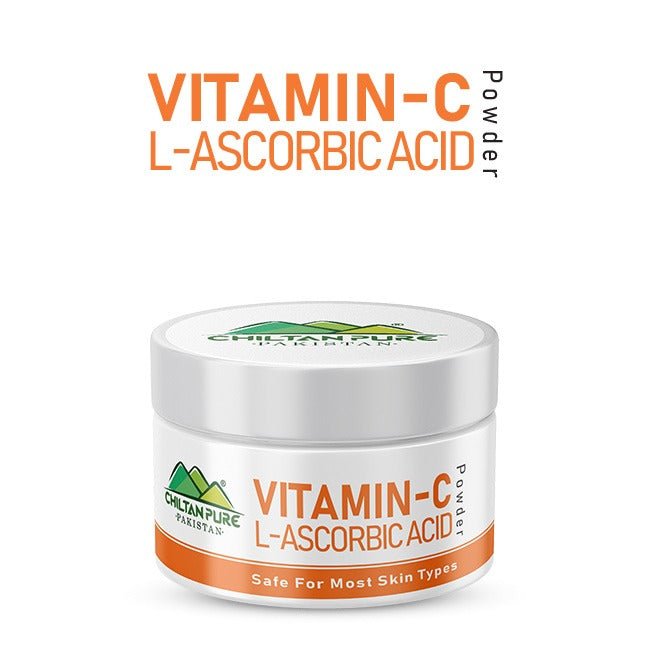
The Vitamin C Powder is a high-purity L-ascorbic acid powder, and its product page describes it as an ingredient used in serums and creams. Pure L-ascorbic acid is very potent, so if you are not experienced with it, follow the directions on the product page and get advice from a skincare professional before using it on your skin.

A Simple Vitamin C Routine
Always follow the time of day recommended on your serum's label.
Morning Routine
Use this with a morning-use serum such as the Skin Renewing Vitamin C Serum.
- Vitamin C Face Wash
- Vitamin C serum
- Vitamin C Cream or Hydrating Moisturizer
- Sunscreen
Evening Routine
Use this with an evening-use serum such as the Chiltan Pure Vitamin C Serum.
- Gentle cleanser
- Vitamin C serum, 2 to 3 drops
- Moisturizer
- Once or twice a week: Vitamin C Mud Mask or Clay as a treatment step before your serum
Avoid using retinol in the same routine as the serums above unless a professional has advised you to do so.
Common Side Effects and How to Avoid Them
Vitamin C is generally well tolerated, but some people may experience:
- Tingling or Mild Stinging: Normal for some people with higher strengths, especially at first.
- Redness or Dryness: Reduce frequency, use a lower strength and add a moisturizer.
- Irritation From Fragrance or Essential Oils: If you are sensitive to citrus, choose a fragrance-free formula and always patch test.
If irritation persists, stop using the product and consult a dermatologist. To minimize the risk, introduce new products slowly, patch test, and avoid combining too many active ingredients at once.

Conclusion
Vitamin C is one of the most trusted, well-studied ingredients in skincare. Whether your goal is a brighter complexion, fading dark spots, or protecting your skin from the sun and pollution, a quality Vitamin C serum is a valuable addition to your routine. The key is to choose a stable formula that matches your experience level, use it consistently, protect your skin with sunscreen and be patient.
Ready to start? Explore the Vitamin C serum range at Chiltan Pure and build a complete brightening routine with the other products in the Vitamin C collection.
Frequently Asked Questions
Can I use a Vitamin C serum every day?
Yes, most people can use it daily once their skin has adjusted. Start slowly if your skin is sensitive, and follow the directions on your product.
Should I apply Vitamin C before or after moisturizer?
Before. Serums go on first because they are lighter, then moisturizer follows.
How long does it take to see results?
Brightness may improve in a few weeks, while dark spots and texture usually need 8 to 12 weeks or longer of consistent use.
Can I use Vitamin C if I have oily or acne-prone skin?
Yes. Lightweight serums can suit oily skin, and Vitamin C may help with the marks left behind by breakouts.
Is it safe to use Vitamin C in the sun?
Yes. Vitamin C does not make the skin more sensitive to the sun, but you should always wear sunscreen.
Why did my Vitamin C serum change color?
Oxidation. Vitamin C breaks down when exposed to air, light and heat. A slight yellow tint can be normal for some formulas, but a dark brown color usually means it is time to replace it.
Can I use Vitamin C with retinol?
Many people use both, but at different times, for example, Vitamin C in the morning and retinol at night. However, some Chiltan Pure serums specifically say not to use them with retinol products, so always check the label of your serum.
Is Vitamin C safe during pregnancy?
Topical Vitamin C is commonly considered safe, but it is always best to check with your doctor about any skincare product during pregnancy.
This article is for general information and does not replace professional medical or dermatological advice. If you have a skin condition or concerns, please consult a qualified professional.