





- Choosing a selection results in a full page refresh.
DOWNLOAD our App & Get Amazing Discount
Download Now
|
Pay in 3 Installments of
Rs. 166Need More Discount ~ Chat with Sales Person! BARGAIN NOW
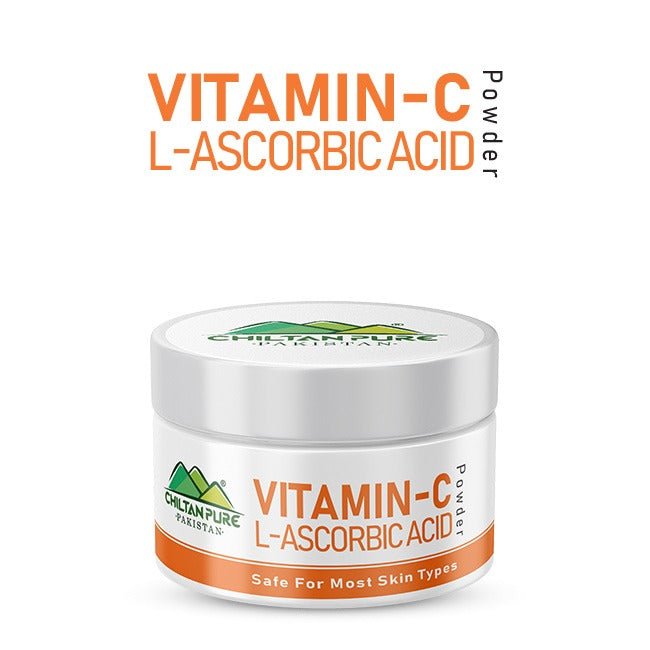
Vitamin C, in its purest cosmetically active form as L-Ascorbic Acid, is a water-soluble vitamin found naturally in citrus fruits, rose hips, and leafy greens. Its role in topical skin care became scientifically prominent in the late twentieth century when research confirmed its dual ability to modulate melanin synthesis and directly support dermal collagen networks. Today it is considered one of the most evidence-backed actives in cosmetic dermatology and is a foundational ingredient in professional brightening formulations worldwide.
What distinguishes L-Ascorbic Acid from all other vitamin C derivatives is that it is the biologically direct form — no skin-level conversion is required. It penetrates the stratum corneum most effectively at a working pH of 2.5 to 3.5, where it delivers antioxidant, tyrosinase-inhibiting, and collagen-stimulating activity simultaneously. At concentrations above 10 percent, published clinical studies report measurable increases in dermal collagen density over 8 to 12 weeks of consistent use, making it a genuine anti-aging active rather than a surface-level cosmetic.
Bio Shop Pakistan supplies cosmetic-grade L-Ascorbic Acid powder suitable for professional skin care formulators, independent beauty brands, DIY beauty makers, and cosmetic science students.
The gold-standard application for L-Ascorbic Acid — water-based serums at pH 2.8 to 3.2 deliver maximum brightening, antioxidant, and collagen-stimulating activity. Stabilize with 0.5% ferulic acid and 1% vitamin E, and package in amber airless containers to delay oxidation.
L-Ascorbic Acid is not a primary hair care active and most hair care formulas are buffered to pH 4.5–6.0, where vitamin C efficacy is negligible. It can be incorporated into acidifying rinses at 1–2% to lower pH and temporarily smooth the cuticle, but results are limited.
Vitamin C is a well-established adjunct to sunscreen formulations, where it quenches UV-generated reactive oxygen species that chemical and mineral filters cannot fully neutralize. Add at 5–10% to a water phase of a sunscreen emulsion at pH below 3.5 and stabilize with vitamin E.
Suitable in low-pH aqueous scrub bases at 2–5% for a brightening and antioxidant body treatment. Anhydrous butters and balms are not compatible as L-Ascorbic Acid requires water to dissolve, activate, and reach the skin surface.
Can function as a mild brightening and odor-control active in underarm serums or deodorant gels at 1–2%. Not recommended in baby care products due to the required low pH and irritation risk for delicate infant skin.
Thanks for subscribing!
This email has been registered!