![Red Onion Oil 🧅 Reduces Hair Fall & Accelerates Hair Regrowth [پیاز کا تیل].. Trending.... 🔥 - ChiltanPure](http://chiltanpure.com/cdn/shop/products/red-onion-oil-reduces-hair-fall-amp-accelerates-hair-regrowth-piaz-ka-til-trending-394813_640x.jpg?v=1707464619)
![Red Onion Oil 🧅 Reduces Hair Fall & Accelerates Hair Regrowth [پیاز کا تیل].. Trending.... 🔥 - ChiltanPure](http://chiltanpure.com/cdn/shop/products/red-onion-oil-reduces-hair-fall-amp-accelerates-hair-regrowth-piaz-ka-til-trending-329640_1170x.jpg?v=1708127491)





Ketoconazole Cream 2% Guide: Uses, Ingredients, How It Works

Ketoconazole 2% cream is a medicated antifungal cream applied to the skin to treat certain fungal and yeast skin conditions, such as ringworm, jock itch, athlete's foot, tinea versicolor and seborrheic dermatitis, depending on the approved label. It works by damaging the cell membrane of the fungus so the infection cannot keep growing.
Bolan Clinic Ketoconazole Cream 2% combines ketoconazole 2% with skin-conditioning ingredients: aloe vera, glycerin, shea butter and tea tree oil. It is a medicine rather than a natural remedy, and it should be used exactly as directed on the pack or by a healthcare professional.
Why Fungal Skin Infections Are So Common in Pakistan
Fungi are everywhere: in soil, on surfaces, and even on healthy skin. Most of the time they cause no trouble. Problems begin when the skin stays warm, damp and covered for long periods, which is exactly what happens during Pakistan's long hot summers and humid monsoon months.
Heavy sweating, tight synthetic clothing, closed shoes worn all day, shared towels and public bathrooms all give fungus the conditions it prefers. This is why ringworm, groin itch and foot infections are among the most common skin complaints in South Asia, and why many people deal with the same infection more than once.
Fungal Skin Infections: The Basics
A fungal skin infection happens when fungus grows on the top layers of the skin, nails or scalp. The most common culprits are dermatophytes, a group of fungi that feed on keratin, the protein in skin, hair and nails. Yeasts such as Candida and Malassezia can also cause skin problems.
Common Types You May Have Heard Of
- Athlete's Foot (Tinea Pedis): Itching, burning, peeling or cracking skin, usually between the toes or on the soles.
- Jock Itch (Tinea Cruris): A red, itchy, sometimes ring-shaped rash in the groin and inner thighs.
- Ringworm (Tinea Corporis): Round, scaly patches with a slightly raised edge on the body. Despite the name, no worm is involved.
- Tinea Versicolor: Small, flaky patches that look lighter or darker than the surrounding skin, caused by an overgrowth of Malassezia yeast.
- Cutaneous Candidiasis: A yeast infection that appears in warm skin folds, such as under the breasts or in the groin.
- Seborrheic Dermatitis: Greasy, flaky, red skin on the scalp, face and chest, linked to Malassezia yeast and the skin's response to it.
Typical Signs
Itching, burning, redness, scaling, cracked skin, and patches that slowly spread outward are the classic signs. However, eczema, psoriasis, contact dermatitis and heat rash can look very similar. That is why a correct diagnosis matters before choosing any treatment.

What Is Ketoconazole?
Ketoconazole belongs to a family of medicines called azole antifungals. It blocks an enzyme fungi need to make ergosterol, a key building block of their cell membrane. Without enough ergosterol, the membrane becomes leaky and weak, and the fungus cannot grow or multiply properly. Your skin's own renewal process then clears away the damaged fungal cells.
Ketoconazole is available in several forms:
- Cream (2%): For skin conditions on the body, groin, feet and other skin areas.
- Shampoo (Usually 1% or 2%): For scalp conditions such as dandruff and seborrheic dermatitis.
- Tablets: A prescription oral form reserved for more serious infections. The strong safety warnings you may see online, including liver-related warnings, apply to the oral tablets, not to the cream.
When applied to the skin, very little ketoconazole is absorbed into the bloodstream, which is one reason the cream is widely used for localized infections.

What Is Ketoconazole 2% Cream Used For?
Official labels for ketoconazole 2% cream describe its use for certain fungal and yeast skin conditions. Depending on the approved label of a specific product, these can include:
- Ringworm of the body (tinea corporis)
- Jock itch (tinea cruris)
- Athlete's foot (tinea pedis)
- Tinea versicolor
- Cutaneous candidiasis
- Seborrheic dermatitis
Indications can differ between manufacturers and countries, so check the ones printed on the pack in your hand.
What It Is Not For
Ketoconazole cream does not treat bacterial infections, viral rashes, eczema, psoriasis, allergic rashes or heat rash. Using an antifungal on a rash that is not fungal will not help and may delay the right treatment.

Meet Bolan Clinic Ketoconazole Cream 2%
Bolan Clinic Ketoconazole Cream 2% is a topical antifungal cream sold in a 75 g pack and available on ChiltanPure.
| Detail | Information |
|---|---|
| Brand | Bolan Clinic |
| Active ingredient | Ketoconazole 2% |
| Pack size | 75 g |
| Form | Topical cream, described as non-greasy |
| Highlighted skin-conditioning ingredients | Aloe vera, glycerin, shea butter, tea tree oil |
| Application | External use only |
The cream is positioned for itching, burning and flaking linked to athlete's foot, ringworm and jock itch.
Ingredient Breakdown: What Each Component Does
A good cream is more than its active ingredient. The base determines how the product feels, how well it spreads and how comfortable it is on irritated skin.
Ketoconazole 2%: The Active Medicine
This is the ingredient that does the antifungal work. Everything else in the formula supports comfort and skin condition, not the treatment itself.
Glycerin: A Humectant
Glycerin attracts water into the upper layer of skin. Fungal rashes often leave skin dry, tight and flaky, so a humectant helps the skin feel more comfortable while the active ingredient works.
Aloe Vera: A Soothing Ingredient
Aloe vera is widely used in skin products for its cooling, soothing feel. The scientific evidence for aloe as a treatment is limited, so its role here is comfort and skin conditioning rather than fighting infection.
Shea Butter: An Emollient
Shea butter is a rich plant fat that softens skin and helps reduce moisture loss. In a cream base, it adds smoothness and a soft feel on the skin.
Tea Tree Oil: A Botanical With Antimicrobial Properties
Tea tree oil is well known in laboratory studies for antimicrobial activity. In this formula, it plays a supporting role. It is also a recognized cause of allergic contact dermatitis in some people, so anyone with sensitive skin or a history of reactions to essential oils should patch test first or ask a healthcare professional.

Natural Ingredients vs Medicated Antifungal: The Real Difference
Many shoppers in Pakistan search for a "natural" fungal cream. It helps to be clear about what that means.
Ketoconazole is a synthetic pharmaceutical ingredient. Any cream that contains it is a medicated product, no matter how many botanical ingredients sit beside it. Bolan Clinic Ketoconazole Cream 2% is therefore not a 100% natural, herbal or medicine-free product.
What sets this formula apart is the supporting cast. Some conventional ketoconazole creams use a basic cream base. This formula highlights aloe vera, glycerin, shea butter and tea tree oil as additions intended to keep skin comfortable and moisturized during use.
| Feature | Typical Ketoconazole 2% Cream | Bolan Clinic Ketoconazole Cream 2% |
|---|---|---|
| Antifungal active | Ketoconazole 2% | Ketoconazole 2% |
| Category | Medicated topical antifungal | Medicated topical antifungal |
| Base and extras | Varies by manufacturer | Aloe vera, glycerin, shea butter, tea tree oil highlighted |
| Skin feel | Varies; some are thick or greasy | Described as non-greasy |
| Pack size | Varies by brand | 75 g |
| Best way to compare | Read the active ingredient, full ingredient list, directions, and warnings | Read the approved Bolan Clinic label and follow its directions |
Formulas differ between brands, so this comparison is general. It does not claim that Bolan Clinic is clinically superior to any other ketoconazole cream. The difference lies in the comfort-focused base, not in a stronger or different active.
How to Choose a Reliable Antifungal Cream in the Pakistani Market
The market has many options, including imported brands, local manufacturers and combination creams. Here is a practical checklist.
- Check the Active Ingredient and Strength: The label should clearly state the antifungal and its percentage.
- Look for Manufacturer and Batch Details: Genuine medicines show the manufacturer, batch number, manufacturing date, expiry date and registration information.
- Read the Full Ingredient List: This matters if you have known allergies, for example to essential oils or fragrance.
- Be Careful With Steroid Combination Creams: Some creams combine an antifungal with a strong steroid. These can make a rash look better for a few days while allowing the fungus to spread deeper, and misuse of such combinations is a recognized contributor to stubborn, recurring ringworm in South Asia. They should only be used when a doctor has prescribed them.
- Buy From a Trusted Seller: Packaging should be sealed, undamaged and consistent with the manufacturer's label.
- Match the Product to the Problem: A cream is for skin. A shampoo is for the scalp.

How to Use Ketoconazole Cream Safely
The directions printed on your pack, or given by your doctor or pharmacist, always take priority. In general, topical antifungal use follows these principles:
- Wash and thoroughly dry the affected area first. Fungus thrives in moisture, so dry carefully, especially between toes and in skin folds.
- Apply a thin layer to the affected area and a small margin of healthy skin around it, as directed on the label.
- Wash your hands after application, unless the hands are the treated area.
- Keep using it for the full period directed, even if itching fades early. Stopping too soon is a common reason infections return.
- Do not use more often or for longer than directed.
- Keep it away from the eyes, mouth and other mucous membranes.
Habits That Help Prevent a Repeat Infection
- Change out of sweaty clothes and socks promptly.
- Choose breathable cotton fabrics and well-ventilated footwear.
- Do not share towels, socks, combs or razors.
- Dry skin folds fully after bathing.
- Wear sandals in shared bathrooms, gyms and changing rooms where floors stay wet.
- Wash clothes and towels used during an infection in hot water where fabric allows.

Precautions and Possible Side Effects
Topical ketoconazole is generally well tolerated, but no medicine suits everyone.
- Do not use it if you are allergic to ketoconazole or any ingredient in the formula.
- Mild local reactions such as stinging, itching, dryness or redness can occur.
- Stop using it and seek medical advice if you notice significant irritation, swelling, blistering or signs of an allergic reaction.
- Ask a healthcare professional before using it during pregnancy or breastfeeding, or on children.
- For external use only. Keep out of reach of children.

Ketoconazole Cream vs Ketoconazole Shampoo
Both contain ketoconazole, but they are built for different areas of the body, so one cannot simply replace the other.
| Feature | Ketoconazole cream | Ketoconazole shampoo |
|---|---|---|
| Best suited for | Skin of the body, groin and feet | Scalp and hair |
| Typical conditions | Ringworm, jock itch, athlete's foot and similar skin infections | Dandruff and scalp seborrheic dermatitis |
| How it is used | Applied as a thin layer and left on the skin | Lathered on the scalp, left for a short contact time, then rinsed off |
| Strength | 2% in this product | Varies by product, so check the label |
| Why not swap | Not formulated for the hair-covered scalp | Not designed to stay on skin, so contact time and rinsing are different |
The cream's moisturizing base suits skin that needs comfort and protection, while a shampoo is formulated to spread through hair and rinse clean. For that reason, use each product only for the area and purpose stated on its own label. If a skin patch and a flaky scalp occur together, ask a healthcare professional whether both products are appropriate for you rather than combining them on your own.
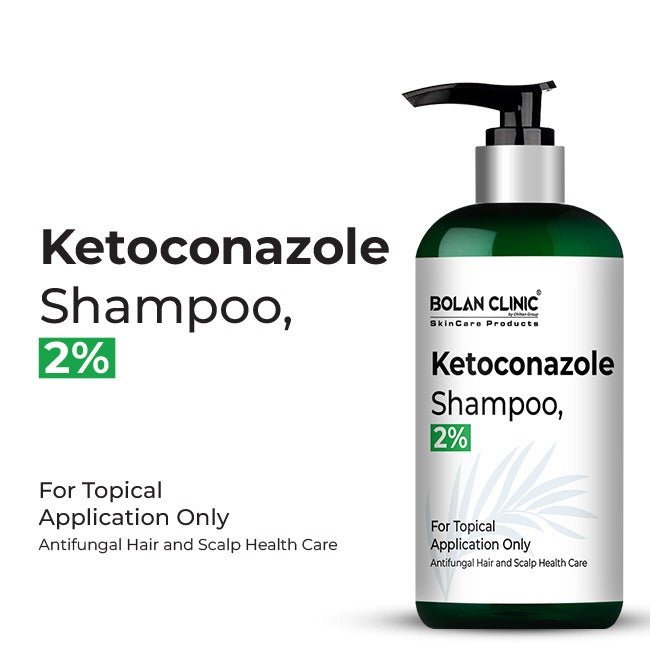
If your main concern is dandruff or scalp flaking, see our Ketoconazole Shampoo for scalp care.
Conclusion
Fungal skin infections are common and often stubborn, but they are manageable when the right treatment is matched to the right problem. Ketoconazole 2% is a well-established antifungal, and Bolan Clinic's cream pairs it with aloe vera, glycerin, shea butter and tea tree oil in a base described as non-greasy.
Use it for fungal conditions rather than every itchy rash, finish the full period directed on the label, and keep the skin dry and cool with breathable clothing. If you are unsure about a diagnosis or the rash is not improving, a pharmacist or doctor can point you in the right direction.
To explore the product, visit the Bolan Clinic Ketoconazole Cream 2% on ChiltanPure.
Frequently Asked Questions
What Does Ketoconazole 2% Cream Treat?
It treats certain fungal and yeast skin conditions, as listed on the approved label of the specific product.
How Long Does It Take to Work?
Itching and discomfort often begin to ease within days, but the infection needs the full course on the label to clear properly. Timing varies by condition and person.
Is Bolan Clinic Ketoconazole Cream 2% Natural?
No. It is a medicated antifungal. It does include botanical and skin-conditioning ingredients, but ketoconazole is the active medicine.
Can I Use It on My Face or Groin?
It is commonly used for groin infections, but the groin skin is delicate, so follow the label closely. Avoid the eyes and mucous membranes, and ask a healthcare professional before using it on the face.
Is Ketoconazole Cream the Same as Clotrimazole or Terbinafine Cream?
They are all antifungals, but they are different active ingredients. Your doctor or pharmacist can help choose the best fit for the condition.
Can I Use It for a Dark Patch or White Patch on My Skin?
Only if a healthcare professional has confirmed a fungal cause such as tinea versicolor. Many pigment changes have other causes.
Can I Apply a Steroid Cream With It?
Do not combine them on your own. Steroids can worsen fungal infections when used without supervision.
How Should I Store It?
Follow the storage instructions on the pack, usually in a cool, dry place, with the cap closed and away from children.
Medical Disclaimer
This article is for general information and does not replace professional medical advice, diagnosis or treatment. The final indications, directions, warnings and ingredient list are those printed on the approved product packaging.