DOWNLOAD our App & Get Amazing Discount
Download Now
Popular Products


Pait Safai / پیٹ صفائی / Natural Laxative Powder / ہر رات آدھا چمچ بنائے زندگی آسان
60 reviews
Prime Fast Delivery
Made with 100% Organic Herbs
Relieves constipation acidity
Bloating and other gastrointestinal issues
Safe to be used by the whole family
Gross Weight 260Grm
Net Weight 200Grm
- Rs. 999
Rs. 1,110- Rs. 999
- Unit price
- / per


Activated Charcoal Teeth / Whitening Treatment - Whitens Teeth Naturally, Kills Cavity causing Bacteria Eliminates Bad Breath
103 reviews
Prime Fast Delivery
Good For Smokers
Protects Gums
Whitens Teeth Naturally
Prevents from Permanent Staining
Removes Toxins from Mouth
Eliminates Bad Breath
Kills Cavity causing Bacteria
Removes Plaque Build up
50ml
- Rs. 999
Rs. 1,110- Rs. 999
- Unit price
- / per
![Red Onion Oil 🧅 Reduces Hair Fall & Accelerates Hair Regrowth [پیاز کا تیل].. Trending.... 🔥 - ChiltanPure](http://chiltanpure.com/cdn/shop/products/red-onion-oil-reduces-hair-fall-amp-accelerates-hair-regrowth-piaz-ka-til-trending-394813_640x.jpg?v=1707464619)
![Red Onion Oil 🧅 Reduces Hair Fall & Accelerates Hair Regrowth [پیاز کا تیل].. Trending.... 🔥 - ChiltanPure](http://chiltanpure.com/cdn/shop/products/red-onion-oil-reduces-hair-fall-amp-accelerates-hair-regrowth-piaz-ka-til-trending-329640_1170x.jpg?v=1708127491)
Red Onion Oil / Reduces Hair Fall & Accelerates Hair Regrowth
122 reviews
Prime Fast Delivery
Nourishes Scalp
Prevents Greying
Boosts Hair Growth
Adds Strength & shine
Wards off Dandruff
Rich in Sulphur
Prevents Split-Ends
Used as a Natural Conditioner
200ml
- Rs. 1,099
Rs. 1,220- Rs. 1,099
- Unit price
- / per


Red Onion Shampoo Natural Solution for Regrow Hair & Prevent Hair Loss.
110 reviews
Prime Fast Delivery
Naturally Low Foaming [SLS FREE]
Boosts Hair Growth
Lessen Dandruff
Reduce Split Ends
Makes Hair Strong
Strengthen Hair Follicles
Calms Itchy & Dry Scalp
Prevent Premature Hair Greying
260ml
500ml
- From Rs. 890
Rs. 1,600- From Rs. 890
- Unit price
- / per


Pinkish Lips & Cheek Tint (گلابی ٹِنٹ) - Organic Liquid stain for lips, Nourish Lips & Hydrate lips all day
112 reviews
Prime Fast Delivery
Rosy-Pink Tint
Long-Lasting
24/7 Stay
Lip Moisturizing
Sheer & Buildablel
Natural-Look
Smudge-Proof
Give Your Face a Fresh Look
Brightens Lips & Cheeks With a Cheery Pop Of Color
30ml
- Rs. 599
Rs. 666- Rs. 599
- Unit price
- / per


Henna Hair and Beard Dye (Chocolate & Coffee) – Prevents Premature Hair Greying, Improves Scalp Health, Balances pH & Oil Production
62 reviews
Prime Fast Delivery
Strengthens Hair
Repairs Split Ends
Restricts Hair Fall
Stress Reliever
Improves Scalp Health
Balances pH & Oil Production
Prevents Premature Hair Greying
200gm
- Rs. 799
Rs. 890- Rs. 799
- Unit price
- / per


Vitamin C Serum for Face – 30ml Brighter, Fresher and More Even-Looking Skin
114 reviews
Prime Fast Delivery
Lightens dark circles
Reduces Wrinkles
Provides moisture
Promotes healthy skin
Enhances skin tone
Fights pigmentation
Improves skin texture
Protects from sun damage
Stimulates collagen production
For all skin types
30ml
- Rs. 750
Rs. 1,220- Rs. 750
- Unit price
- / per


Mix Seeds Normal – Rich in Antioxidants, Metabolism Booster & Good Source of Omega-3
68 reviews
Prime Fast Delivery
Right Fuel for Health
Good Source Of Fiber
Lower Cholesterol
Relieves Diarrhea
Nutritious Source of Plant Protein
Help Lower Blood Pressure
Support Healthy Bones
Reduce Inflammation
Aid Blood Cell Formation
Small200g
Large750g
- From Rs. 699
Rs. 1,350- From Rs. 699
- Unit price
- / per


CHILTAN PURE Glow Facial Kit – 6-Step Professional Facial at Home
294 reviews
Prime Fast Delivery
Step 1,Glow Facial Cleanser
Step 2,Glow Facial Scrub
Step 3,Glow Facial Massaging Cream
Step 4,Glow Skin Polisher
Step 5,Glow Facial Mud Mask
Step 6,Glow Facial Serum
- Rs. 4,599
Rs. 5,090- Rs. 4,599
- Unit price
- / per

-10%
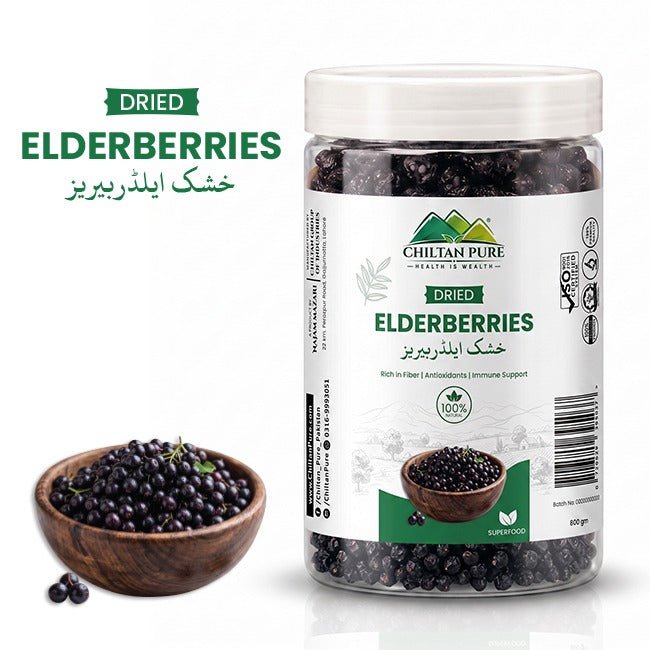
Dried Elderberries
2
sold in last
8
hours
Prime Fast Delivery
|
- Rs. 2,599
Rs. 2,884- Rs. 2,599
- Unit price
- / per
Pay in 3 Installments of
Rs. 866
10 customers are viewing this product


Need More Discount ~ Chat with Sales Person! BARGAIN NOW
Dried elderberries must be cooked before eating — they are not a ready-to-eat, straight-from-the-bag snack. Raw and dried-but-uncooked elderberries (along with the leaves, stems, roots, and seeds of the elder plant) naturally contain cyanogenic glycosides, compounds that can release small amounts of cyanide during digestion. Drying alone does not fully break these compounds down — only proper cooking (typically simmering in water for at least 20–30 minutes) does. Eating raw or undercooked elderberries can cause nausea, vomiting, diarrhea, and stomach cramps. Always cook dried elderberries thoroughly (in syrups, teas, jams, or other simmered preparations) before consuming, and never eat them straight from the pack.
Dried Elderberries come from the dark purple fruit of the Sambucus nigra plant, long valued for their deep color, tart flavor, and natural antioxidant content. Sun-dried or low-heat dried to preserve their character, these berries are a popular base for homemade elderberry syrup, teas, jams, and wellness blends. Please note: dried elderberries must be cooked before consumption — see the safety notice above for full details.
Disclaimer: This product is a natural dried fruit ingredient, not a ready-to-eat snack. It is not intended to diagnose, treat, cure, or prevent any disease. Always cook thoroughly before use, and consult a qualified healthcare provider before use if pregnant, nursing, on medication, or managing a health condition.
Key Features
- 100% Natural Sambucus Nigra Berries — no artificial additives.
- Deep, Naturally Dark Color — from the berries' own rich anthocyanin pigments.
- Versatile Base Ingredient — ideal for syrups, teas, jams, and baking once properly cooked.
- Naturally Rich in Antioxidants and Vitamin C (in the ripe, properly prepared berry).
- Long Shelf Life — drying naturally extends storage life when kept properly.
- Must Be Cooked Before Use — clearly labeled for safe preparation.
- No Artificial Preservatives (check label for your specific batch).
- Vegetarian & Vegan-Friendly.
What Are Dried Elderberries?
Dried Elderberries are the sun-dried or low-heat dried berries of the elder plant, most commonly Sambucus nigra (European elderberry) or Sambucus canadensis (American elderberry). The berries are small, dark purple-black, and grow in clusters on the elder shrub. Once dried, they develop a wrinkled, raisin-like appearance and a deeply tart, slightly earthy flavor. They are almost always used as a cooking ingredient — for syrups, teas, jams, and wine — rather than eaten on their own.
A Look at Their History
Elderberries have a long history stretching back thousands of years across Europe, where the elder tree was often considered a sacred or protective plant in folklore. Traditional European households used elderberries and elderflowers in home remedies, wines, cordials, and preserves for generations, particularly during the cold winter months. The berries' use as a seasonal wellness ingredient — most famously as elderberry syrup — has been passed down through generations of European herbal tradition and remains one of the most recognized uses of the plant today, now enjoyed and studied around the world.
Sourcing & Production
- Harvesting — Elderberry clusters are hand-harvested once fully ripe, when the berries have turned a deep purple-black color (unripe green or red berries are not used, as they carry higher toxin concentrations).
- Removing Stems — Berries are carefully separated from their stems, as the stems themselves are toxic and must not be included.
- Washing — The separated berries are thoroughly washed.
- Drying — Berries are dried slowly using controlled low heat or sun-drying, reducing their moisture content while preserving their color and character.
- Sorting & Inspection — Dried berries are inspected to remove any remaining stem fragments, leaves, or inconsistent berries.
- Packaging — The dried elderberries are packed to preserve freshness and are clearly labeled with cooking instructions before final packaging.
Ingredients Breakdown
| Ingredient | Role |
|---|---|
| Elderberries (Sambucus nigra/canadensis) | The sole core ingredient — dried whole berries. |
| No Artificial Colors | The deep purple-black color comes naturally from the berries' own anthocyanins. |
| No Added Sugar | Left in its natural, unsweetened dried form — sweetness is typically added during cooking (e.g., in syrup recipes). |
Please refer to the printed label on your specific pack for the exact, verified ingredient list and species used, as safety guidance can vary slightly by elderberry species.
Taste Profile
Dried Elderberries have a distinctly tart, slightly bitter, and earthy flavor with a deep berry undertone — quite different from sweeter dried fruits like raisins or dried blueberries. This is why they are almost always cooked with added sweeteners (like honey or sugar) in syrups, jams, and teas, rather than eaten plain.
How to Prepare Dried Elderberries Safely
- Add dried elderberries to a pot with water (a common ratio is roughly 1 part dried berries to 3–4 parts water).
- Bring to a boil, then reduce to a gentle simmer for at least 20–30 minutes to fully break down the natural compounds.
- Strain out the softened berries.
- Use the strained liquid as a base for syrup (often combined with honey), tea, or other recipes — never consume the dried berries directly without this cooking step.
Who Should Be Cautious
- Pregnant or breastfeeding individuals should consult a doctor before using elderberry products.
- Not recommended for children without medical guidance, and only in properly cooked, age-appropriate preparations.
- Individuals taking immune-modulating medications, diabetes medications, or other prescriptions should consult a doctor first, as elderberry may interact with certain medications.
- Never consume raw or uncooked dried elderberries, and never use the leaves, stems, roots, or seeds of the elder plant.
- This product is not a substitute for medical treatment for any diagnosed condition.
Why Choose These Dried Elderberries
- Naturally Sourced — made from real Sambucus berries, hand-harvested at proper ripeness.
- Trusted Traditional Ingredient — rooted in generations of European herbal and culinary use.
- Versatile Base — perfect for homemade syrups, teas, jams, and baked goods once cooked.
- Clearly Labeled for Safe Use — preparation guidance included for safe, confident use at home.
Frequently Asked Questions (FAQs)
1. Can I eat dried elderberries straight from the bag? No. Dried elderberries must be cooked (typically simmered in water for at least 20–30 minutes) before eating. Drying alone does not remove the natural compounds that can cause nausea, vomiting, or stomach upset if eaten raw.
2. Why do dried elderberries need to be cooked? Elderberries naturally contain cyanogenic glycosides, compounds that can release small amounts of cyanide during digestion. Cooking breaks these compounds down, making the berries safe to consume.
3. What's the best way to use dried elderberries? The most common use is simmering them in water to make a base for elderberry syrup, tea, or jam.
4. Are dried elderberries 100% natural? Yes, they are made from real Sambucus berries, without artificial additives. Always check your specific label for the exact species and any additional ingredients.
5. Can children have elderberry products? Only properly cooked, age-appropriate preparations, and generally with a doctor's guidance for younger children.
6. Is it safe to use elderberries during pregnancy or breastfeeding? Please consult your doctor before using elderberry products during pregnancy or breastfeeding.
7. Do elderberries interact with medications? Elderberry may interact with certain medications, including some immune-related and diabetes medications. Consult your doctor or pharmacist if you're on any prescription medicine.
8. What do dried elderberries taste like? They have a tart, slightly bitter, earthy flavor — quite different from sweeter dried fruits, which is why they're typically cooked with a sweetener.
9. How should I store dried elderberries? Store in a cool, dry place in an airtight container, away from direct sunlight.
10. What's the shelf life of dried elderberries? Refer to the manufacturing and expiry date printed on your specific pack.
11. Are dried elderberries gluten-free? Elderberries themselves are naturally gluten-free, but always check your specific label to confirm no cross-contamination.
12. Do dried elderberries cure or prevent illness? No. This product is a natural food ingredient only and is not intended to diagnose, treat, cure, or prevent any disease. Please rely on a qualified doctor for the diagnosis and treatment of any health condition.
13. Do you offer bulk or wholesale orders? Yes — for bulk or wholesale inquiries, please contact our customer support team directly.
Related Products
Example product title
- Rs. 2,599
Rs. 2,884- Rs. 2,599
- Unit price
- / per
Example product title
- Rs. 2,599
Rs. 2,884- Rs. 2,599
- Unit price
- / per
Example product title
- Rs. 2,599
Rs. 2,884- Rs. 2,599
- Unit price
- / per
Example product title
- Rs. 2,599
Rs. 2,884- Rs. 2,599
- Unit price
- / per
Example product title
- Rs. 2,599
Rs. 2,884- Rs. 2,599
- Unit price
- / per
Example product title
- Rs. 2,599
Rs. 2,884- Rs. 2,599
- Unit price
- / per
Example product title
- Rs. 2,599
Rs. 2,884- Rs. 2,599
- Unit price
- / per
Example product title
- Rs. 2,599
Rs. 2,884- Rs. 2,599
- Unit price
- / per
Example product title
- Rs. 2,599
Rs. 2,884- Rs. 2,599
- Unit price
- / per
Example product title
- Rs. 2,599
Rs. 2,884- Rs. 2,599
- Unit price
- / per
Recently Viewed Products
Example product title
- Rs. 2,599
Rs. 2,884- Rs. 2,599
- Unit price
- / per
Example product title
- Rs. 2,599
Rs. 2,884- Rs. 2,599
- Unit price
- / per
Example product title
- Rs. 2,599
Rs. 2,884- Rs. 2,599
- Unit price
- / per
Example product title
- Rs. 2,599
Rs. 2,884- Rs. 2,599
- Unit price
- / per
Example product title
- Rs. 2,599
Rs. 2,884- Rs. 2,599
- Unit price
- / per
Example product title
- Rs. 2,599
Rs. 2,884- Rs. 2,599
- Unit price
- / per
Example product title
- Rs. 2,599
Rs. 2,884- Rs. 2,599
- Unit price
- / per
Example product title
- Rs. 2,599
Rs. 2,884- Rs. 2,599
- Unit price
- / per
Example product title
- Rs. 2,599
Rs. 2,884- Rs. 2,599
- Unit price
- / per
Example product title
- Rs. 2,599
Rs. 2,884- Rs. 2,599
- Unit price
- / per
- Choosing a selection results in a full page refresh.