DOWNLOAD our App & Get Amazing Discount
Download Now
Popular Products


Pait Safai / پیٹ صفائی / Natural Laxative Powder / ہر رات آدھا چمچ بنائے زندگی آسان
60 reviews
Prime Fast Delivery
Made with 100% Organic Herbs
Relieves constipation acidity
Bloating and other gastrointestinal issues
Safe to be used by the whole family
Gross Weight 260Grm
Net Weight 200Grm
- Rs. 999
Rs. 1,110- Rs. 999
- Unit price
- / per


Activated Charcoal Teeth / Whitening Treatment - Whitens Teeth Naturally, Kills Cavity causing Bacteria Eliminates Bad Breath
103 reviews
Prime Fast Delivery
Good For Smokers
Protects Gums
Whitens Teeth Naturally
Prevents from Permanent Staining
Removes Toxins from Mouth
Eliminates Bad Breath
Kills Cavity causing Bacteria
Removes Plaque Build up
50ml
- Rs. 999
Rs. 1,110- Rs. 999
- Unit price
- / per
![Red Onion Oil 🧅 Reduces Hair Fall & Accelerates Hair Regrowth [پیاز کا تیل].. Trending.... 🔥 - ChiltanPure](http://chiltanpure.com/cdn/shop/products/red-onion-oil-reduces-hair-fall-amp-accelerates-hair-regrowth-piaz-ka-til-trending-394813_640x.jpg?v=1707464619)
![Red Onion Oil 🧅 Reduces Hair Fall & Accelerates Hair Regrowth [پیاز کا تیل].. Trending.... 🔥 - ChiltanPure](http://chiltanpure.com/cdn/shop/products/red-onion-oil-reduces-hair-fall-amp-accelerates-hair-regrowth-piaz-ka-til-trending-329640_1170x.jpg?v=1708127491)
Red Onion Oil / Reduces Hair Fall & Accelerates Hair Regrowth
122 reviews
Prime Fast Delivery
Nourishes Scalp
Prevents Greying
Boosts Hair Growth
Adds Strength & shine
Wards off Dandruff
Rich in Sulphur
Prevents Split-Ends
Used as a Natural Conditioner
200ml
- Rs. 1,099
Rs. 1,220- Rs. 1,099
- Unit price
- / per


Red Onion Shampoo Natural Solution for Regrow Hair & Prevent Hair Loss.
110 reviews
Prime Fast Delivery
Naturally Low Foaming [SLS FREE]
Boosts Hair Growth
Lessen Dandruff
Reduce Split Ends
Makes Hair Strong
Strengthen Hair Follicles
Calms Itchy & Dry Scalp
Prevent Premature Hair Greying
260ml
500ml
- From Rs. 890
Rs. 1,600- From Rs. 890
- Unit price
- / per


Pinkish Lips & Cheek Tint (گلابی ٹِنٹ) - Organic Liquid stain for lips, Nourish Lips & Hydrate lips all day
112 reviews
Prime Fast Delivery
Rosy-Pink Tint
Long-Lasting
24/7 Stay
Lip Moisturizing
Sheer & Buildablel
Natural-Look
Smudge-Proof
Give Your Face a Fresh Look
Brightens Lips & Cheeks With a Cheery Pop Of Color
30ml
- Rs. 599
Rs. 666- Rs. 599
- Unit price
- / per


Henna Hair and Beard Dye (Chocolate & Coffee) – Prevents Premature Hair Greying, Improves Scalp Health, Balances pH & Oil Production
62 reviews
Prime Fast Delivery
Strengthens Hair
Repairs Split Ends
Restricts Hair Fall
Stress Reliever
Improves Scalp Health
Balances pH & Oil Production
Prevents Premature Hair Greying
200gm
- Rs. 799
Rs. 890- Rs. 799
- Unit price
- / per


Vitamin C Serum for Face – 30ml Brighter, Fresher and More Even-Looking Skin
114 reviews
Prime Fast Delivery
Lightens dark circles
Reduces Wrinkles
Provides moisture
Promotes healthy skin
Enhances skin tone
Fights pigmentation
Improves skin texture
Protects from sun damage
Stimulates collagen production
For all skin types
30ml
- Rs. 750
Rs. 1,220- Rs. 750
- Unit price
- / per


Mix Seeds Normal – Rich in Antioxidants, Metabolism Booster & Good Source of Omega-3
68 reviews
Prime Fast Delivery
Right Fuel for Health
Good Source Of Fiber
Lower Cholesterol
Relieves Diarrhea
Nutritious Source of Plant Protein
Help Lower Blood Pressure
Support Healthy Bones
Reduce Inflammation
Aid Blood Cell Formation
Small200g
Large750g
- From Rs. 699
Rs. 1,350- From Rs. 699
- Unit price
- / per


CHILTAN PURE Glow Facial Kit – 6-Step Professional Facial at Home
294 reviews
Prime Fast Delivery
Step 1,Glow Facial Cleanser
Step 2,Glow Facial Scrub
Step 3,Glow Facial Massaging Cream
Step 4,Glow Skin Polisher
Step 5,Glow Facial Mud Mask
Step 6,Glow Facial Serum
- Rs. 4,599
Rs. 5,090- Rs. 4,599
- Unit price
- / per

-10%
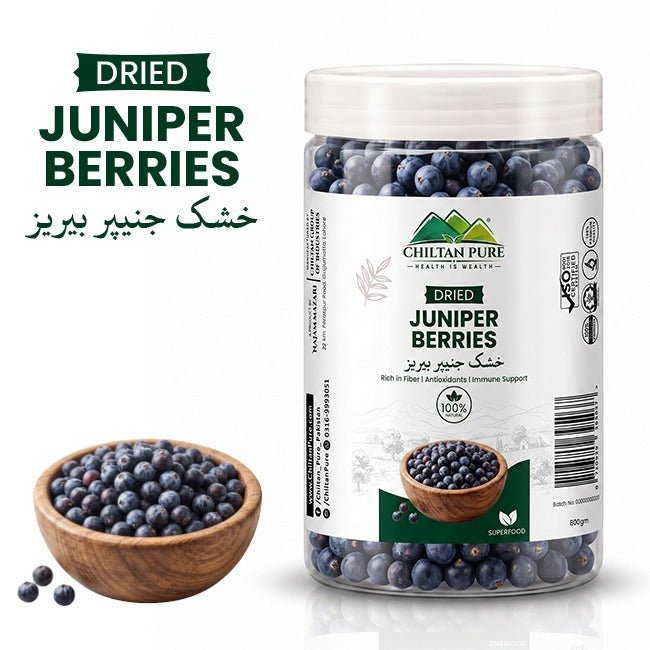
Dried Juniper Berries
2
sold in last
8
hours
Prime Fast Delivery
|
- Rs. 2,599
Rs. 2,884- Rs. 2,599
- Unit price
- / per
Pay in 3 Installments of
Rs. 866
10 customers are viewing this product


Need More Discount ~ Chat with Sales Person! BARGAIN NOW
Dried Juniper Berries come from the common juniper shrub, Juniperus communis, and are one of the most distinctive spices in the culinary world — best known for giving gin its signature aromatic flavor. With a pungent, pine-forward taste and a hint of citrus, these small, dark berries are a staple in European game cookery, marinades, sauerkraut, and slow-cooked meat dishes. Note: juniper berries are used as a pungent spice, in small quantities — not eaten by the handful like a dried fruit snack.
Key Features
- 100% Natural Juniperus Communis Berries — the culinary juniper species, not an ornamental or toxic variety.
- Distinctive Pine-Citrus Flavor — the same aromatic character used to flavor gin.
- Whole Dried Berries — ideal for crushing, grinding, or using whole in cooking.
- Classic European Culinary Spice — a staple in game, pork, and cabbage dishes.
- Long Shelf Life — properly dried and stored, whole juniper berries keep well over time.
- No Artificial Additives — just the dried berry itself.
- Vegetarian & Vegan-Friendly.
What Are Dried Juniper Berries?
Dried Juniper Berries are the small, fleshy cones (commonly called "berries") of the common juniper shrub, Juniperus communis, an evergreen conifer native to Europe, Asia, and North America. Despite being called berries, they are technically female seed cones that take up to two years to fully ripen into their characteristic deep bluish-purple color with a light, dusty bloom on the skin. Once dried, they retain their strong, resinous aroma and are used almost exclusively as a spice rather than a fruit.
A Look at Their History
Juniper berries have a long and storied place in European history, both in the kitchen and in traditional practice. They've been used for centuries across Northern and Eastern Europe to season game meats, pork, and fermented cabbage dishes like sauerkraut, helping to balance rich, fatty flavors with their sharp, resinous character. Perhaps most famously, juniper berries are the defining botanical behind gin — the Dutch drink "jenever," from which gin takes its name, was originally flavored with juniper for both taste and its traditional folk reputation. This connection between juniper and juniper-flavored spirits has endured for centuries and remains central to gin production worldwide today.
Sourcing & Production
- Species Identification — Only berries from Juniperus communis, the recognized culinary juniper species, are harvested; other juniper species are not used for consumption.
- Harvesting — Ripe berries, identified by their deep blue-purple color, are hand-harvested once fully matured (a process that can take up to two years on the shrub).
- Cleaning & Sorting — Harvested berries are cleaned to remove needles, twigs, and other plant debris, then sorted for consistent size and ripeness.
- Drying — The cleaned berries are dried slowly to reduce moisture while preserving their essential oils and aromatic character.
- Quality Inspection — Dried berries are inspected for color, aroma, and consistency before packaging.
- Packaging — Whole dried juniper berries are packed to protect their aromatic oils and preserve freshness until opened.
Ingredients Breakdown
| Ingredient | Role |
|---|---|
| Juniper Berries (Juniperus communis) | The sole ingredient — whole dried berries from the culinary juniper species. |
| No Additives | Sold as a pure, whole-spice ingredient with nothing else added. |
Please refer to the printed label on your specific pack to confirm species and sourcing, as culinary use should always be limited to Juniperus communis.
Taste & Aroma Profile
Dried Juniper Berries have a pungent, resinous, pine-forward aroma, balanced with a bright citrus note and a mildly sweet-bitter finish. Their flavor is concentrated, which is why they're used sparingly — typically crushed or lightly cracked to release their essential oils into a dish, rather than eaten whole in quantity.
Flavor Notes: Piney → Citrus → Mildly Bitter-Sweet Finish Texture: Firm, slightly wrinkled dried berry; releases aromatic oil when crushed.
How Juniper Berries Are Traditionally Used
- Game & Meat Dishes — a classic pairing with venison, wild boar, duck, and other game meats.
- Pork Dishes — often used in roasts, pâtés, and terrines.
- Sauerkraut & Fermented Cabbage — a traditional addition in German, Polish, and Alsatian cooking.
- Marinades & Brines — crushed berries add aromatic depth to meat marinades and brines.
- Sauces & Gravies — a few crushed berries can deepen the flavor of rich, savory sauces.
- Homemade Infusions — used by home cocktail enthusiasts to flavor homemade gin-style spirits or infused syrups.
- Herbal Teas — occasionally used in small amounts in herbal tea blends (check sourcing and moderation guidance).
Important Precautions
- Use in Moderation — juniper berries are a potent spice, not a snack food; they are typically used a few berries at a time, crushed or whole, rather than consumed in large quantities.
- Not Recommended During Pregnancy — juniper berries have traditionally been associated with uterine-stimulating effects and are generally advised against during pregnancy.
- Caution for Kidney Conditions — individuals with kidney disease or related conditions should avoid or limit juniper berry use, as it may be irritating to the kidneys in larger quantities.
- Species Matters — always ensure the product is sourced from Juniperus communis; other juniper species (such as Juniperus sabina) are not suitable for consumption.
- Consult a Doctor if Unsure — especially if you are managing diabetes, blood pressure concerns, or taking medication, as juniper may interact with certain treatments.
Why Choose These Dried Juniper Berries
- Correctly Sourced Species — from Juniperus communis, the recognized culinary variety.
- Naturally Aromatic — whole berries retain their essential oils and full flavor.
- Classic Culinary Ingredient — a staple spice for European-style cooking and homemade infusions.
- Simple, Pure Product — just the dried berry, with nothing else added.
Frequently Asked Questions (FAQs)
1. What exactly are juniper berries? Juniper berries are the small, fleshy seed cones of the Juniperus communis shrub, best known as the signature flavoring botanical in gin, and widely used as a culinary spice in European cooking.
2. Are all juniper berries safe to eat? No — only Juniperus communis is the recognized culinary species. Other juniper species, such as Juniperus sabina, are not suitable for consumption. Always confirm sourcing.
3. How are juniper berries used in cooking? They are typically crushed or lightly cracked and used in small amounts to flavor game meats, pork dishes, sauerkraut, marinades, sauces, and homemade spirit infusions.
4. Can I eat juniper berries like a dried fruit snack? No — juniper berries are a concentrated, pungent spice meant to be used in small quantities within recipes, not eaten by the handful.
5. Is it safe to use juniper berries during pregnancy? Juniper berries are generally advised against during pregnancy due to their traditional association with uterine-stimulating effects. Please consult your doctor before use if pregnant or trying to conceive.
6. Are juniper berries safe for people with kidney conditions? Caution is advised — juniper berries may be irritating to the kidneys in larger quantities, so those with kidney disease should consult a doctor before use.
7. How should I store dried juniper berries? Store in a cool, dry place in an airtight container, away from direct sunlight, to help preserve their aromatic oils.
8. What's the shelf life of dried juniper berries? Refer to the manufacturing and expiry date printed on your specific pack. Whole dried spices generally retain their best flavor for up to a year or more when stored properly.
9. Do juniper berries need to be crushed before use? For most recipes, lightly crushing or cracking the berries helps release their essential oils and flavor, though some recipes call for whole berries that are removed before serving.
10. Is this product gluten-free? Juniper berries themselves are naturally gluten-free, but always check your specific label to confirm no cross-contamination.
11. Does this product interact with medications? Juniper berries may interact with certain medications, including those for diabetes or blood pressure. Consult your doctor or pharmacist if you're on any prescription medicine and plan to use juniper regularly.
12. Do you offer bulk or wholesale orders? Yes — for bulk or wholesale inquiries, please contact our customer support team directly.
Related Products
Example product title
- Rs. 2,599
Rs. 2,884- Rs. 2,599
- Unit price
- / per
Example product title
- Rs. 2,599
Rs. 2,884- Rs. 2,599
- Unit price
- / per
Example product title
- Rs. 2,599
Rs. 2,884- Rs. 2,599
- Unit price
- / per
Example product title
- Rs. 2,599
Rs. 2,884- Rs. 2,599
- Unit price
- / per
Example product title
- Rs. 2,599
Rs. 2,884- Rs. 2,599
- Unit price
- / per
Example product title
- Rs. 2,599
Rs. 2,884- Rs. 2,599
- Unit price
- / per
Example product title
- Rs. 2,599
Rs. 2,884- Rs. 2,599
- Unit price
- / per
Example product title
- Rs. 2,599
Rs. 2,884- Rs. 2,599
- Unit price
- / per
Example product title
- Rs. 2,599
Rs. 2,884- Rs. 2,599
- Unit price
- / per
Example product title
- Rs. 2,599
Rs. 2,884- Rs. 2,599
- Unit price
- / per
Recently Viewed Products
Example product title
- Rs. 2,599
Rs. 2,884- Rs. 2,599
- Unit price
- / per
Example product title
- Rs. 2,599
Rs. 2,884- Rs. 2,599
- Unit price
- / per
Example product title
- Rs. 2,599
Rs. 2,884- Rs. 2,599
- Unit price
- / per
Example product title
- Rs. 2,599
Rs. 2,884- Rs. 2,599
- Unit price
- / per
Example product title
- Rs. 2,599
Rs. 2,884- Rs. 2,599
- Unit price
- / per
Example product title
- Rs. 2,599
Rs. 2,884- Rs. 2,599
- Unit price
- / per
Example product title
- Rs. 2,599
Rs. 2,884- Rs. 2,599
- Unit price
- / per
Example product title
- Rs. 2,599
Rs. 2,884- Rs. 2,599
- Unit price
- / per
Example product title
- Rs. 2,599
Rs. 2,884- Rs. 2,599
- Unit price
- / per
Example product title
- Rs. 2,599
Rs. 2,884- Rs. 2,599
- Unit price
- / per
- Choosing a selection results in a full page refresh.