![Red Onion Oil 🧅 Reduces Hair Fall & Accelerates Hair Regrowth [پیاز کا تیل].. Trending.... 🔥 - ChiltanPure](http://chiltanpure.com/cdn/shop/products/red-onion-oil-reduces-hair-fall-amp-accelerates-hair-regrowth-piaz-ka-til-trending-394813_640x.jpg?v=1707464619)
![Red Onion Oil 🧅 Reduces Hair Fall & Accelerates Hair Regrowth [پیاز کا تیل].. Trending.... 🔥 - ChiltanPure](http://chiltanpure.com/cdn/shop/products/red-onion-oil-reduces-hair-fall-amp-accelerates-hair-regrowth-piaz-ka-til-trending-329640_1170x.jpg?v=1708127491)





Weight Loss: A Practical Guide to Losing Weight Safely and Keeping It Off

The safest and most sustainable way to lose weight is to create a modest daily calorie deficit, eat a high-protein and high-fibre diet, walk daily, do strength training, sleep 7 to 9 hours and manage stress. Most people can aim for about 0.25 to 0.5 kg per week at the start, and up to 1 kg per week if they have more weight to lose and a larger deficit under guidance. Crash diets, detox teas and laxatives do not burn fat. They mostly cause water loss, muscle loss, and rebound weight gain.
Key Takeaways
-
Real weight loss means losing fat while protecting muscle. The scale alone does not tell you that.
-
A realistic pace is 0.25 to 1 kg per week. Losing 5 to 10 percent of your body weight already improves blood sugar, blood pressure and cholesterol.
-
South Asians tend to store more fat around the belly and develop diabetes and heart disease at a lower BMI than other populations, so waist size matters as much as weight.
-
Protein, fibre, sleep and daily movement matter far more than any single "fat burning" food or supplement.
-
Familiar pantry foods such as daal, chana, seeds, ispaghol, jau, bajra and multi-grain atta (many of them stocked by ChiltanPure) can make a calorie deficit easier to live with, but only inside a balanced diet.
-
If you have PCOS, thyroid disease, diabetes, kidney disease, a history of eating disorders, or you are pregnant or on regular medication, speak to a doctor before starting a new plan.
What Does Weight Loss Actually Mean?
Body weight includes fat, muscle, bones, organs and water. If you lose weight by starving yourself, a large share can be muscle and water. Muscle keeps your metabolism active and your body firm, so losing it leaves you tired, weaker and more likely to regain weight. What you want is fat loss.
How to Measure Progress Properly
Use at least three measures:
-
Body weight: Weigh yourself once a week, at the same time of day, on the same scale. Some people find daily weighing helpful, but others find it stressful, because normal water shifts can move the number by 1 to 2 kg. Choose the approach that keeps you calm and consistent.
-
Waist circumference: Measure at belly button level. For South Asian adults, health risk rises when waist size crosses roughly 90 cm in men and 80 cm in women.
-
Energy, sleep and clothing fit: Looser clothes, easier stairs and better sleep mean you are succeeding, even if the scale moves slowly.
Why BMI Needs a South Asian Lens
Asian populations face a higher risk of type 2 diabetes and heart disease at lower BMI values. WHO has noted public health action points for Asian adults at a BMI of about 23 (increased risk) and 27.5 (high risk), compared with 25 and 30 in the standard classification. This is why many Pakistani adults who look "not that heavy" still carry a lot of visceral fat, the dangerous fat stored around internal organs.

Why Is It So Hard to Lose Weight? 8 Common Problems and Their Solutions
Most people do not fail because of weak willpower. They fail because of specific, solvable problems.
1. Hidden Calories in Everyday Desi Food
A medium roti is around 100 to 120 calories, a cup of cooked rice around 200, and a single paratha cooked with ghee or oil can reach 250 to 300. Three cups of chai with two spoons of sugar each add roughly 100 calories from sugar alone, before the milk. Samosas, pakoras, nimco, soft drinks and packaged juices add more.
Solution: You do not need to give up desi food. Reduce portions, choose whole-grain options, bake or air-fry instead of deep frying, and replace sugary drinks with water, lemon water or unsweetened tea.
2. Too Little Protein
Protein keeps you full, protects muscle during weight loss and takes more energy to digest. Many Pakistani meals are heavy on bread and rice but light on protein.
Solution: Include a protein source in every meal: eggs, daal, chana, lobia, chicken, fish, dahi, paneer, nuts and seeds. A commonly used range for active people losing weight is about 1.2 to 1.6 g of protein per kg of body weight per day. Do not follow this if a doctor has restricted your protein (for example, in kidney or liver disease), and check with a doctor if you have any chronic illness.
3. Too Little Fibre
Fibre slows digestion, steadies blood sugar and helps you feel full on fewer calories. Most adults eat far less than the recommended 25 to 30 g per day.
Solution: Add vegetables to every meal, choose whole grains, eat fruit instead of drinking juice, and use fibre-rich seeds and psyllium husk, such as ChiltanPure's Husk Ispaghol, in sensible amounts.
4. Crash Dieting Followed by Binge Eating
Eating very little triggers strong hunger and cravings, and one "cheat" day becomes a week.
Solution: Eat regular meals with protein and fibre, and keep a planned snack (roasted chana, or a handful of nuts or seeds) ready so you never reach extreme hunger.
5. Poor Sleep
Short sleep is linked with higher ghrelin (hunger hormone), lower leptin (fullness hormone) and stronger cravings. People sleeping under 6 hours often eat more the next day without realising it.
Solution: Aim for 7 to 9 hours, keep a fixed sleep time, reduce screens an hour before bed and avoid late caffeine.
6. Chronic Stress
Long-term stress raises cortisol, which is associated with cravings and abdominal fat storage, and it drives emotional eating.
Solution: Build small breaks into your day: a 10-minute walk, deep breathing, prayer or meditation, or time with family. Ask yourself whether you are hungry, or tired, bored or upset.
7. A Sedentary Routine
Desk jobs, long commutes and screens mean many people sit for 8 to 10 hours a day.
Solution: Walk after meals, take stairs, stand up every 45 to 60 minutes and add structured exercise (see below).
8. Undiagnosed Medical Conditions or Medicines
Hypothyroidism, PCOS, insulin resistance, Cushing's syndrome, sleep apnoea and some medicines (certain antidepressants, steroids, diabetes medicines) can make weight loss harder.
Solution: If you eat well and move regularly but see no results after two to three months, ask your doctor about a thyroid profile, fasting glucose or HbA1c, lipid profile and, for women, a hormonal evaluation.

How Fast Should You Lose Weight Safely?
A safe rate is about 0.25 to 1 kg (roughly 0.5 to 2 pounds) per week. Smaller bodies usually lose at the lower end; people with more weight to lose may reach the upper end.
-
Losing 5 to 10 percent of your body weight improves blood pressure, blood sugar, cholesterol and joint pain. At 90 kg, that is 4.5 to 9 kg.
-
Faster loss in the first two weeks is normal. Cutting refined carbohydrates and salt releases stored water. This pace will not continue.
-
Very rapid loss raises the risk of gallstones, muscle loss, hair fall, fatigue, dizziness and nutrient deficiencies.

The Foundation: Calorie Balance Without Obsessive Counting
Fat loss happens when you consistently use more energy than you eat. A deficit of about 500 calories per day equals roughly 0.5 kg of fat loss per week, so a deficit of 300 to 500 calories will give about 0.25 to 0.5 kg per week. A larger deficit of 750 to 1,000 calories per day is only suitable for people with a lot of weight to lose, ideally with professional guidance, and your total intake should still stay above the minimums below.
You can create a modest deficit without an app:
-
Cut liquid calories (sugary chai, soft drinks, packaged juices, flavoured milk).
-
Reduce rice and roti portions by one-third and fill that space with vegetables or daal.
-
Replace one fried snack a day with fruit, roasted chana or a small handful of nuts.
-
Stop eating at about 80 percent full.
-
Eat slowly. Fullness signals take around 20 minutes to reach the brain.
Women should generally not go below 1,200 calories, and men below 1,500 calories per day, without medical supervision.

Build a Desi Plate That Works
For lunch and dinner:
-
Half the plate: Non-starchy vegetables and salad (karela, tori, lauki, palak, saag, bhindi, cabbage, cucumber, tomato, carrot)
-
A quarter: Protein (chicken, fish, eggs, daal, chana, lobia, paneer)
-
A quarter: Smart carbohydrates, which is about one to two small rotis of multi-grain, jau or bajra flour, or a small portion of brown rice or daliya
-
A little healthy fat: About one teaspoon of desi ghee, olive oil or mustard oil in cooking, plus nuts and seeds as snacks
-
A side of plain dahi or raita
Smart Carbohydrate Swaps
| Instead of | Try | Why it helps |
|---|---|---|
| White flour roti or naan | Multi-grain atta, or jau, bajra or jowar roti | More fibre, slower sugar release |
| Large plate of white rice | Smaller portion of brown rice, or daliya | More fibre and nutrients |
| Packaged biscuits | Roasted chana or mixed seeds | More protein and fibre per calorie |
| Sugary chai | Chai with less sugar, or unsweetened tea | Cuts empty calories |
| Fruit juice | Whole fruit | Fibre slows sugar absorption |
| Deep-fried snacks | Baked or air-fried versions | Lower fat and calories |
| Sweetened lassi | Plain or lightly salted lassi | Protein and probiotics without added sugar |
A Seven-Day Desi Meal Framework
A flexible framework, not a strict diet. Adjust portions to your body size, activity and medical advice.
| Day | Breakfast | Lunch | Snack | Dinner |
|---|---|---|---|---|
| Monday | Vegetable omelette with one multi-grain roti | Daal, mixed sabzi, salad, small portion of brown rice | Handful of mixed seeds and nuts | Grilled chicken, sauteed vegetables, cucumber raita |
| Tuesday | Daliya with milk, a few almonds and chopped apple | Kala chana salad with tomato, onion and lemon, plus one roti | Guava or apple | Lauki or tori sabzi with one roti and dahi |
| Wednesday | Besan chilla with mint chutney | Lobia curry, salad, small portion of rice | Roasted chana | Baked or grilled fish, steamed vegetables, salad |
| Thursday | Two boiled eggs, one multi-grain roti, green tea | Chicken karahi (less oil), cucumber salad, one roti | Dahi with ground flax seeds | Mixed vegetable daal soup with a slice of whole-wheat bread |
| Friday | Anday paratha (minimal ghee) with dahi | Mash daal, bhindi, salad, small rice portion | Handful of walnuts or almonds | Chicken and vegetable stir-fry |
| Saturday | Dahi bowl with seeds and seasonal fruit | Vegetable pulao with brown rice, raita | Fruit chaat without added sugar | Egg curry or paneer bhurji with salad |
| Sunday | Vegetable besan omelette with one jau or bajra roti | Family meal in a smaller portion, salad first | Unsweetened tea and one or two dates | Saag with a small makai roti, plus grilled protein |
Tip: Start meals with salad or a broth-based soup. It can reduce the total calories eaten in the meal.
Natural Foods That Support Weight Loss
No single food melts fat. But some foods make a calorie deficit easier because they keep you full, steady blood sugar and support digestion. None is essential. Pick two or three that fit your routine and budget. Many of the items below are available from ChiltanPure so that you can find them in one place.
Mixed Seeds: Pumpkin, Flax, Sesame, Sunflower
Seeds provide fibre, plant protein, healthy fats and minerals such as magnesium and zinc, and they can help you feel full for longer. Flax offers roughly 2 to 3 g of fibre per tablespoon, and grinding it makes the nutrients easier to absorb. A ready blend like ChiltanPure's Mix Seeds keeps several seeds together in one pack, so a spoonful is always within reach.
-
How to use: One tablespoon to a small handful per day on dahi, daliya, salads or soups. Seeds are energy-dense, so keep portions small. If you prefer single seeds, you can also use flax seeds, pumpkin seeds and sesame seeds separately.
Psyllium Husk (Ispaghol)
Ispaghol is a soluble fibre that forms a gel in the gut, which can increase fullness, support healthy cholesterol levels, and keep bowel movements regular. It works best as a daily habit with plenty of water rather than an occasional fix. ChiltanPure's Husk Ispaghol is an easy way to add it to your routine, and the pack label will tell you the serving size.
-
How to use: Start with one teaspoon in a full glass of water (or as directed on the pack), drink immediately, then have another glass of water. Increase slowly to avoid gas and bloating. Take it 1 to 2 hours apart from medicines unless your doctor says otherwise.
-
Important: Without enough water, psyllium can worsen constipation.
Apple Cider Vinegar (Seb ka Sirka)
Vinegar taken with meals may modestly improve fullness and reduce blood sugar spikes after eating. Any effect on weight is small, so it is best treated as a helpful habit, not a fat burner. A plain, naturally fermented Apple Cider Vinegar from ChiltanPure is all you need if you want to try it.
-
How to use: One to two teaspoons in a large glass of water before a meal. Never drink it undiluted, because it can damage tooth enamel and irritate the throat.
-
Be careful if you have: gastritis, acid reflux, ulcers, kidney disease, or take diabetes or diuretic medicines. Ask your doctor first.
Multi-Grain, Jau, Bajra and Jowar Flours
Switching from refined flour to whole-grain flour is one of the easiest upgrades, because it raises the fibre and protein in every roti. Traditional grains such as jau, bajra and jowar, along with millets like ragi, tend to have a gentler effect on blood sugar than refined wheat. ChiltanPure's Multi Grain Atta saves you from blending grains yourself, and its Ragi Flour can be mixed into the dough for extra fibre and calcium.
-
How to use: Replace regular atta with multi-grain atta, or blend jau, bajra or ragi flour into your dough. Keep to one or two rotis per meal.
Brown Rice, Daliya and Daal
Whole grains keep more of their bran, so they offer more fibre and digest more slowly than polished white rice. Daal and other lentils add protein and fibre in one affordable package, which makes a smaller portion of rice with a big bowl of daal very filling. ChiltanPure's Brown Rice is a simple place to start, and mixing it half and half with your usual rice keeps the change gradual.
-
How to use: Make a smaller portion of brown rice or daliya with a generous bowl of daal as a regular habit.
Nuts, in the Right Quantity
Almonds, walnuts, pistachios and cashews are linked with better heart health and improved fullness. A 25 to 30 g handful is roughly 150 to 180 calories, so measuring your portion matters. If you prefer a spread, ChiltanPure's Almond Butter works too, but keep it to about a tablespoon at a time.
-
How to use: One small handful (25 to 30 g) per day as a snack, or chopped into daliya and dahi.
Fenugreek (Methi) Seeds
Fenugreek seeds are rich in soluble fibre and may support fullness and blood sugar control, although the evidence for weight loss itself is modest. Soaking the seeds overnight and drinking the water in the morning is a traditional desi habit that many people find easy to keep. ChiltanPure's Fenugreek (Methi) can be soaked, or ground and stirred into water, dahi or dough.
-
How to use: Half a teaspoon of powder in water or dahi, or a few seeds soaked overnight. Avoid during pregnancy, and check with your doctor if you take diabetes medicines.
Herbal and Unsweetened Teas
Replacing sugary drinks with unsweetened herbal tea saves calories and helps with hydration and evening cravings. The benefit comes from the calories you replace, not from any "detox" effect. Choose a caffeine-free blend from ChiltanPure's Herbal Teas collection for a warm cup after dinner, and keep it unsweetened.
-
How to use: One or two cups a day without sugar, especially in the afternoon or after dinner. Skipping two teaspoons of sugar in a cup saves about 30 calories each time.
Other Nutritious Add-Ons (Moringa, Beetroot)
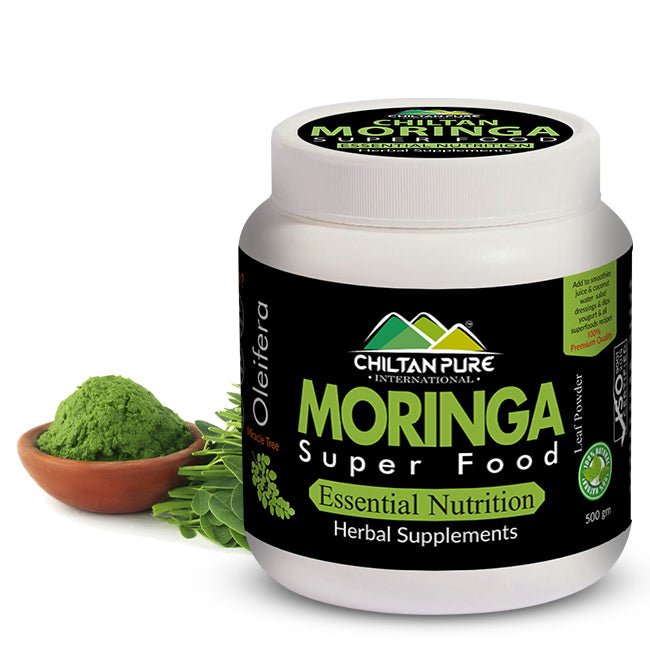
Moringa leaf powder and beetroot powder add vitamins, minerals and natural colour to smoothies, soups and raita. They are often marketed for weight loss, but evidence for direct fat loss is limited, so treat them as nutritious extras. ChiltanPure's Moringa Powder and Beetroot Powder both fit easily into recipes you already make.
-
How to use: Half to one teaspoon in a smoothie, soup, dahi or raita. Pregnant women should check with a doctor before using moringa.
Desi Ghee and Honey: Use in Small Amounts
Neither desi ghee nor honey is a diet food, but both can fit into a plan when measured. One teaspoon of ghee has roughly 40 to 45 calories and one teaspoon of honey about 20, and honey is still sugar. Pure Desi Cow Ghee and a strongly flavoured Sidr Beri Honey from ChiltanPure are best kept to a teaspoon at a time.
-
How to use: One teaspoon of ghee on daal or roti, and keep sweeteners minimal.
Quick Reference
| Goal | Habit | Foods |
|---|---|---|
| Feel fuller between meals | Measured snack | Mixed seeds, almonds, roasted chana |
| Improve daily fibre | Whole-grain roti, ground flax, psyllium | Multi-grain atta, flax seeds, ispaghol |
| Better carbohydrate choices | Whole-grain flours and rice | Jau, bajra, jowar, brown rice, daliya |
| Smoother blood sugar after meals | Diluted vinegar before meals (optional) | Apple cider vinegar |
| Cut sugary drinks | Unsweetened tea | Plain water, herbal tea |
These foods support a healthy lifestyle. They are not medicines and do not replace a balanced diet, exercise or medical advice.
Exercise for Weight Loss: What Actually Works
Walking Is the Best Starting Point
A brisk daily walk is free, safe for most people and easy to sustain. Build up to 7,000 to 10,000 steps per day, or at least 30 minutes of brisk walking on most days. A 10 to 15 minute walk after main meals also helps manage blood sugar.
Add Strength Training Two or Three Times a Week
Resistance training protects muscle while you lose fat. A simple home routine (2 or 3 rounds):
-
10 to 15 squats
-
8 to 12 push-ups (on knees if needed)
-
10 to 12 glute bridges
-
20 to 30 seconds of plank
-
10 to 12 rows with a resistance band or a backpack
Aim for 150 Minutes or More a Week
Adults should aim for at least 150 to 300 minutes of moderate activity per week (or 75 to 150 minutes of vigorous activity), plus muscle-strengthening on two or more days. For weight loss, many people need the upper end.
Spot Reduction Is a Myth
Hundreds of sit-ups will not burn belly fat. Fat comes off the whole body based on genetics, hormones and overall energy balance.
Sleep, Stress and Water
-
Sleep: Aim for 7 to 9 hours, with consistent bed and wake times.
-
Stress: Pick one daily habit: a short walk, breathing exercises, journaling, prayer or stretching.
-
Water: About 2 to 3 litres a day, depending on climate and activity. A glass before meals may help some people eat slightly less. Unsweetened herbal tea counts toward fluids.

Digestion, Bloating and Constipation
Constipation and bloating can make your stomach look larger, and your body feel heavier. Simple fixes:
-
Increase fibre gradually from vegetables, fruit, whole grains, daal and seeds, and add a teaspoon of ispaghol with plenty of water if it suits you.
-
Drink enough water.
-
Move daily. Walking stimulates the gut.
-
Eat probiotic foods such as plain dahi and unsweetened lassi.
-
Chew slowly and avoid scrolling while eating.
A note on laxatives: Laxatives, including herbal laxative powders, do not burn fat. Weight lost this way is water and electrolytes, and overuse can cause dependency, dehydration and mineral imbalance. If constipation is persistent, see a doctor rather than relying on laxatives.

Weight Loss Myths to Drop
-
"Skipping meals speeds up weight loss." It usually leads to overeating later.
-
"Carbs are the enemy." Refined carbs and sugar are the problem. Whole grains, fruit and legumes are valuable.
-
"Fat makes you fat." Excess calories do. Healthy fats in small portions are part of a good diet.
-
"Detox teas flush out fat." Your liver and kidneys already detoxify your body. These teas mostly act as laxatives or diuretics.
-
"Sweating more burns more fat." Sweat is cooling, not fat loss.
-
"Honey and lemon water alone will melt fat." It can be a pleasant habit, but it is not a fat burner.
-
"Eating after 8 pm always causes weight gain." Total daily intake matters most, though heavy late meals can disturb sleep and digestion.
-
"Supplements can replace diet and exercise." No supplement can.

How to Break a Plateau
Plateaus are normal. After you lose weight, your body needs less energy, and portions or movement often creep back.
-
Track your food honestly for 3 to 5 days. Extra ghee, sugary chai and snacks often explain a stall.
-
Increase protein and fibre.
-
Add strength training, or increase weights.
-
Raise your daily steps by 1,500 to 2,000.
-
Check sleep and stress.
-
Be patient for 2 to 3 weeks. Waist size may still be dropping.
-
See a doctor if the plateau lasts more than 6 to 8 weeks despite consistent effort.

Special Situations
-
PCOS: Insulin resistance makes weight loss harder, so focus on low-glycaemic carbohydrates (jau, bajra, whole grains, legumes), enough protein, strength training and good sleep. Even 5 percent weight loss can improve cycle regularity. Work with a gynaecologist or endocrinologist.
-
After pregnancy: Wait for medical clearance, start with nutrition and gentle walking, and avoid aggressive calorie cuts if you are breastfeeding.
-
After 40: Muscle mass declines with age, so strength training and enough protein matter even more.
-
Eid, Weddings and Ramadan: Enjoy the food, but control portions, start with salad or soup and skip sugary drinks. In Ramadan, break your fast with water and dates (a small date is roughly 20 to 25 calories, though larger varieties such as Ajwa or Medjool have more, so 2 to 3 is plenty), then have a balanced meal and keep fried foods and sweets small.

When to See a Doctor
Seek professional advice if you:
-
Have diabetes, heart disease, kidney disease, thyroid disease or high blood pressure
-
Are pregnant, breastfeeding or planning pregnancy
-
Take regular medicines
-
Lose weight rapidly without trying (this can be a sign of illness)
-
Feel constantly exhausted or dizzy, or notice significant hair loss
-
Have a BMI above 30 (or above 27.5 with other risk factors) and have not succeeded with lifestyle changes. In such cases, a doctor may discuss additional options, including prescription weight-loss medicines or, in some cases, bariatric surgery. These are only for medically suitable patients under specialist supervision.
If food, weight or body shape has started to feel obsessive or distressing, or you binge, purge, restrict heavily or misuse laxatives, please speak to a doctor or mental health professional. Support is available, and you do not need to handle it alone.

Your 30-Day Action Plan
Week 1: Set the Foundation
-
Take starting measurements (weight, waist, optional photos).
-
Replace sugary drinks with water or unsweetened herbal tea.
-
Walk 20 minutes daily.
-
Add a vegetable portion to lunch and dinner.
-
Go to bed 30 minutes earlier.
Week 2: Upgrade Your Food
-
Switch to multi-grain atta, jau or bajra flour.
-
Add a protein source at every meal.
-
Replace one fried snack a day with a measured portion of nuts, mixed seeds or roasted chana.
-
Increase fibre gradually, with plenty of water. If you add Husk Ispaghol, start with one teaspoon.
Week 3: Add Strength and Structure
-
Start three short strength sessions per week.
-
Raise walking to 30 minutes or 7,000 to 8,000 steps.
-
Plan meals for the week to avoid last-minute fast food.
-
Optional: try diluted apple cider vinegar before your largest meal, if suitable for you.
Week 4: Lock In Habits
-
Review weight, waist, energy and sleep.
-
Keep what works and adjust what does not.
-
Plan for events and travel.
-
Set your next 30-day goal, such as another 1 to 3 kg or improved fitness markers.

Conclusion
Weight loss is not a 30-day punishment. It is a way of eating and living you can maintain for years. Choose whole foods, keep portions sensible, move every day, protect your sleep and be patient with yourself. Foods like seeds, whole-grain flours and psyllium can make the journey easier, and ChiltanPure stocks many of these everyday natural foods, but your daily habits do the real work.
Frequently Asked Questions
How can I lose weight naturally without pills?
Eat plenty of vegetables, protein and fibre, cut sugary drinks and fried snacks, walk daily, do strength training two or three times a week, sleep 7 to 9 hours and manage stress. Small swaps such as multi-grain atta and a spoonful of seeds make the diet easier to stick to.
How much weight can I lose in one month?
Roughly 1 to 2 kg with a small deficit, and up to 4 kg if you have more weight to lose. The first two weeks may show slightly more because of water loss.
What is the fastest safe way to lose belly fat?
You cannot target belly fat alone. A calorie deficit, high protein and fibre, strength training, walking, better sleep and fewer sugary drinks all help reduce waist size.
Is ispaghol good for weight loss?
It is a soluble fibre that increases fullness and supports regular bowel movements, so it helps indirectly. ChiltanPure's Husk Ispaghol is a convenient option. Take it with plenty of water and introduce it gradually.
Can I eat roti and rice while losing weight?
Yes. Control portions, choose whole-grain flours such as multi-grain atta and brown rice, and pair them with vegetables and protein.
Why am I not losing weight even though I eat less?
Common reasons are underestimated portions and liquid calories, too little protein, poor sleep, high stress, muscle loss from crash dieting, or a condition such as hypothyroidism or PCOS. If progress stays stuck, track your intake for a few days and talk to your doctor.
Medical Disclaimer: This article is for general education and does not replace advice from a qualified doctor or registered dietitian. Individual results vary. Consult a healthcare professional before changing your diet or starting supplements, particularly if you have a medical condition, are pregnant or breastfeeding, or take regular medication.


![Husk Ispaghol – Constipation Relief, A Stopper on Diarrhea & Smaller Waistlines [چلتن اِسپغول]](https://chiltanpure.com/cdn/shop/files/husk-ispaghol-constipation-relief-a-stopper-on-diarrhea-smaller-waistlines-chltn-aspghol-289932_1000x.jpg?v=1739014067)